The specification that affects every door and cabinet in the villa
Hardware sits at the intersection of aesthetics and function in a way that most building materials do not. A door handle is touched dozens of times a day. A hinge carries a door’s weight and movement for the life of the building. A lock is the primary security barrier between the villa’s contents and the outside world, and none of these components get the luxury of failing quietly.
Thailand’s tropical climate affects hardware everywhere in the country, though not in the same way everywhere. Humidity cycling causes door movement that stresses hinges and locks regardless of location, and UV exposure degrades polymer components and some surface finishes whether the villa sits on Samui’s coastline or on a hillside outside Chiang Mai. Salt air adds a second, more aggressive layer of corrosion risk specifically for coastal and beachfront properties, which is why the correct specification varies by location rather than following one blanket rule. Getting hardware specification right costs modestly more than getting it wrong, and the visible, functional difference it produces lasts for the life of the villa either way.
The material hierarchy, and where location changes it
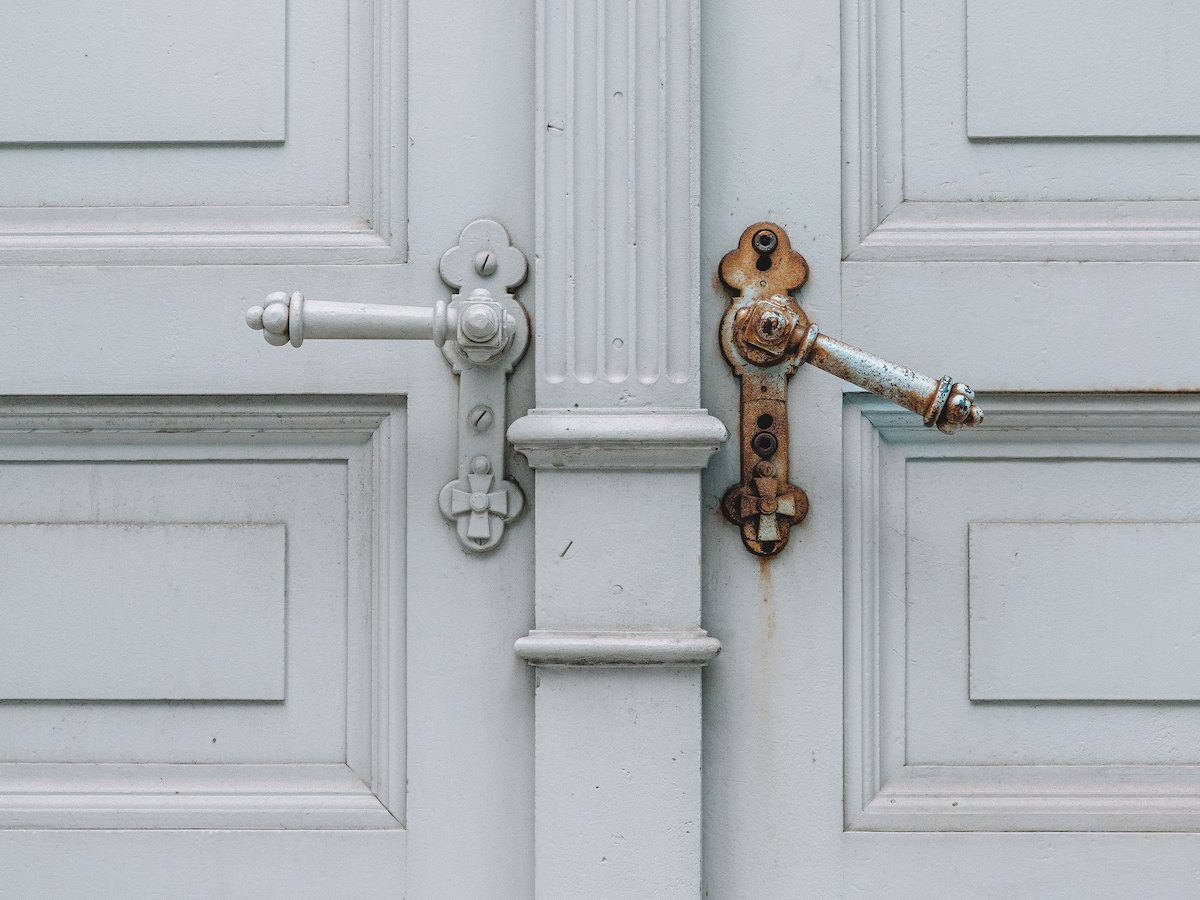
Grade 316 stainless steel is the correct specification for handles, hinges, locks, cabinet pulls, and fixings in coastal locations, since its molybdenum content provides significantly better chloride corrosion resistance than grade 304. Grade 304 develops surface rust spots in coastal salt air within a few years; grade 316 holds its appearance and structural integrity for decades in the same conditions. For inland villas with no salt exposure, whether in Chiang Mai, Bangkok, or anywhere away from the coast, grade 304 stainless is a perfectly adequate and more cost-effective specification, since humidity and UV are still real considerations there but the aggressive chloride corrosion that drives the 316 requirement simply is not present. Confirm the grade with your supplier either way, since both grades are sold simply as stainless steel without the grade being obvious from appearance, and request material certificates for any coastal specification rather than taking the label at its word.
Solid brass is the traditional alternative to stainless steel, and its natural corrosion resistance holds up well across Thailand generally, developing a patina rather than corroding structurally. It should be solid brass specifically, not brass-plated zinc alloy, which is a different material entirely and corrodes through the plating in humid conditions, coastal or otherwise, faster than most owners expect. Solid brass is also noticeably heavier than plated alternatives, and a lightweight product marketed as brass almost never is.
Matte black PVD finishes, familiar from the PVD-coated brass fittings covered in our bathroom specification guide, work well on either stainless or brass substrate anywhere in the country and are worth specifying over standard powder coat or paint on zinc alloy, which looks identical on installation day and deteriorates considerably faster from that point, regardless of how far the villa sits from the sea.
Avoid zinc alloy hardware and chrome-plated base metals everywhere in Thailand, not just at the coast. Zinc alloy corrodes under regular humidity even without salt exposure, and chrome plating over base metal fails wherever moisture finds a way through plating imperfections, bubbling and peeling in a way that is both unsightly and irreversible. Aluminium hardware is adequate for some applications nationally but is softer than stainless and scratches in high-use positions, so it is not the preferred choice for handles and locks anywhere wear resistance matters.
Handles and hinges
Lever handles are the correct choice for primary doors over knobs, more practical for wet, full, or limited-grip hands, with a profile that gives positive grip without sharp edges. For cabinets, the fixing method matters more than the handle style: through-bolt fixings into the door are considerably more secure and longer-lasting than surface-mounted fixings that pull out as cabinet materials move seasonally with humidity, a consideration that applies across the whole country rather than only near salt air. Keep hardware finishes consistent across the villa, since matching handles, hinges, locks, and cabinet pulls creates coherence that mismatched finishes never achieve, however good each individual piece is.
Ball-bearing hinges are the correct specification for all primary doors nationally, providing smooth operation under load where standard butt hinges develop friction, noise, and eventual binding as wear accumulates. Rate heavy-duty ball-bearing hinges specifically for the door weight on solid teak, composite fire doors, and large glazed panels, since underrated hinges wear rapidly and eventually drop the door, misaligning the latch and opening uneven gaps that no adjustment fixes without replacing the hinges. Use two hinges per door for lightweight internal doors, three above 30 kilograms, which covers most solid timber external and composite fire doors, and four above 60 kilograms. The third hinge on a heavy door is not an upgrade, it is what stops the door twisting on the hinge stile and binding at the latch side over time, a failure mode that shows up regardless of where in Thailand the villa sits.
All fixing screws should be stainless steel, since standard steel corrodes at the fixing point wherever humidity reaches the screw head through timber or frame, coastal exposure or not, and screw length must engage solid structural material rather than door lining alone.
Locks and security hardware
Mortise locks, built into the door leaf rather than surface-mounted, are the correct specification for primary external door security nationwide, since the lock body cannot be attacked from the surface side the way a surface-mounted deadbolt can. Specify ANSI Grade 1 or equivalent rated locks, since the grading indicates tested resistance to forced entry, use cycles, and corrosion, where unrated locks carry no documented performance standard at all. Upgrade the strike plate to a heavy-duty version with 75 millimetre or longer fixings engaging the structural door frame rather than just the lining, since standard strike plates with short fixings pull straight through under impact, a meaningful security improvement at minimal added cost.
Smart locks are increasingly specified in Thai rental villas nationally for genuinely practical reasons: guests get access codes without a key handover, codes change between guests, and access is managed remotely. Battery life management matters wherever the villa sits, since a dead battery provides no access and no security at exactly the moment it is needed, so establish a replacement schedule rather than reacting to failures. Specify smart locks with documented performance in high-humidity conditions, since consumer models designed for temperate climates fail at their electronics in Thailand’s humidity generally, not only at the coast, and always include a physical key override in case the electronics fail.
For padlocks on gates, utility areas, and storage, solid brass or stainless steel throughout is worth the modest premium over standard hardware store padlocks everywhere in the country, since standard steel padlocks corrode and seize within one to two rainy seasons regardless of proximity to the sea, only faster where salt is also present.
Installation and maintenance
Correct alignment at installation matters more than the hardware itself in the long run. Doors that do not close smoothly, latches that need lifting or pushing to engage, and inconsistent gaps around the perimeter are installation problems that worsen as seasonal movement compounds the initial misalignment, so verify alignment before signing off rather than assuming it will settle in.
Timber doors move seasonally across all of Thailand, expanding in the wet season and contracting in the dry season, so allow 2 to 3 millimetres clearance at the sides and top and 5 to 8 millimetres at the threshold. Tight clearances cause wet season binding that later needs planing or door replacement to fix.
Clean hardware monthly with mild soap and water, since deposit accumulation, salt or otherwise, accelerates deterioration even on correctly specified materials, and lubricate hinges and locks every six months with dry PTFE rather than an oil-based product that attracts dust in tropical conditions.
The bottom line
Door and joinery hardware in a Thai villa is a specification category where the difference between correct and incorrect material choices becomes visible within a few years, not decades, wherever in the country the villa sits. Match the grade to the location: 316 stainless or solid brass at the coast, 304 stainless perfectly adequate inland, ball-bearing hinges rated for door weight, mortise locks with heavy-duty strike plates, and smart locks specified for Thailand’s humidity generally. These decisions, much like the coastal-grade coatings that protect a villa’s window and door framing, produce hardware that performs and looks right for the life of the villa rather than needing replacement within a single renovation cycle.
The cost premium over inadequate specification is modest. The difference in outcome is not.
The full build process, from land purchase through to handover and beyond, is covered in The Thailand Build Blueprint™, so sign up for early access.
If something about your own design or construction is genuinely keeping you up at night, whether that is a build issue, a contractor you are not sure you trust, or a structural concern you cannot get a straight answer on, book a Strategy Session with Nay to work through it directly.
Getting this specified and checked on site
Decisions like this one are only as good as the drawings and the site supervision behind them. If you are building on Koh Samui, Nay's full service from land assessment to handover is described at our Samui practice; for Phuket, see our Phuket practice. If you already have a builder and want an independent second opinion on a specification, talk to Nay directly.