What aluminium composite panels are and why they are used
Aluminium composite panels, or ACPs, consist of two thin aluminium sheets bonded to a core material, typically polyethylene or fire-rated mineral. The result is a panel that is lightweight, rigid, dimensionally stable, and resistant to the conditions that degrade most conventional cladding materials in Thailand’s tropical climate.
ACPs have become a common specification for contemporary facade cladding across Thai villa construction, coastal and inland alike, for practical reasons. They resist humidity and UV damage better than plaster or cement render nationwide, with coastal properties gaining the additional benefit of genuine salt air resistance on top of that. They require significantly less maintenance and install faster than masonry alternatives, and when correctly specified and installed they provide 10 to 15 years of reliable service with minimal upkeep.
That qualification, when correctly specified and installed, is not a formality. ACP performance varies significantly with specification quality and installation precision, more so than many cladding materials, and understanding what correct specification looks like is the most important thing a villa owner or architect needs to know before selecting them.
Core specification: the fire safety issue that cannot be overlooked
The core material is the most critical specification decision for ACPs used externally, and this matters just as much for an inland villa as a beachfront one, since it is a fire safety question rather than a climate one.
Polyethylene core, or PE, is the original and most common ACP core, lightweight and cost-effective, but the significant problem for external use is combustibility. PE core ACPs burn readily and have been implicated in serious building fires internationally, and several countries now prohibit PE core ACPs on building exteriors above certain heights. Fire-rated mineral core, or FR, contains mineral compounds that significantly reduce combustibility and is the correct specification for any external cladding application anywhere in Thailand. It costs more than PE core, but the fire safety difference is not a marginal improvement. It is fundamental, and it is not a decision that should vary by location.
Coatings and colour retention in tropical conditions
Thailand’s UV intensity is among the highest in the world, and it affects every villa in the country regardless of proximity to the sea. Cladding coatings that perform adequately in temperate climates fade, chalk, and degrade visibly within a few years of tropical sun exposure. PVDF coating, polyvinylidene fluoride, is the correct specification for ACP external finishes throughout Thailand, offering significantly better UV resistance than standard polyester coatings, with colour retention over 10 to 15 years rather than the 5 to 7 years typical of polyester under tropical sun.
Specify a minimum of 70 percent PVDF content in the coating formulation, since lower content reduces UV resistance, and suppliers sometimes market products as PVDF-coated when they contain significantly less than that figure. Request the technical data sheet and check the actual content rather than accepting the marketing description. Batch colour consistency matters more than most buyers anticipate too, since panels from different production batches can show visible colour variation on large facades, and Thailand’s intense sunlight makes any colour mismatch highly visible. Request batch consistency reports and source all panels for a project from the same batch wherever possible.
Weight and structural implications
A 4mm ACP panel weighs between 5.5 and 7.5 kilograms per square metre, significantly lighter than concrete render, cement board, or masonry cladding, which has real practical implications for construction. The reduced load matters meaningfully for villas on stilts or elevated foundations, where additional cladding weight increases structural demands and cost, and the lightweight nature also makes ACPs more practical than most alternatives for adding cladding to an existing structure without structural reinforcement.
One important limitation is worth stating plainly: ACPs are cladding only. They have no structural function and should never be specified as a structural element or used to span unsupported openings. The subframe system that carries the panels is the structural element. The panels themselves are not, regardless of how rigid they may feel by hand.
Installation: where performance is actually determined
ACP performance in Thailand’s monsoon conditions depends heavily on installation precision. Correctly installed ACPs perform well nationwide. Poorly installed ACPs leak, corrode at fixings, and require expensive remediation, wherever the villa happens to sit.
Fixing specification is one area where location genuinely changes the answer. In coastal locations, specify stainless steel grade 316 fixings throughout, since standard grade 304 corrodes faster than most people expect in salt air, and grade 316 provides meaningfully better corrosion resistance for a modest cost difference, much like the grade 316 versus grade 304 distinction that applies to window and door framing. Inland, away from salt exposure, grade 304 is generally adequate, though humidity still demands a genuine stainless specification rather than standard steel.
Sealants and joint design matter regardless of location. Use UV-stable sealants rated for tropical conditions at all panel joints and junctions with the building envelope, since standard silicone sealants degrade under sustained UV exposure nationwide. Joints between panels must also allow for thermal expansion while maintaining weathertightness, since aluminium expands and contracts with temperature variation, and Thailand’s daily temperature range, combined with direct sun heating panel surfaces, creates significant thermal movement wherever the villa is built. Joints that do not accommodate this movement develop stress cracks and sealant failure over time regardless of coastal or inland positioning.
Subframe design is one further place where coastal conditions specifically raise the bar. The aluminium subframe that carries the panels must be engineered for the wind loads relevant to the actual location rather than estimated from a standard detail, and coastal Thailand in particular can experience significant wind pressure during storms that an inland site may not see to the same degree. Misalignment or inadequate sealing at panel junctions allows water ingress during heavy monsoon rain anywhere in the country, and once water penetrates behind ACPs it is difficult to detect and harder to remediate without removing panels, so getting the installation right from the start is far less expensive than addressing concealed moisture damage later. Use contractors with documented ACP installation experience in tropical conditions specifically, and ask to see completed projects and check how they have actually aged.
Design considerations: where ACPs work and where they do not
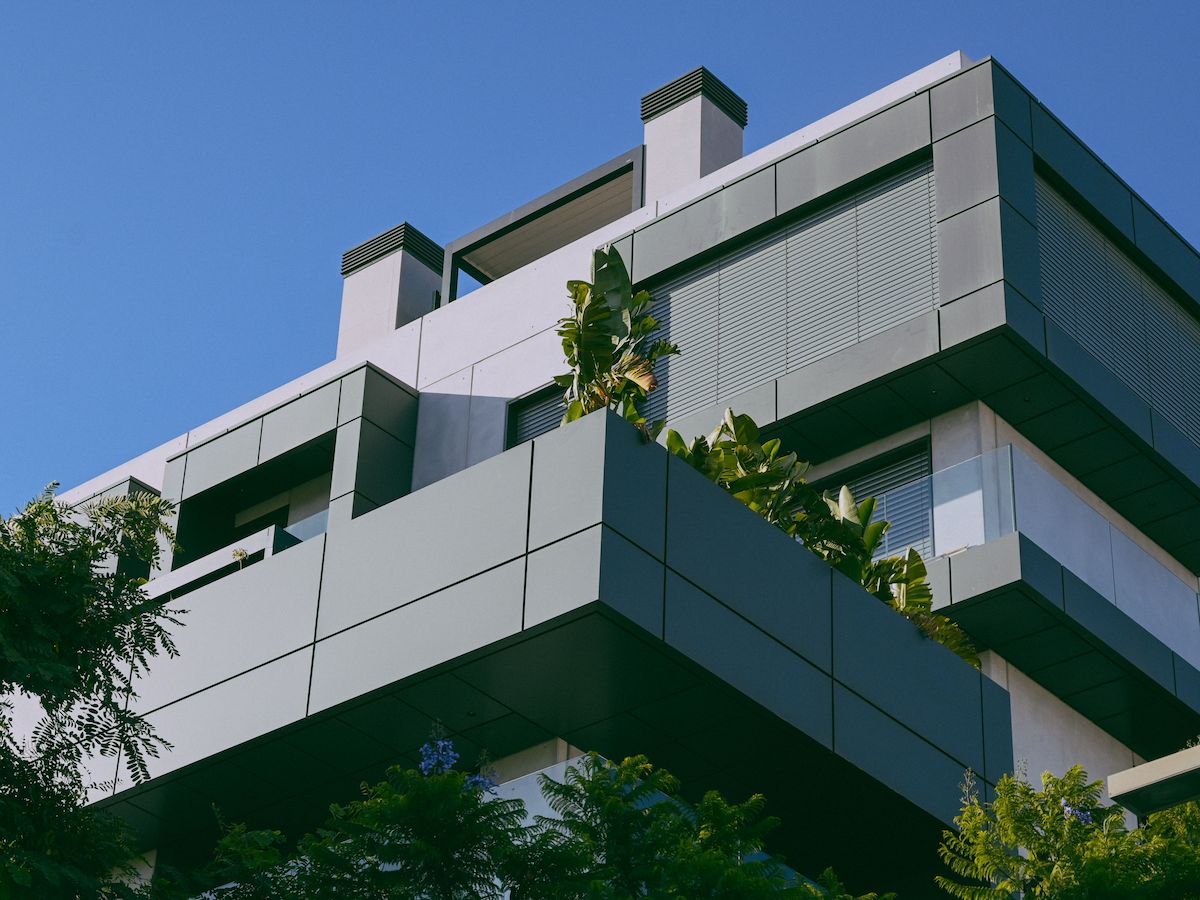
ACPs work well in contemporary and minimalist villa designs where clean lines and consistent large-format surfaces are the design objective, delivering flat, uniform facades with consistent colour and texture that are difficult to achieve with render or masonry. They are available in finishes including brushed metal, matte colours, and wood-effect laminates, and the wood-effect options are worth considering wherever the aesthetic of timber is desired without the maintenance demands that real timber carries.
They are less appropriate for rustic, organic, or traditional architectural styles, where the clean precision of ACP panels reads as incongruous with the design intent, and for applications requiring texture or depth, since ACPs are flat by nature and do not replicate the visual character of textured render, natural stone, or real timber. They are also not the right specification for surfaces below 300mm from ground level, where mechanical damage from cleaning, gardening, and general use is likely, since the surface can be dented and scratched in ways that are difficult to repair without full panel replacement.
Maintenance requirements in practice
The maintenance advantage of ACPs over render and timber is real but not zero. Annual inspection should check sealant joints for cracking or separation, fixings for early corrosion signs, and panel surfaces for impact damage, since sealant failures caught early are straightforward to address but become expensive moisture ingress if left. Clean with a mild soap solution and a soft cloth, since abrasive cleaners scratch the PVDF coating and reduce its UV resistance, and use pressure washing carefully if at all, since close-range pressure can force water behind panels at the joints.
Individual damaged panels can be replaced, but achieving an exact colour match on an aged facade is genuinely difficult, and the batch consistency issue already discussed applies to replacements as much as to the original installation. Keeping a small number of spare panels from the original batch, where possible, is worth the modest storage inconvenience.
How ACPs compare to alternatives
Cement render is versatile and capable of a wide range of textures and finishes, but in Thailand’s climate it is prone to cracking as the structure moves and to weathering that requires repainting every 3 to 5 years, making it the right choice where texture and traditional aesthetics are genuine priorities rather than an afterthought. Timber cladding offers the highest natural aesthetic quality available, but in Thailand’s conditions, coastal or otherwise, it requires regular treatment against termites, moisture, and UV degradation, a significant ongoing maintenance commitment that only makes sense where the natural aesthetic justifies it. uPVC cladding is low maintenance but degrades under sustained UV exposure, developing surface chalking and colour fade, and is not recommended for quality villa construction anywhere in the country. Natural stone offers exceptional durability and a genuinely premium aesthetic, but it is heavy, expensive, and requires skilled installation, making it the right choice mainly for feature walls and specific applications where cost allows.
ACPs offer the best combination of low maintenance, durability, and contemporary aesthetic for modern villa facades across Thailand’s climate, provided fire-rated cores and PVDF coatings are specified and installation is done correctly.
The bottom line
Aluminium composite panels are a strong specification choice for contemporary tropical villa facades in Thailand, coastal or inland, but only when the specification is correct. Fire-rated mineral core, minimum 70 percent PVDF coating, appropriately graded stainless steel fixings for the location, UV-stable sealants, and experienced installation are not optional refinements. They are what determines whether ACPs perform as specified or become an expensive problem regardless of where the villa is built.
The cost of correct specification is modest relative to the total project cost. The cost of incorrect specification, in remediation, replacement, and in the case of fire-rated cores, safety, is not.
The full build process, from land purchase through to handover and beyond, is covered in The Thailand Build Blueprint™, so sign up for early access.
If something about your own design or construction is genuinely keeping you up at night, whether that is a build issue, a contractor you are not sure you trust, or a structural concern you cannot get a straight answer on, book a Strategy Session with Nay to work through it directly.
Getting this specified and checked on site
Decisions like this one are only as good as the drawings and the site supervision behind them. If you are building on Koh Samui, Nay's full service from land assessment to handover is described at Architect Samui; for Phuket, see Architect Phuket. If you already have a builder and want an independent second opinion on a specification, book a strategy session.