A finish with a long history in tropical conditions
Lime plaster has been used in warm, humid climates for centuries, and not by accident. In tropical villa builds across Thailand, it offers something most modern finishes cannot: genuine breathability combined with natural beauty and long-term durability when correctly specified and applied. This article covers where lime plaster performs best, where it struggles, how it compares to alternatives, and what specification and application decisions determine whether the finish lasts decades or fails within years.
Why breathability matters in Thailand’s climate
Thailand’s heat and humidity create a specific problem for wall finishes nationwide, not only near the coast. Materials that trap moisture, including cement renders and most paints, cause walls to hold water internally, and over time this leads to mould, peeling, salt or mineral efflorescence at the surface, and in serious cases structural damage at the substrate.
Lime plaster works differently. Its slow curing process produces a surface that allows moisture vapour to pass through rather than accumulate behind it, a property called vapour permeability and measured by a coefficient called μ, where lower values indicate more breathable materials. Lime plaster typically sits at μ 6 to 10, against cement render at 15 to 35 and acrylic paint coatings at 200 to 2,000. In practice this means walls finished in lime plaster release moisture from the substrate to the atmosphere rather than holding it within the wall buildup, and combined with lime’s natural alkalinity, around pH 12 in fresh plaster, settling to pH 8 to 9 as it carbonates, which provides mild resistance to fungi, mould, and some insects, this makes it well suited to Thailand’s humidity generally, with coastal properties gaining the additional benefit of that same breathability helping the substrate dry out after salt-laden rain rather than trapping it.
The catch is that performance depends heavily on skilled application. Poor mixing, inadequate curing, or rushed work causes cracking, chalking, and surface delamination, and this risk is more pronounced in coastal salt air but is not exclusive to it. Using experienced craftspeople and quality lime products is not optional. It is the difference between a finish that lasts decades and one that fails within years.
The two lime types and which to specify
Lime plaster is not a single material, and the two main types behave differently and suit different applications. Non-hydraulic lime, also called air lime or fat lime, cures by carbonation, reacting with atmospheric carbon dioxide over weeks and months to form calcium carbonate. It produces the most breathable and aesthetically refined finishes and remains the traditional specification for fine interior plasterwork, but it is more vulnerable to exposure during curing, since it needs air contact rather than water to cure and does so slowly in humid, moisture-saturated conditions. For Thai interior applications anywhere in the country, non-hydraulic lime delivers the highest aesthetic quality but requires the longest and most carefully controlled curing period.
Hydraulic lime, designated NHL 2, NHL 3.5, or NHL 5 by strength class, contains naturally occurring silicates and aluminates that let it cure with water as well as carbonation. It is more robust, sets faster, and tolerates damp conditions better during application. NHL 3.5 is the most commonly specified hydraulic lime for residential applications in humid climates generally, with NHL 5 reserved for more exposed conditions, and for any exterior application where moisture exposure is constant, whether that is Samui’s salt air or an inland monsoon-exposed facade, hydraulic lime is the more practical specification. Discuss the specification with the plasterer directly before committing, since the application techniques differ meaningfully between the two types.
Interior use where lime plaster excels
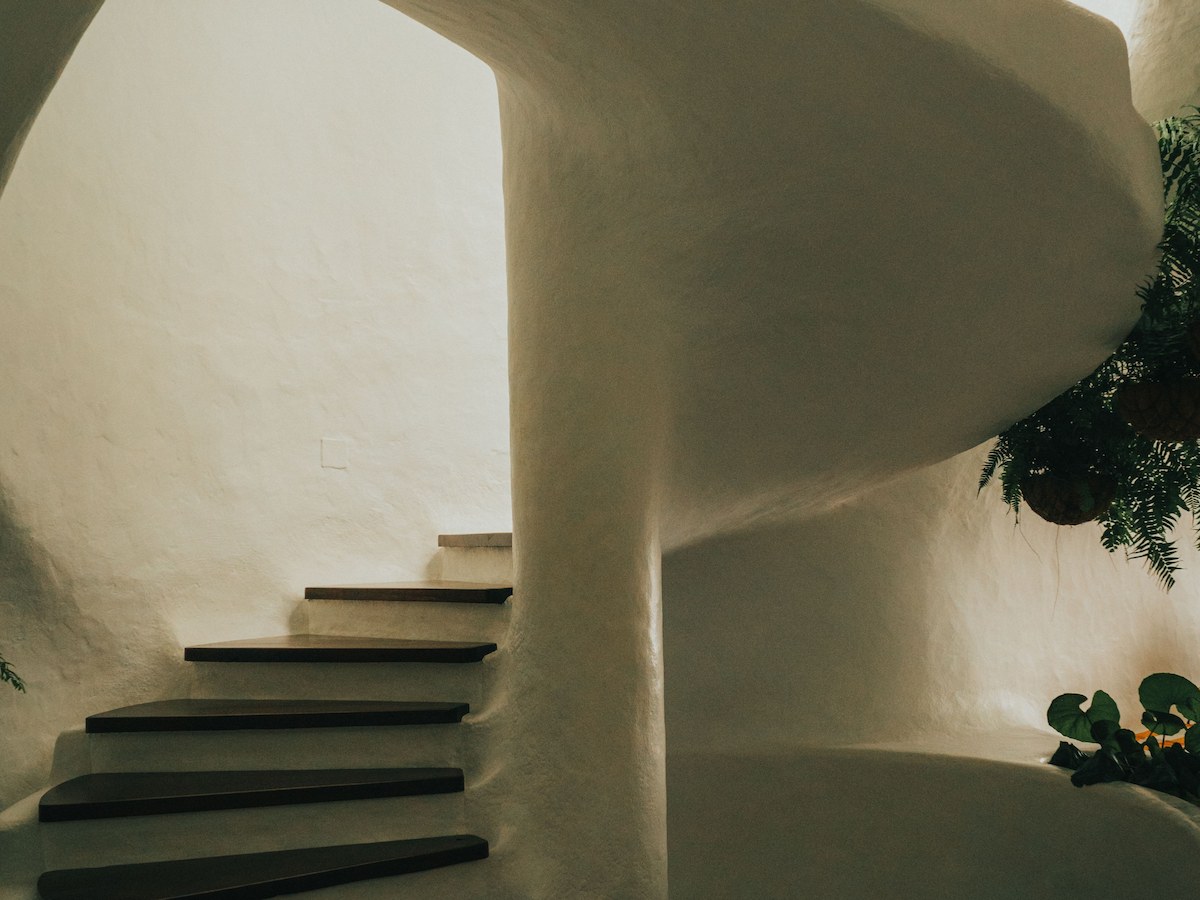
Inside a villa, lime plaster ages gracefully. Unlike paint, which fades and flakes in tropical conditions, lime plaster develops a distinctive patina over time that adds character rather than losing it. Its soft matte texture works particularly well with curved walls, alcoves, and organic architectural forms, and mineral pigments can be added during mixing, removing the need for additional paint layers entirely, since the pigment becomes part of the plaster body rather than sitting on the surface, meaning colour does not peel, flake, or wash off with cleaning. Earth pigments, including ochres, umbers, and iron oxides, are the most stable in lime and have been used in this exact combination for thousands of years, while synthetic pigments need verification that they are lime-stable, since some react with the high pH of fresh lime and either change colour or fail to disperse evenly.
Maintenance is minimal, typically just gentle cleaning with mild soap and water, and lime plaster performs best in dry interior spaces, including living rooms, bedrooms, and corridors. In wet or high-traffic areas such as bathrooms and kitchens, protective coatings are advisable or an alternative finish should be considered. Tadelakt, a polished lime plaster traditional to Morocco, can be specified for limited wet area applications when finished with olive oil soap that creates a water-resistant surface, but the application is highly skilled and is not a casual specification for a first-time plasterer to attempt.
Exterior use is selective and strategic
Lime plaster can work well on sheltered outdoor surfaces such as covered verandas, shaded courtyards, and protected feature walls anywhere in Thailand. It adds warmth and texture that harder finishes cannot replicate, and its breathability allows the substrate to dry naturally after monsoon rainfall rather than trapping moisture against the wall.
It is not suitable for fully exposed exterior walls, and the reasons differ slightly by location. On the coast, intense sun, heavy rain, and salt spray accelerate wear significantly. Inland, sun and monsoon rainfall alone are enough to shorten its life without salt in the equation. Where exposed exterior lime is genuinely wanted, hydraulic lime variants, NHL 3.5 or NHL 5, combined with breathable mineral silicate sealants extend durability, though periodic maintenance is still required, typically a fresh limewash every five to seven years. For exposed exterior walls where breathability is still desired without that maintenance commitment, a lime-cement blend with 30 to 50 percent lime content is a more practical choice nationally, more robust than pure lime plaster while retaining some of the breathability that makes lime worth using in the first place. The specific blend ratio affects both durability and vapour permeability, and the right mix depends on the exposure conditions of the particular wall and its location.
Application requirements
Applying lime plaster properly is skilled work that few contractors in Thailand have direct experience with, wherever in the country the project sits. It typically involves three coats: a scratch coat that creates mechanical bond to the wall, a floating coat that builds thickness and corrects irregularities, and a finishing coat that produces the final surface. Each coat is applied at 5 to 10 millimetres thickness and allowed to cure before the next goes on, with controlled drying between each. A full three-coat system takes six to eight weeks to cure in temperate conditions, and can take longer in Thailand’s humidity regardless of coastal or inland location.
The curing process needs careful management throughout. Plaster that cures too quickly in dry, hot conditions cracks at the surface, while plaster that cures too slowly in saturated humidity develops surface efflorescence and fails to reach full strength. Mist spraying the surface with water for the first two to three days helps prevent rapid drying, and fans or dehumidifiers may be needed during high-humidity periods to maintain adequate curing conditions. Application during the wet season is possible but requires more active management than application during the dry season, a consideration that applies equally whether the project is on Samui or in the north.
The substrate matters significantly too. Lime plaster bonds well to porous masonry, brick, and traditional render substrates, but does not bond reliably to smooth modern concrete, painted surfaces, or sealed substrates without specific preparation. A scratch coat with appropriate adhesion promoters is required on smooth substrates, and any existing paint or sealer must be removed completely before lime application begins.
Cost guide
Interior lime plaster typically costs 500 to 1,000 baht per square metre supplied and applied. Outdoor protective treatments and additional weather-resistant finishes add 100 to 300 baht per square metre. Premium specifications including tadelakt or specialist polished finishes range considerably higher, from 1,500 to 3,000 baht per square metre depending on complexity and the plasterer’s expertise.
The cost reflects the labour intensity of correctly applied lime plaster rather than the material cost itself. Hydraulic lime and quality non-hydraulic lime are not significantly more expensive than cement-based alternatives at the material level. The premium is entirely for the skilled application the finish requires, which is also why sourcing the right plasterer matters more here than for almost any other finish in the villa.
How lime plaster compares to other finishes
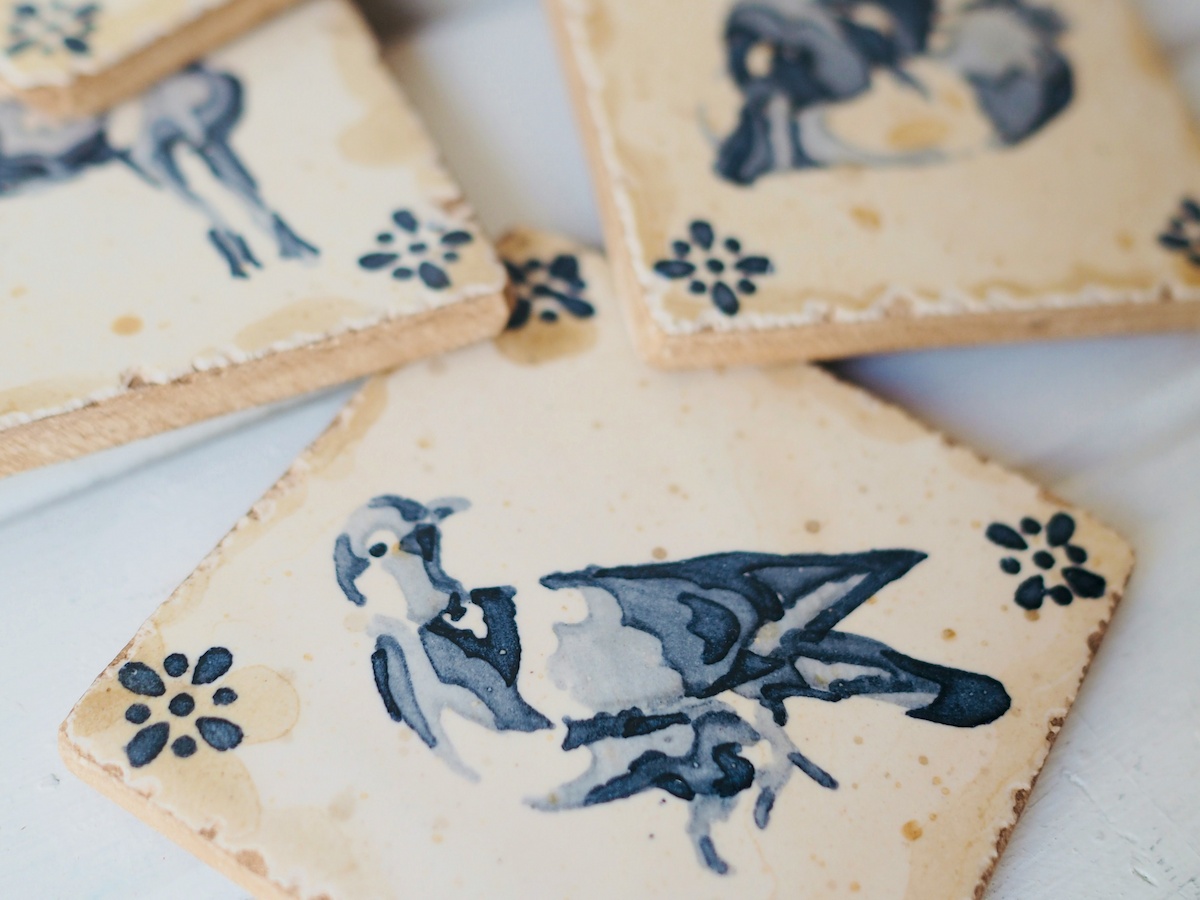
Cement render is durable and low maintenance but traps moisture against the substrate, making it the better choice for exposed exteriors where weather resistance matters more than breathability. Conventional paint is affordable and quick to apply but short-lived in tropical climates, typically needing repainting every two to three years in humid conditions, which compounds the lifetime cost well beyond what the initial price suggests. Mineral silicate paints are a more breathable alternative that perform better over lime and lime-cement substrates than standard acrylic. Tiles are extremely durable and moisture resistant but can feel cold and impersonal, better suited to bathrooms, kitchens, and service areas than to living spaces where atmosphere and material warmth genuinely matter.
Lime plaster is breathable, warm, visually inviting, and long-lasting when properly applied, and it is the best choice for interior living spaces and protected exterior surfaces across Thailand where aesthetics matter and the repeated maintenance cycle of repainted alternatives is not what the owner wants.
The bottom line
Lime plaster is not the right finish for every surface, but for interior living spaces and sheltered exteriors in tropical Thai villas, coastal or inland, it is hard to beat. Its breathability suits the climate nationwide, its texture complements organic architecture, its embedded pigment removes the maintenance cycle that paint imposes, and its longevity rewards the upfront investment in skilled application.
The key decisions are not whether to use it, but where to use it, which lime type to specify for the application and its location, and ensuring the people applying it genuinely know what they are doing. The right product applied by the wrong contractor produces a worse outcome than a more forgiving finish applied competently.
The full build process, from land purchase through to handover and beyond, is covered in The Thailand Build Blueprint™, so sign up for early access.
If something about your own design or construction is genuinely keeping you up at night, whether that is a build issue, a contractor you are not sure you trust, or a structural concern you cannot get a straight answer on, book a Strategy Session with Nay to work through it directly.
Getting this specified and checked on site
Decisions like this one are only as good as the drawings and the site supervision behind them. If you are building on Koh Samui, Nay's full service from land assessment to handover is described at Architect Samui; for Phuket, see Architect Phuket. If you already have a builder and want an independent second opinion on a specification, book a strategy session.