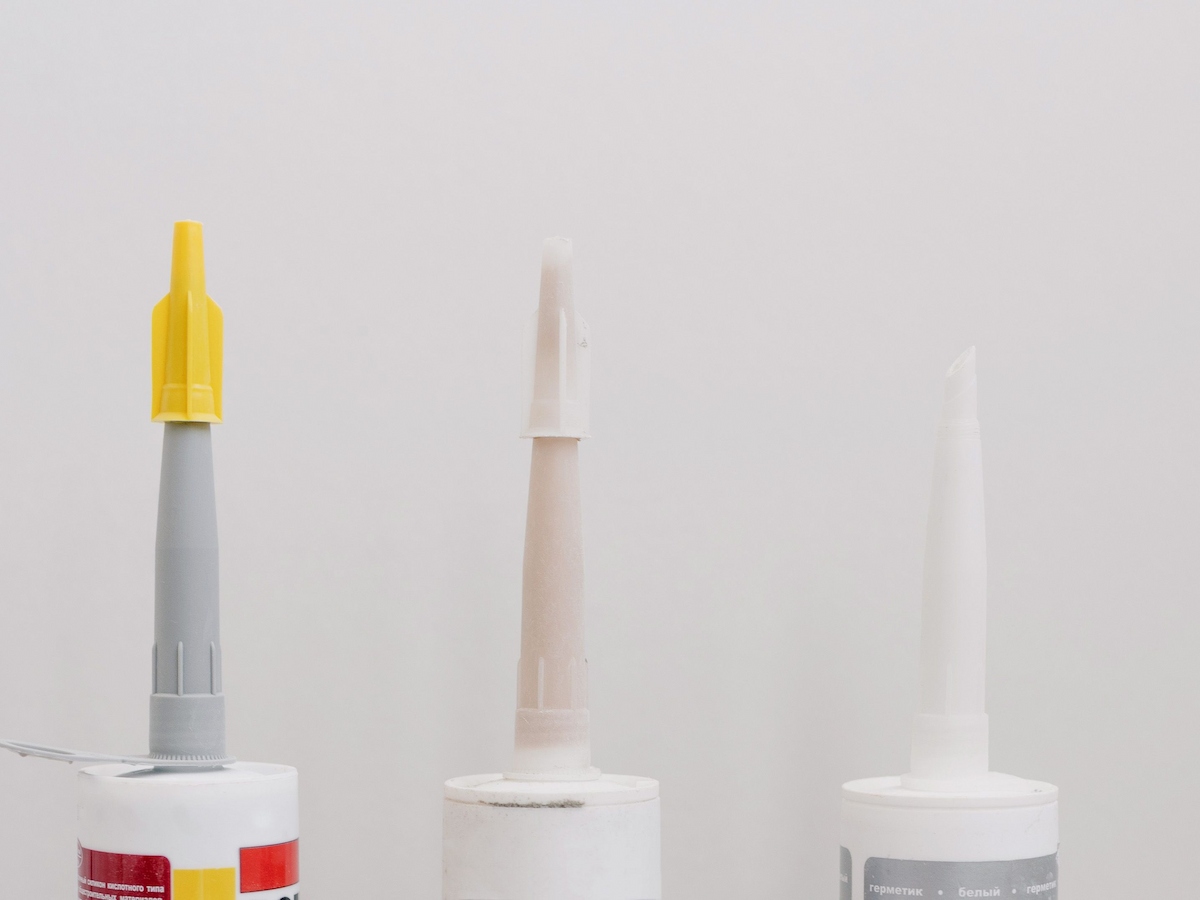
The sealant decision that affects every junction in the villa
Silicone sealant is applied at virtually every junction between building materials in a villa: around window and door frames, at glazing perimeters, between tiles and fixtures, at structural movement joints, and wherever two different materials meet and need weatherproofing. In Thailand’s tropical climate these junctions are under continuous stress from UV radiation, thermal cycling, monsoon rainfall, and coastal salt air.
Most people treat sealant selection as a minor procurement decision: choose a reputable brand, match the colour, apply correctly. In Thai villa construction this approach produces two specific and avoidable failure modes.
The first is premature sealant failure: yellowing, surface cracking, loss of adhesion, and mould establishment from using products specified for temperate climate conditions in Thailand’s more demanding environment. The second is aluminium frame corrosion caused by acid-cure silicone, a failure mode that most villa owners and many contractors do not know exists until the damage is visible on frames that cannot be economically remediated.
Understanding the chemistry behind these failure modes takes five minutes and changes every sealant specification decision in a villa build.
The chemistry that determines performance and the corrosion risk
Silicone sealants cure by releasing a byproduct as the material crosslinks from paste to rubber. The byproduct varies by silicone chemistry, and this variation is the most important specification decision for Thai tropical villa construction.
Acid-cure silicone, also known as acetoxy cure, is the most common silicone sealant type globally. It cures by releasing acetic acid, the same compound that gives vinegar its smell. The distinctive vinegar odour during and after application is the diagnostic sign of an acid-cure product. The acetic acid released during curing is corrosive to aluminium and aluminium alloys including all the anodised and powder-coated aluminium frames, profiles, and structural elements specified throughout a villa; to natural stone, particularly calcium-rich stones like marble and limestone where the acid causes surface etching; to copper, brass, and zinc; and to certain adhesives and substrates where the acid affects the bond.
The corrosion mechanism is specific. Acetic acid released during curing penetrates the interface between the sealant and the frame, attacking the aluminium oxide layer that provides aluminium’s natural corrosion resistance. The damage accumulates during every curing cycle and eventually produces visible surface degradation that cannot be reversed without stripping and refinishing the affected area. In a Thai villa with extensive aluminium framing across windows, doors, louvres, screens, pergolas, and railings, acid-cure silicone applied at frame junctions causes progressive damage to the most expensive and extensive material specification in the building. The damage is slow enough that the connection to the sealant is not always made, and extensive enough that it affects the entire frame wherever the acid-cure product was applied.
Neutral-cure silicone, available in oxime, alkoxy, or acetone-cure formulations, cures by releasing neutral byproducts rather than acetic acid. There is no distinctive vinegar smell during application and no corrosive byproduct in contact with adjacent materials. Neutral-cure silicones are safe for use against aluminium, natural stone, most metals, and sensitive substrates. They provide equivalent or better weatherproofing performance compared to acid-cure alternatives in tropical conditions. For Thai villa construction where aluminium is extensively used, neutral-cure is the correct specification throughout, not just in positions obviously adjacent to metal.
Identifying which type you have is straightforward. Smell the product during application: acid-cure products smell of vinegar distinctly during and after application; neutral-cure products have a mild solvent smell or almost none. Read the product data sheet: acid-cure products are described as acetoxy cure or acetic acid release; neutral-cure products specify oxime cure, alkoxy cure, or neutral cure explicitly. Do not rely on colour, brand name, or price as indicators of cure type. Acid-cure and neutral-cure silicones are sold across the full price range and in identical colours. The cure chemistry is a formulation decision, not a quality tier distinction.
Performance requirements for Thailand’s tropical climate
Beyond the acid-cure issue, silicone sealants for Thai tropical villa applications need to meet specific performance criteria that generic products do not always achieve.
UV resistance is the first requirement. Thailand’s UV index reaches 10 to 12 regularly, and silicone sealants exposed to this intensity without adequate UV stabilisation yellow, become brittle, and develop surface cracking within a few years. UV-stabilised silicone formulations maintain their flexibility and appearance significantly longer in direct sun exposure. Specify silicones with documented UV resistance, referencing ASTM C793 weathering resistance testing or equivalent. For exposed external joints in direct sun, UV resistance is as important as weatherproofing performance.
Flexibility and movement accommodation is the second requirement. The thermal cycling in Thailand’s climate, between cool air-conditioned interiors and hot exterior surfaces, and between cool nights and hot days, creates significant dimensional movement in building materials at every junction. The elongation at break specification indicates how much movement a silicone sealant accommodates before failure. Specify silicones with elongation at break above 300 percent for structural movement joints and above 200 percent for standard perimeter joints. Budget silicones with low elongation values crack under the thermal movement that Thai villa conditions produce regularly.
Mould resistance is the third requirement. Silicone’s non-porous surface is naturally more mould resistant than acrylic alternatives because moisture does not penetrate the cured silicone surface. However, organic matter accumulation on the surface provides a substrate for mould growth regardless of the sealant material. Mould-inhibited silicone formulations include biocides that resist surface mould establishment in wet areas. Specify mould-inhibited silicone for all bathroom, kitchen, and wet area applications.
Salt air resistance completes the specification requirements. Standard silicone performs adequately in salt air conditions, better than acrylic alternatives. For positions in direct coastal salt spray exposure, specify silicones with documented marine environment performance. The distinction from standard silicone is primarily in the adhesion promoter formulation, which maintains bond strength to substrates that salt deposits contaminate over time.
Where silicone is the correct specification
Glazing perimeters and structural glazing junctions require the flexibility, UV resistance, and weather performance that only silicone provides reliably. Acrylic sealants at glazing perimeters fail under the thermal movement and UV exposure these positions receive. Neutral-cure silicone is the correct specification for all glazing applications in tropical villa construction.
Bathroom and wet area junctions, including bath surrounds, shower enclosures, and tile-to-fixture interfaces, require silicone’s impermeability to water and the mould resistance of mould-inhibited formulations. Acrylic alternatives underperform in sustained water contact conditions.
Natural stone junctions, stone-to-stone and stone-to-frame, require neutral-cure silicone specifically. Acid-cure silicone causes etching damage to marble and limestone. Acrylic lacks the flexibility for the movement these junctions experience and polyurethane can stain porous stone.
Metal-to-metal and metal-to-substrate junctions involving aluminium, stainless steel, or other metals require neutral-cure silicone specified explicitly. The acid-cure corrosion risk is not theoretical in these positions: it is a consistent failure mechanism in Thai villa construction where the wrong product is used.
Structural movement joints at facade junctions, where different facade materials meet and significant thermal movement occurs, require the movement accommodation and weatherproofing permanence of silicone over acrylic in these exposed, high-movement positions.
Application requirements
Correct sealant specification fails if application is inadequate. In Thailand’s climate the margin for application errors is smaller than in temperate conditions: surfaces dry faster in heat, adhesion to contaminated surfaces fails faster in humidity cycling, and joints that were marginally adequate in temperate conditions are inadequate under tropical stresses.
Clean, dry surfaces are the non-negotiable starting requirement. In Thailand’s humidity, surfaces that appear dry may have a moisture film. Wipe with a dry cloth immediately before application and apply within minutes rather than allowing the surface to re-absorb ambient moisture. Remove all previous sealant completely before resealing. Silicone does not bond reliably to cured silicone, and applying new silicone over old produces adhesion failure at the interface regardless of surface preparation. Use a silicone remover tool and appropriate solvent to strip existing sealant. Prime porous substrates including concrete, render, and natural stone with appropriate primer before silicone application.
Joint geometry determines how well the sealant accommodates movement. The optimal geometry is a width-to-depth ratio of 2:1, twice as wide as it is deep. A joint that is deeper than it is wide cannot flex properly because the deep narrow geometry creates stress concentrations that cause cohesive failure when the joint moves. Use a backer rod to control joint depth in joints deeper than half their width.
Tool the applied sealant immediately, within the open time specified for the product, which is typically two to five minutes in Thailand’s temperatures. Tooling presses the sealant into full contact with both joint faces and creates a slightly concave surface profile that sheds water rather than pooling it. Poor tooling leaves the sealant surface convex or with voids, creating water retention points at the surface and incomplete adhesion to one or both joint faces.
Maintenance and replacement
Annual inspection of all external silicone joints is appropriate in Thai tropical conditions. Look for surface cracking, adhesion loss at joint faces, yellowing indicating UV degradation, and mould establishment in wet area joints.
External silicone in direct UV exposure should be replaced every seven to ten years regardless of apparent condition. UV degradation reduces elasticity progressively before visible surface cracking appears, and a sealant that looks intact may have lost significant movement accommodation capacity. Wet area silicone should be replaced every five to seven years or when mould establishment becomes persistent despite cleaning. The mould-inhibiting biocide in treated silicone depletes over time and loses effectiveness.
Complete removal before replacement is essential in all cases. Silicone does not bond to cured silicone. Applying new sealant over old without complete removal produces premature adhesion failure. The correct approach is full removal, surface preparation, and fresh application rather than topping up or covering existing sealant.
The bottom line
Silicone sealant specification in a Thai tropical villa affects every glazed junction, every aluminium frame perimeter, every wet area finish, and every facade movement joint in the building. The two decisions that matter most are neutral-cure chemistry to protect aluminium frames, and UV-stabilised formulation for external exposure. Neither is an expensive upgrade. Both are the baseline correct specification that prevents failure modes with significant remediation costs.
The vinegar smell test during application is the simplest quality check available on any Thai construction site. If the silicone smells of vinegar, it is the wrong product for use near aluminium.
For structured guidance on every stage of a villa build in Thailand — from land purchase through to handover — sign up for the upcoming Thailand Build Blueprint™ at thetropicalarchitect.com/the-blueprint
For laser focused solutions for anything troubling you with your specific project, book a strategy session with Nay at thetropicalarchitect.com/consultations
Getting this specified and checked on site
Decisions like this one are only as good as the drawings and the site supervision behind them. If you are building on Koh Samui, Nay's full service from land assessment to handover is described at licensed Koh Samui architect; for Phuket, see licensed Phuket architect. If you already have a builder and want an independent second opinion on a specification, get a second opinion.