Inside a villa renovation: what an architect actually appraises
A previous article in this knowledge hub explained why an older villa often needs more than a cosmetic makeover. A coat of paint and some new photographs may make a property look better, but they do not necessarily address why it has become harder to book, more expensive to operate, or less competitive against the steady stream of newer villas entering the market.
A serious renovation often needs a clear commercial purpose. It might be to increase occupancy, raise the achievable nightly rate, improve reviews, compete with newer properties, reduce operating costs, or simply make the villa more attractive to the kind of guests you actually want. That changes the architect’s role. The question is no longer simply what could we generally improve. It becomes where the next baht spent will make the biggest difference to the villa, and that is what an architect appraisal is primarily focused on.
Start with the commercial objective
Before looking at individual rooms, the first task is understanding what the villa is actually trying to achieve. Is it struggling to compete with newer properties, or is the nightly rate it commands now too low? Are certain bedroom configurations limiting the type or size of group that can book it, or are guests complaining about the same things repeatedly? Is the villa expensive to operate, or does it photograph beautifully but fail to deliver the experience guests expect once they arrive?
These questions matter because the right renovation depends on the broader issues actually being solved. Sometimes the answer is a new bathroom. Sometimes it is a better kitchen. Sometimes it is another bedroom. And sometimes a relatively small investment, a spectacular outdoor shower, a properly designed barbecue area, a pool feature, a swing, a cinema room, or a memorable view from the right piece of furniture, creates more commercial value than a much larger decorative renovation. The architect’s job is to distinguish between the things that distinctly improve the property and the things that lack a direct, meaningful impact.
Bedroom and bathroom reconfiguration
Bedrooms are one of the clearest examples of where design and commercial thinking have to work together. The question is not merely which bedroom would benefit most from a new suite. It is which configuration produces the best result for the property. Could an existing room become another ensuite and increase the villa’s appeal to larger groups? Could two smaller rooms be reorganised into a more useful family suite? Would adding a bathroom allow the villa to compete for a higher-value category of booking?
Then comes the practical question of whether the conversion can actually be achieved efficiently. A new bathroom needs practical routes for water supply and waste drainage, which means looking at existing plumbing, floor levels, ceiling voids, service risers and the structure of the building before deciding where it should go. A bedroom that looks like the obvious candidate on a floor plan can become the most expensive option once the actual plumbing routes are traced through the building, while another, less obvious room might sit directly beside an existing service route and require far less disruption.
The rental calendar matters just as much. If the villa is operating, it cannot necessarily close entirely for months, so which rooms can be taken out of service together, whether the property can continue to accommodate a commercially viable group size throughout, and whether the work can be phased around quieter periods all need answering before work begins. The cost of a renovation is not only what the builder is paid. It can also include the income lost while the villa is unavailable.
The systems behind the walls
Whenever a wall is opened or a bathroom is stripped out, there is an opportunity to inspect the infrastructure that would otherwise remain hidden. Electrical systems deserve particular attention, since an older villa may have been designed around a very different electrical load from the one required today. Additional air-conditioning units, larger kitchens, water heaters, pumps, laundry equipment and multiple bathrooms can place very different demands on the installation. That does not automatically mean everything needs replacing. It means the existing capacity, distribution and condition should be assessed before additional loads are simply connected.
The same applies to plumbing. If pipework is already exposed because a bathroom is being renovated, this is often the sensible moment to replace ageing, damaged or undersized sections rather than closing everything up and hoping they continue to perform for another ten years. The principle is simple: if access is already available, deal with problems while that access exists. Reopening a finished wall or ceiling later to reach the same pipe or cable is considerably more disruptive, and usually considerably more expensive. An appraisal that considers only the room being renovated, without looking at what feeds and supports it, can easily miss where the real risk lies.
Small features that create big booking value
This is where renovation becomes particularly interesting from a commercial perspective, because not every improvement needs to be expensive. In a competitive villa market, a memorable feature can give guests a reason to choose one property over another, and, importantly, a reason to photograph it and share it. A well-designed outdoor shower, a dramatic bathtub with a view, a beautiful barbecue and outdoor dining area, a hammock positioned perfectly over the landscape, a swing, a family-friendly play feature, a cinema room, a clever pool feature, a spectacular entrance, or simply one beautifully designed space that photographs exceptionally well, none of these are just decorative extras. If they appeal to the market being targeted, they can become part of the villa’s identity.
The important word is designed. Adding random Instagram features to a property because they are currently fashionable is not a strategy. The feature has to belong to the villa, suit the site, be durable enough for tropical conditions, and ideally contribute something to the guest experience beyond the photograph. A good architect asks not only whether something will look good, but whether it will actually make someone choose this villa.
What happens after the sun goes down
A villa appraised only in daylight is missing a significant part of the guest experience. Many older properties were lit primarily for visibility, a bright central fitting in the middle of a room, perhaps with additional task lighting where it was needed, and that approach can make a beautifully renovated villa feel surprisingly flat after dark.
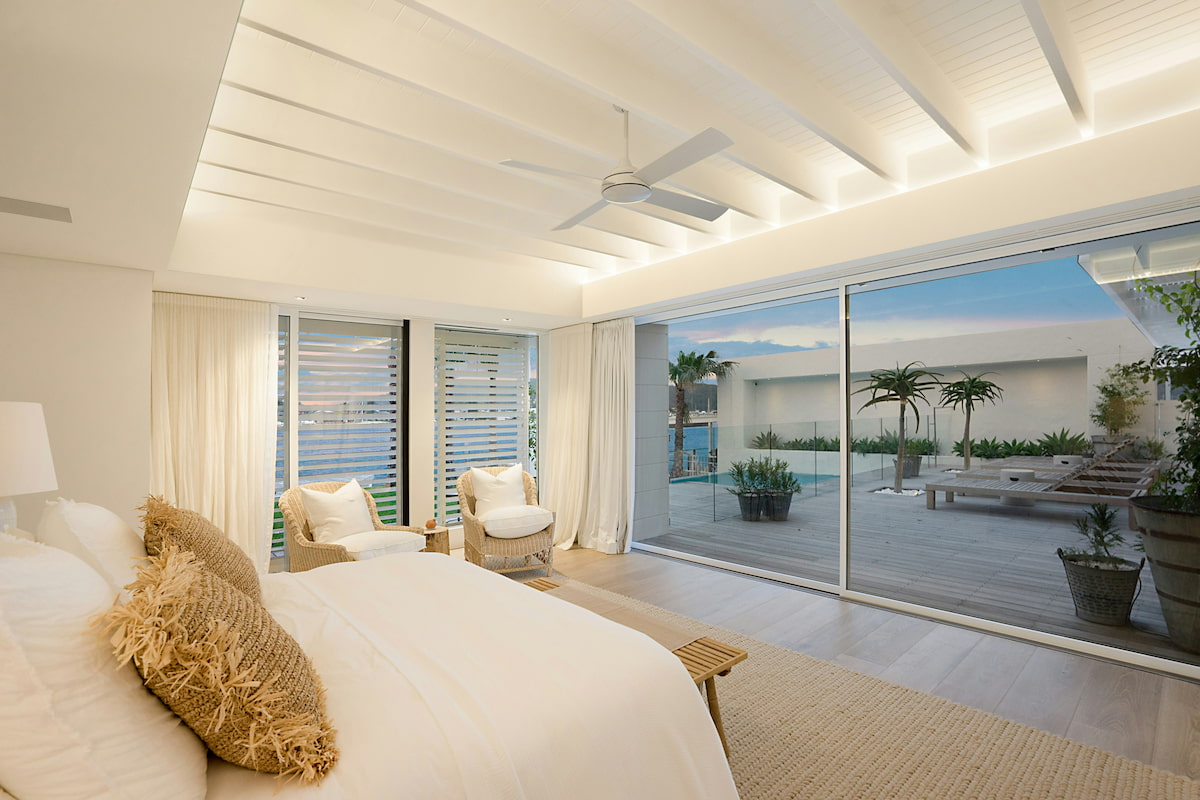
Good lighting creates layers. Softer light at lower levels, carefully positioned architectural lighting, illuminated landscaping and selected features can completely change how living spaces, terraces and pool areas are experienced in the evening. For a rental villa, this matters twice, since guests experience the property after dark, and many of the photographs they use to judge a villa are taken in the evening. A villa that looks ordinary in the evening can lose some of its impact precisely when guests are deciding whether to spend time outside, use the pool, or photograph the property. Lighting is often a relatively modest part of a renovation budget compared with structural work, yet it can have a disproportionate effect on how the finished villa actually feels.
Making the villa easier to live in
Some of the best renovation decisions are not glamorous at all. They simply make the villa work better: master switches that let guests turn off an entire room or villa zone without hunting for individual lights, timers for external lighting and equipment, convenient charging points, better luggage storage, more practical wardrobes, a proper place to dry towels and swimwear, covered parking, easy access from parking to the villa, outdoor showers near the pool, and wet rooms designed for people coming straight in from the beach.
These are the details guests may never mention in a review because they work so seamlessly and well. But when they do not work, they notice. Good design often means removing friction from everyday life.
Reducing running costs, and making sustainability visible
A renovation is also an opportunity to reduce the cost of operating the villa. Better shading, appropriate glazing and improved insulation can reduce unwanted heat gain and therefore reduce the amount of work required from the air-conditioning system. Solar power can reduce reliance on grid electricity, particularly where the villa has significant daytime energy consumption. Grey-water systems and sensible water management can reduce demand on the property’s water supply.
Bringing the appraisal together
None of these areas gets assessed in isolation, and that is really the point of starting with the commercial objective before a single room is looked at. A bedroom conversion that is cheap to build but does nothing for the type of booking the villa needs is not a good use of the budget. A modest lighting upgrade that changes how the villa feels after dark can matter more than a far more expensive finish. Judging which changes actually move the needle towards the performane metrics the owner most needs, is the gauge of a successful architectural appraisal.
For those of you doing a full build, from land purchase through to handover and beyond, you can find everything you will need in The Thailand Build Blueprint™, so sign up for early access.
If something about your own renovation or construction is keeping you up at night, whether that is a build issue, a contractor you are not sure you trust, or a structural concern you cannot get a straight answer on, book a Strategy Session with Nay to work through it directly.
Working with Nay on your build
If you are planning a build on Koh Samui, the six-step process from land viability to site supervision is set out at Architect Samui; for Phuket, start with Architect Phuket. If you are further along and want an experienced second opinion on drawings, a quote or a contractor, book a strategy session.