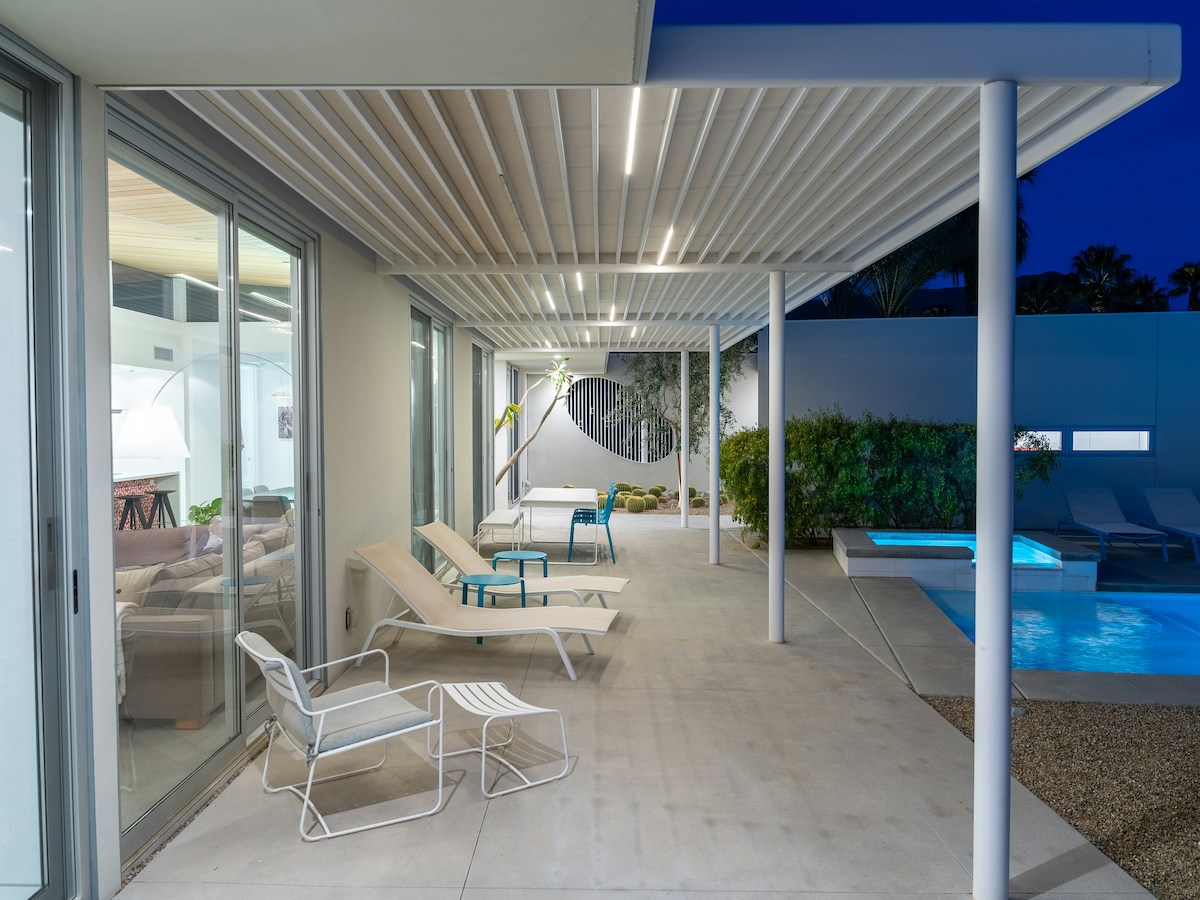
The aluminium applications that get less attention than they deserve
Two previous articles in this series cover aluminium profiles for villa framing systems and aluminium windows and doors specifically. Both focus on the glazed building envelope, the frames that carry glass across openings in walls and facades.
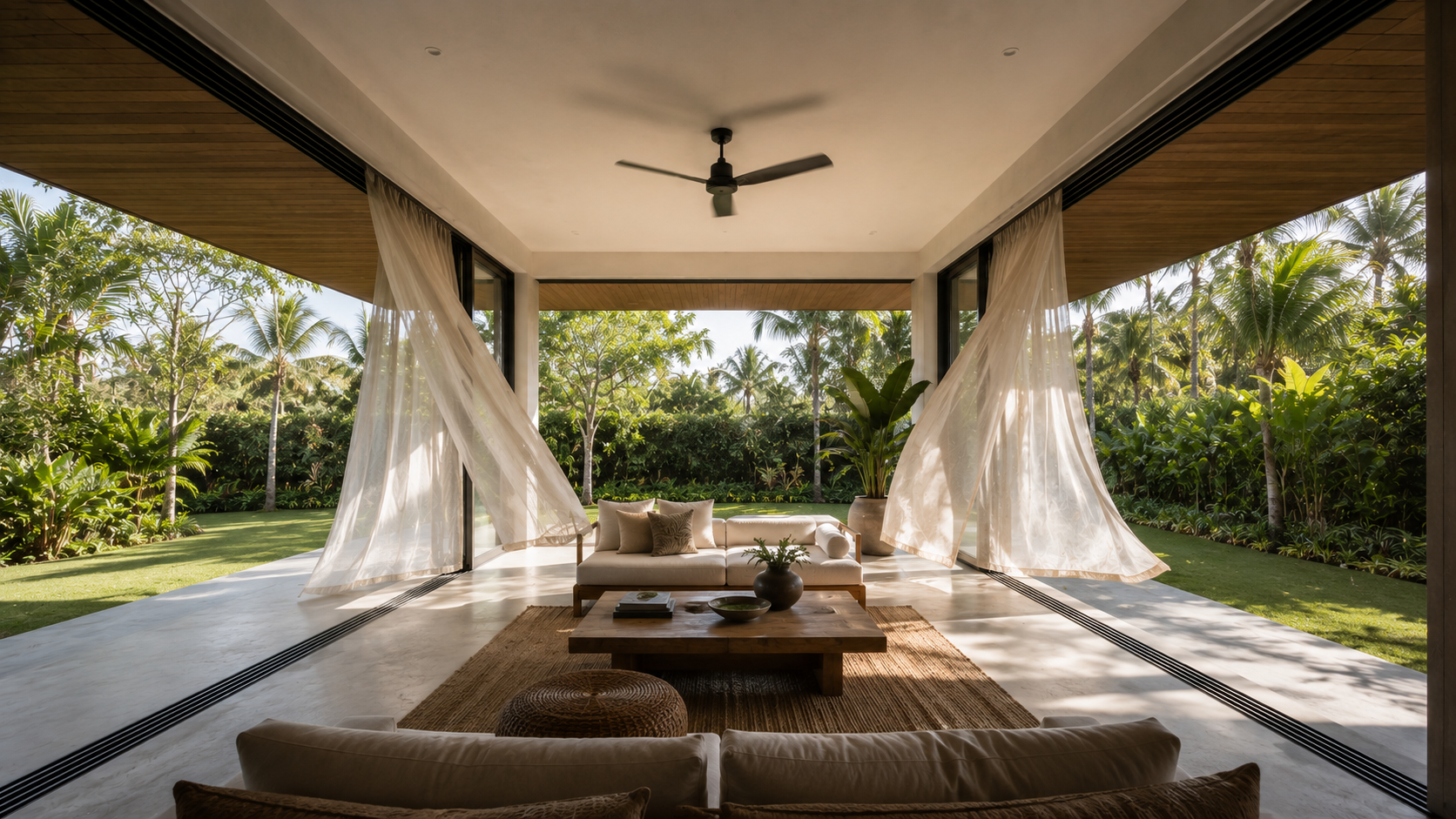
Aluminium’s application in tropical villa construction extends significantly beyond this. Pergolas, privacy screens, balcony railings, louvred shading systems, and external sun control elements are structural and architectural components where aluminium’s performance in Thailand’s coastal climate makes it the right material by a wider margin than almost any alternative.
These elements are exposed to Thailand’s climate more directly and continuously than windows and doors. They receive no protection from glass, and many have no roof shelter. The material demands are correspondingly higher, and the consequences of incorrect specification are more immediately visible.
Why aluminium suits exposed structural elements in Thailand
The comparison that defines aluminium’s case for pergolas, screens, and shading structures is not primarily with other metals. It is with timber, which is the intuitive natural alternative in tropical villa design.
Timber has exceptional aesthetic qualities in tropical architecture. For exposed structural elements such as pergola beams, screen frames, and railing posts, the maintenance demands in Thailand’s climate are significant and ongoing. UV exposure bleaches and degrades timber surfaces. Humidity cycling causes dimensional movement that opens joints and creates entry points for moisture and insects. Termite risk in most Thai locations is real and ongoing. Salt air accelerates surface deterioration in coastal positions. Maintaining exposed timber elements in good condition in Thailand requires treatment every one to two years without fail. Elements that are neglected during periods of unoccupancy, common in rental villas and seasonal homes, deteriorate rapidly and require replacement rather than maintenance when the owner returns.
Aluminium in the same positions does not rust, does not warp, does not provide sustenance for termites, and does not require periodic sealing or treatment. A correctly specified aluminium pergola with appropriate coating requires cleaning and occasional inspection rather than annual treatment cycles. Its appearance and structural integrity after ten years of Thailand’s climate are essentially unchanged from installation, provided the initial specification was correct.
This is not an argument against timber in tropical villa design. It is an argument for using timber where its aesthetic qualities justify the maintenance commitment, rather than in exposed structural positions where aluminium delivers equivalent function with dramatically lower ongoing demands.
Alloy specification
Not all aluminium performs equally. The alloy composition determines the balance of properties, including strength, formability, corrosion resistance, and surface finish quality, that make it suitable for specific applications.
The 6063 alloy is the standard specification for architectural aluminium elements in tropical villa construction. It provides excellent corrosion resistance in coastal salt air conditions and a good strength-to-weight ratio sufficient for structural pergola and screen applications without requiring heavy section sizes that increase cost and visual weight. It produces a high surface quality after extrusion, which is important for powder coating adhesion and final appearance, and offers good formability that allows complex profile shapes for louvred systems, screen panels, and decorative elements without compromising structural integrity.
For structural elements carrying significant loads, such as large span pergola beams or high-level railing systems on exposed elevated terraces, discuss alloy specification with the fabricator. Higher-strength alloys in the 6000 series may be appropriate depending on the specific load and span requirements.
Pergolas: the structural case for aluminium
A pergola in Thailand’s climate is not a decorative garden feature. It is a structural element that provides shade, defines outdoor living space, and must resist significant wind loads during monsoon weather while maintaining its appearance year-round.
Coastal Thailand experiences wind loads during storms that test pergola structures significantly. Structural design for the specific site’s wind exposure zone is not optional for permanent pergola installations. Undersized or poorly connected pergola structures fail during storms in ways that damage adjacent building fabric and create safety risks. Aluminium’s strength-to-weight ratio allows slender elegant sections to carry the required loads without the heavy visual presence that equivalent timber or steel sections would require. The result is shade structures that feel light and appropriate to the tropical architectural context rather than industrial or over-engineered.
The connections between aluminium pergola elements, including beam-to-column junctions, fixings to the building structure, and base plate connections, are where pergola failures typically originate. Specify grade 316 stainless steel fixings throughout in coastal locations. Aluminium-to-aluminium connections should use appropriate isolation materials to prevent galvanic corrosion at direct metal contact points.
Flat-top pergolas accumulate water during monsoon rainfall, both from direct rain and from drainage off any structure above them. Design positive drainage falls into all horizontal elements and ensure drainage paths are clear and connected to the building’s stormwater system. Blocked pergola drainage creates ponding that accelerates coating degradation and, if the pergola abuts the building, can cause water ingress problems at the building junction.
Louvred shading systems
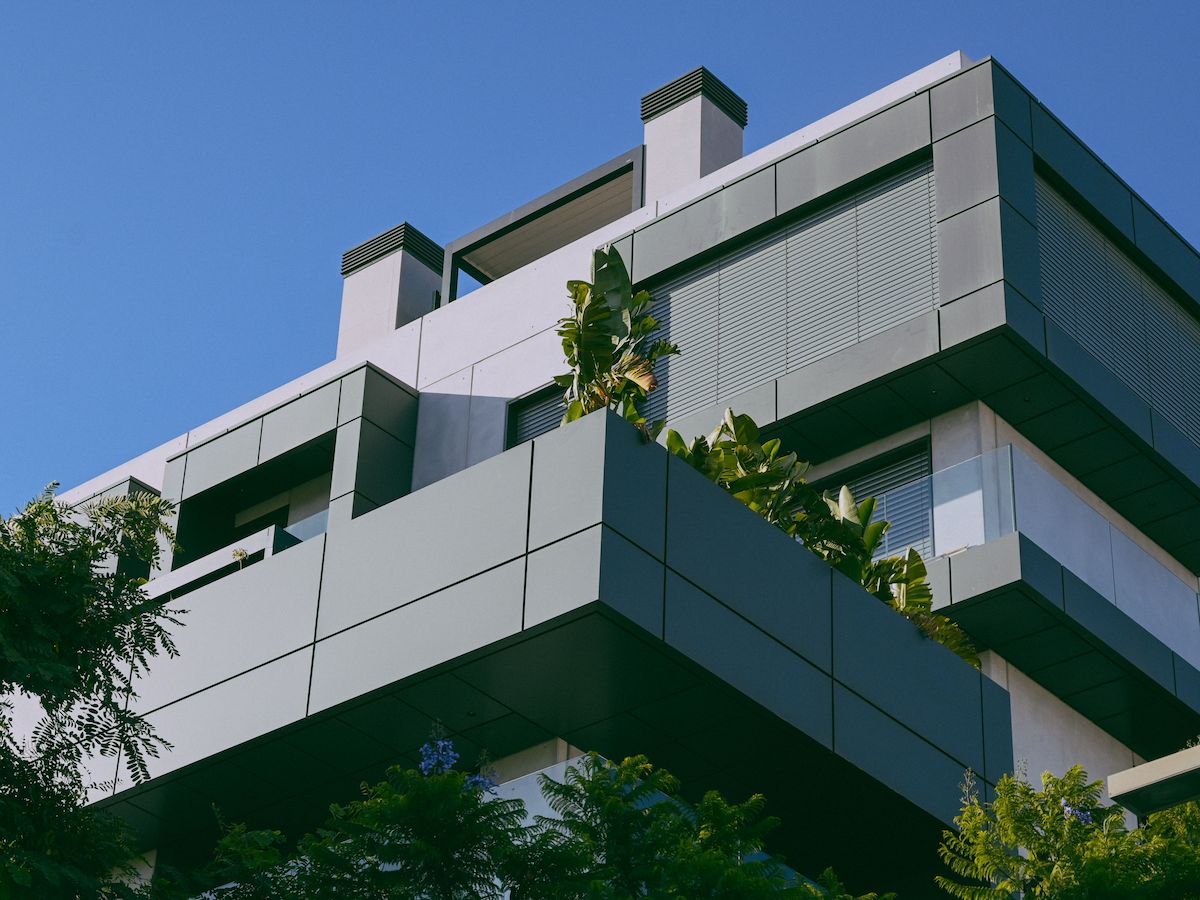
Louvred aluminium shading systems are among the most effective passive cooling interventions available in tropical villa design. Fixed or adjustable louvres that shade west and south-facing facades reduce solar heat gain through walls and glazing significantly, reducing cooling loads in a way that other shading approaches cannot match.
Fixed louvres are angled to block direct sun during the hottest parts of the day while allowing sky light through. The angle is calculated from the solar geometry of the specific location, and once installed they require no operation or adjustment. The limitation is that a fixed angle optimised for the summer sun position provides less effective shading during other seasons when the sun tracks at different angles. For west-facing facades in Thailand where afternoon sun creates the most significant heat gain, fixed louvres at 45 degrees provide effective shading during the critical afternoon period across most of the year.
Adjustable louvres, motorised or manually operated, allow the angle to be changed in response to conditions, blocking direct sun when it creates heat gain or glare, opening to allow maximum light and ventilation when solar conditions are benign. Greater flexibility than fixed systems but with moving parts that require maintenance and eventual replacement in tropical conditions. Specify motorised louvre drive mechanisms rated for outdoor tropical use because standard interior blind motors are not adequate for the humidity and temperature cycling that external louvre systems face. Salt air specification for motor and control electronics is essential in coastal locations.
For louvre profile specification, use 6063 alloy with marine-grade powder-coated finish in coastal locations. Louvre width and depth determine the shading effectiveness at different sun angles. Wider, deeper blades provide more effective shading but reduce visible light transmission. The design calculation balances these against each other for the specific facade orientation.
Privacy screens
Privacy screens in Thai villa design serve two functions: visual screening between neighbouring properties or from roads, and wind filtration in exposed positions. The material and structural requirements follow from these functions.
Aluminium perforated panels and louvred screen elements provide visual privacy while allowing airflow, which is important in positions where solid screens would create wind loading problems or reduce ventilation. The perforation pattern or louvre angle determines the balance between privacy and air movement.
Privacy screens in exposed positions can receive significant wind loads, particularly in coastal Thailand during monsoon weather. Structural adequacy for local wind conditions is a design requirement, not an aesthetic consideration. The fixing into foundations or building structure needs to be engineered for the loads rather than estimated.
Large screen installations in positions that are difficult to access, such as elevated terraces and boundary walls, should be designed with maintenance access considered from the start. Powder-coated aluminium screens require periodic cleaning to remove salt deposits and organic growth in humid conditions. Screens that cannot be reached adequately for cleaning deteriorate faster than those where cleaning is straightforward.
Balcony railings
Balcony railings in Thai villas are structural safety elements first and design features second. The specification needs to satisfy both requirements in a climate that is hard on materials.
Building regulations and basic safety standards define minimum load requirements for balcony railings, typically 1.0 to 1.5 kN per linear metre lateral force. Railing systems need to be engineered to meet these loads, not selected by appearance alone.
Specify aluminium structural posts and top rails with grade 316 stainless steel fixings throughout. For infill elements, whether glass panels, wire, or louvred inserts, specify materials with documented performance in coastal conditions. Standard wire rope corrodes in salt air, and marine-grade wire or aluminium rod infill performs better. Glass infill panels, a common contemporary choice for railings on terraces with views, require laminated safety glass, framed or clamped fixing systems rated for the wind loads on the specific terrace, and marine-grade hardware throughout.
Minimum railing height in Thailand is 1.0 metre for balconies above ground level. For elevated positions, particularly upper-floor terraces on hillside villas where the fall distance is significant, 1.1 to 1.2 metres is worth specifying for additional safety margin.
Environmental credentials
Aluminium’s environmental credentials for these applications are genuinely strong and worth understanding rather than simply asserting.
Aluminium is 100 percent recyclable without loss of material properties. It can be remelted and reused indefinitely. Many architectural aluminium products contain significant recycled content, reducing the primary production energy that would otherwise be required. The recycling infrastructure for aluminium in Thailand is more developed than for most construction materials because aluminium has scrap value that makes collection and recycling economically driven rather than dependent on regulatory pressure.
The most significant environmental advantage of aluminium for pergolas, screens, and shading structures is lifespan. An aluminium pergola correctly specified and installed in Thailand will outlast multiple replacement cycles of timber alternatives. The embodied manufacturing impact of a material that is installed once and lasts for decades compares favourably with alternatives that require replacement every ten to fifteen years.
Certified FSC timber from sustainable sources has strong environmental credentials. Uncertified tropical hardwood, which a significant proportion of timber used in Thai villa construction is, carries deforestation risk that negates the environmental case for using it. Aluminium with documented recycled content and a lifespan of decades is a more defensible environmental specification than uncertified hardwood regardless of its natural material credentials.
The bottom line
Aluminium for pergolas, privacy screens, louvred shading systems, and balcony railings in Thai tropical villa construction is the practical specification for exposed structural elements where durability, low maintenance, and design flexibility need to coexist.
The specification decisions that determine performance, namely 6063 alloy, marine-grade powder coating for coastal locations, grade 316 stainless fixings, and structural design for local wind loads, are the same principles that apply across all aluminium applications in Thailand’s coastal climate. Getting them right from the start produces elements that perform for decades with minimal intervention.
For structured guidance on every stage of a villa build in Thailand (from land purchase through to handover) see The Thailand Build Blueprint™ at thetropicalarchitect.com/the-blueprint
For guidance on materials specification or guidance on your specific project, book a strategy session with Nay at thetropicalarchitect.com/consultations
Getting this specified and checked on site
Decisions like this one are only as good as the drawings and the site supervision behind them. If you are building on Koh Samui, Nay's full service from land assessment to handover is described at our Samui practice; for Phuket, see our Phuket practice. If you already have a builder and want an independent second opinion on a specification, talk to Nay directly.