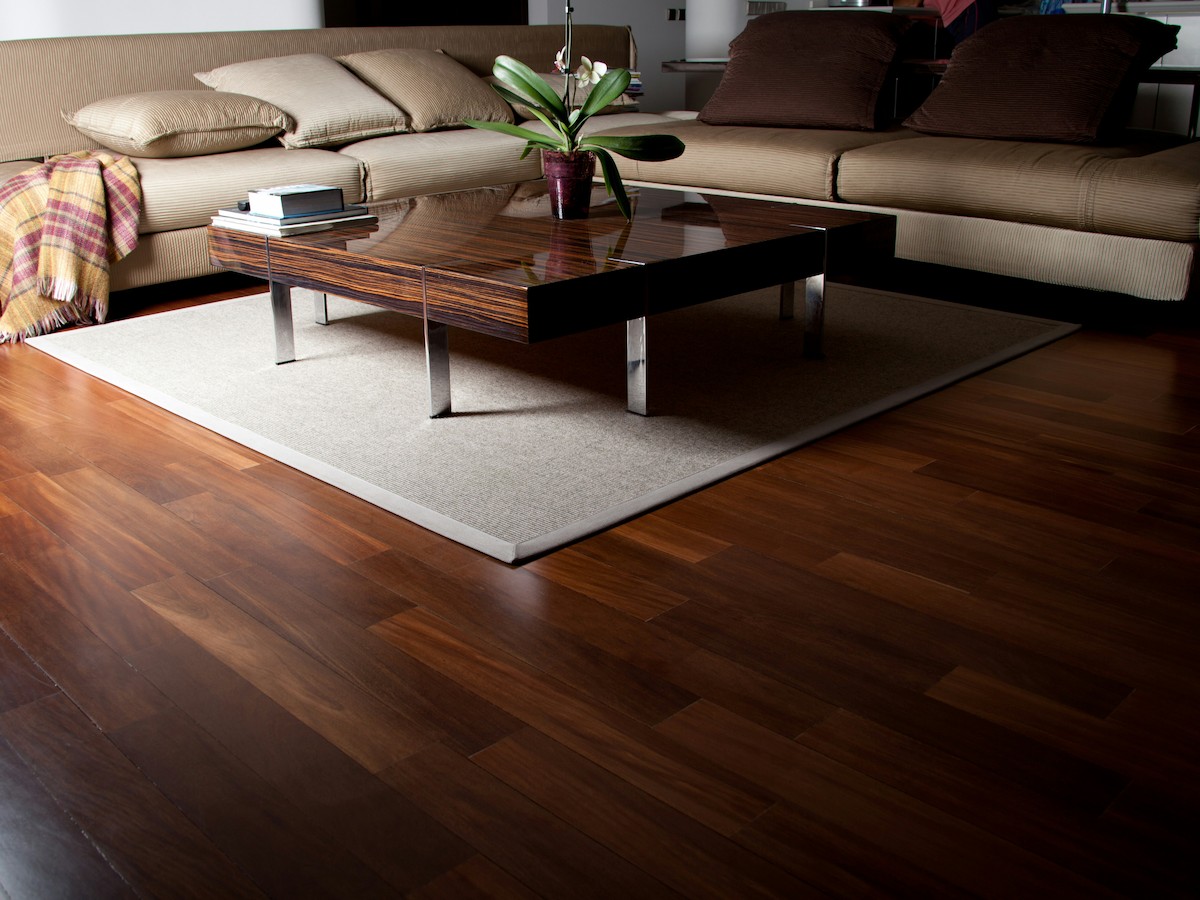
A material category that deserves more serious consideration
Premium decorative laminates occupy an awkward position in architectural conversations about tropical villa interiors. They are associated in many people’s minds with budget office furniture and low-cost kitchen cabinets, a perception that was accurate for standard laminates twenty years ago and is significantly outdated for the premium end of the current market.
Contemporary high-end laminates are a distinct material category: engineered surfaces with sophisticated finishes such as brushed metal effects, accurate timber grain textures, soft matte tones, and stone replication, applied over stable cores designed to perform in demanding conditions. The aesthetic quality of the best products is genuinely high, and their performance in tropical humidity and UV conditions addresses several of the failure modes that make natural timber veneer a difficult specification in Thai villas.
The qualification is specificity of application. Premium laminates are not a universal interior surface solution. Understanding where they perform well and where they do not is what makes the difference between a specification that adds value and one that creates problems.
What separates premium from standard laminate
The laminate market spans a wide quality range and the performance differences between the bottom and top are significant. This matters because some products marketed as premium do not meet the technical standards that genuinely high-performance laminates achieve.
The core construction is the first differentiator. Standard laminates use particleboard or MDF cores that absorb moisture in sustained humidity, swelling, delaminating at edges, and eventually losing structural integrity. Premium laminates specify moisture-resistant cores, high-density moisture-resistant MDF or HDF, that perform significantly better in sustained high-humidity conditions. The core is not visible in the finished product but determines how the panel behaves over time in Thailand’s climate.
Surface thickness is the second differentiator. Laminate surface layer thickness determines wear resistance and long-term appearance. Specify 1.2 to 1.5 millimetres surface thickness for high-touch applications including dining tables, wardrobe doors, kitchen joinery, and desk surfaces. Thinner surface layers wear through in high-use positions, exposing the core and requiring replacement of the entire panel.
UV stabilisation is the third. The surface finish must be UV-stabilised to resist the fading that Thailand’s UV intensity produces in unstabilised coatings. This should be a documented specification requirement with test data, not a general claim about outdoor or tropical suitability. The difference between adequately UV-stabilised and inadequately stabilised laminate surfaces becomes visible within two to three years in positions with significant natural light exposure.
Anti-fungal treatment is the fourth. In sustained high humidity, surfaces that are not treated against fungal growth develop mould visible as dark spotting that is difficult to remove without damaging the surface. Premium laminates with documented anti-fungal protection maintain their appearance in humid conditions where untreated alternatives do not.
Request technical data sheets from suppliers rather than relying on marketing descriptions. The data sheet shows actual test performance, moisture resistance to specific standards, UV resistance hours, and surface hardness ratings, that allow meaningful comparison between products.
Where premium laminates outperform timber veneer in Thai conditions
The comparison with timber veneer is the most practically relevant one for villa interiors. Timber veneer is the natural aesthetic alternative for joinery, cabinetry, and interior cladding, and in Thailand’s climate it faces specific challenges that premium laminates handle better.
Timber veneer over standard MDF or particleboard substrates expands and contracts with humidity cycling. The veneer checks and lifts at edges, joints open, and in severe cases panels cup or bow. In Thailand’s seasonal humidity variation this movement is significant and the visual deterioration it produces is progressive. Premium laminates over moisture-resistant cores are significantly more dimensionally stable. The engineered construction resists the seasonal humidity cycling that causes timber veneer failure modes. For joinery elements that need to remain flat, tight-jointed, and consistent in appearance over years of tropical conditions, this stability advantage is real and meaningful.
Maintenance simplicity is the second comparative advantage. Timber veneer requires periodic treatment, cleaning with appropriate products and occasional refinishing, to maintain its appearance in tropical conditions. Premium laminate surfaces require only cleaning with mild soap solution. The maintenance difference compounds over the life of the installation, particularly relevant for rental villas or seasonally occupied properties where maintenance consistency cannot be guaranteed.
Mould resistance is the third. Timber veneer in humid enclosed spaces such as wardrobes, storage units, and interior wall panels can develop mould in sustained high humidity. Anti-fungal treated laminate surfaces resist this. In the enclosed and potentially stagnant-air spaces of wardrobes and cabinets in a tropical villa, this is a practical advantage rather than a theoretical one.
The applications where premium laminates perform best
Feature wardrobes and built-in storage are the strongest application for premium laminate. The enclosed and potentially humid interior of wardrobes makes laminate the correct specification for both the external carcass and internal surfaces. Dimensional stability, mould resistance, and maintenance simplicity all work in its favour. The aesthetic range available, from timber grain effects to matte contemporary finishes, is wide enough to suit most villa interior palettes.
Dining tables and coffee tables are high-use surfaces that receive daily cleaning, UV exposure in naturally lit spaces, and significant wear from use. Premium laminate at 1.2 to 1.5 millimetres surface thickness handles these demands well. The surface can be wiped clean without the careful product selection that timber and stone surfaces require, which matters in a villa context where cleaning is often done by household staff.
Interior wall cladding and feature panels are appropriate for laminate where the design intention is a consistent, maintenance-simple surface that can replicate stone, timber, or concrete effects with reasonable visual accuracy at normal viewing distances. For large panel installations, moisture-resistant fixing and edge sealing matter more than at smaller scales. Laminate panels that are inadequately fixed or have unsealed edges in humid conditions develop edge swelling that is visible and difficult to remediate without panel replacement.
Headboards and bedroom joinery suit laminate where the combination of aesthetic quality and humidity resistance is relevant. Air-conditioned bedrooms with closed door operation create persistent humidity differentials that affect timber veneer but are handled well by correctly specified laminate.
Laminate-faced interior doors provide consistent appearance, dimensional stability, and low maintenance. For villas where timber doors are prone to swelling and sticking in humidity, a common complaint in Thai villa construction, laminate-faced doors over moisture-resistant cores solve the problem directly.
Where premium laminates are not the right specification
Wet zones and direct water contact are the clearest exclusion. Most premium laminates are not rated for water immersion or direct sustained water contact. Inside showers, around sinks where water regularly splashes the surface, and in any position where the laminate edge is in direct contact with water, laminate fails regardless of the quality of the surface specification. The core absorbs water at exposed edges and the surface delaminates from below. For wet zone wall surfaces, large-format porcelain tile, stone, or specifically waterproofed composite panels are the correct specifications. Premium laminate stops at the boundary of the wet zone.
Outdoor and semi-outdoor positions are the second exclusion. Direct sun and rain exposure degrades laminate surfaces faster than interior conditions regardless of UV stabilisation. Covered outdoor areas with significant direct sun penetration also exceed what interior-grade laminate UV stabilisation is designed for. Outdoor and semi-outdoor applications require materials specifically designed for exterior use.
High-heat positions are the third. Laminate surfaces near direct heat sources, behind cooking hobs, near fireplaces, or in enclosed spaces that reach high temperatures, can delaminate and discolour. These positions require heat-resistant specification, with stone or stainless steel as the appropriate materials.
Feature areas where material authenticity matters are the final exclusion. Premium laminates replicate natural materials convincingly at normal viewing distances. They do not fully replicate the depth, tactile quality, and natural variation of real timber or stone. For feature areas in high-specification villa interiors where material authenticity is a significant design objective, such as entrance feature walls and prominent built-in furniture in principal entertaining spaces, genuine natural materials deliver a quality that laminate cannot match at close inspection.
Installation requirements
Premium laminate panels must be bonded to flat, dry, moisture-resistant substrates. Standard MDF or particleboard substrates negate the moisture resistance of the laminate surface because moisture reaches the substrate at edges and fixings and causes swelling that lifts the surface from below. Moisture-resistant MDF or HDF substrate is the correct specification throughout, not just for the laminate layer.
Use contact adhesives formulated for humid tropical conditions. Standard contact adhesives can soften in sustained heat and lose bond strength, causing the laminate to lift from the substrate and create edge peeling that is visible and difficult to repair without panel replacement.
All cut edges must be sealed with matching edge banding or sealant before installation. Unsealed edges in humid conditions allow moisture ingress into the core regardless of how moisture-resistant the core specification is. This is one of the most common installation failures with premium laminates and one of the most straightforward to prevent.
Premium laminates suit off-site fabrication well. Panels can be cut, edged, and assembled in controlled workshop conditions and delivered to site ready for installation. This reduces on-site dust, noise, and the risk of installation quality problems that arise from working in unfavourable conditions. For renovation projects or occupied villas where construction disruption needs to be minimised, off-site fabrication is a meaningful practical advantage.
The bottom line
Premium decorative laminates are a genuinely capable interior material for Thai tropical villa applications. They are not a budget substitute for natural materials but a distinct specification choice with specific performance advantages in the conditions where they are well-suited.
Dimensional stability in humidity, maintenance simplicity, mould resistance with appropriate specification, and a wide aesthetic range make them the right choice for built-in joinery, cabinetry, and interior wall panels in most villa applications. The limitations, wet zones, outdoor positions, and feature areas where material authenticity matters at close inspection, define where they are not the right choice, and those boundaries are clear.
Specify correctly, with moisture-resistant cores, adequate surface thickness, documented UV stabilisation, and edge sealing throughout, and premium laminates deliver consistent, attractive, low-maintenance performance in Thailand’s tropical climate for the long term.
For structured guidance on every stage of a villa build in Thailand (from land purchase through to handover) see The Thailand Build Blueprint™ at thetropicalarchitect.com/the-blueprint
For guidance on specification or anything for your specific project, book a strategy session with Nay at thetropicalarchitect.com/consultations
Getting this specified and checked on site
Decisions like this one are only as good as the drawings and the site supervision behind them. If you are building on Koh Samui, Nay's full service from land assessment to handover is described at Architect Samui; for Phuket, see Architect Phuket. If you already have a builder and want an independent second opinion on a specification, book a strategy session.