Not a cleaning problem
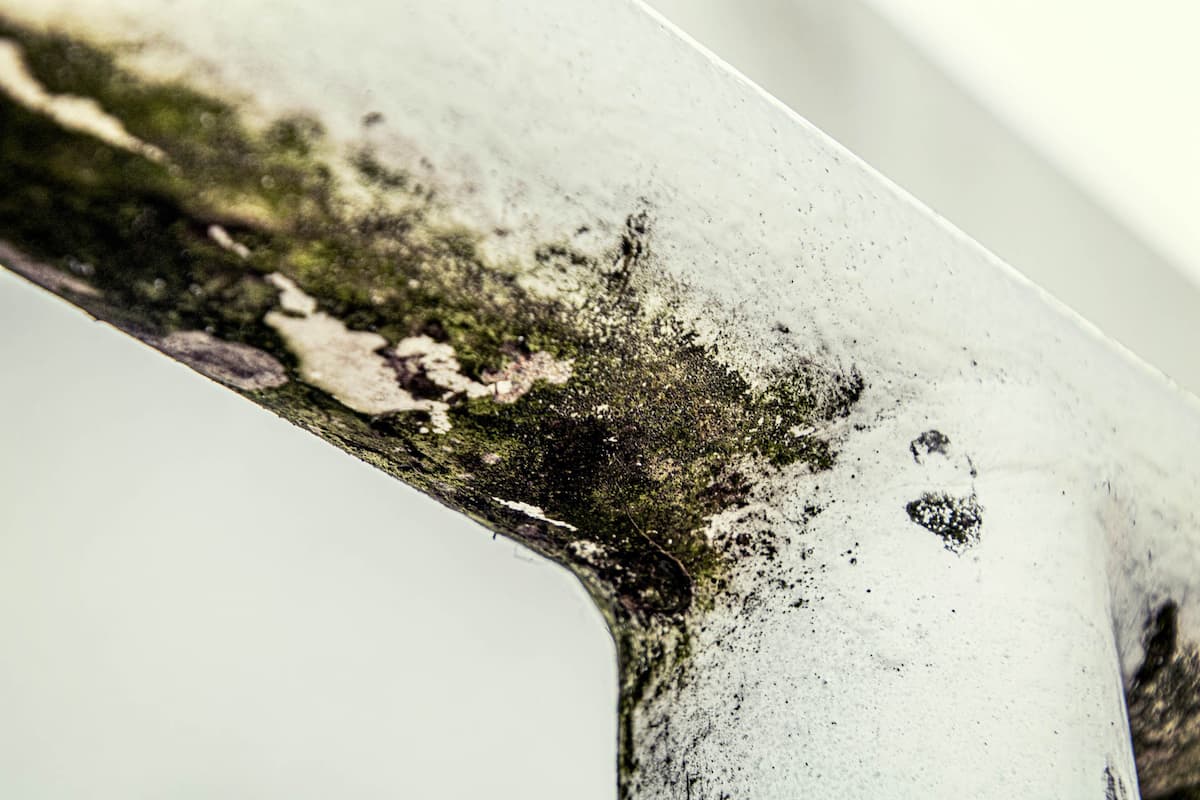
Mould in a Thai villa is the visible symptom of conditions that the building is creating continuously. Cleaning removes the symptom. It does not change the conditions. A villa where mould is cleaned regularly and returns within weeks has a design, specification, or management problem that cleaning cannot resolve, and the mould will continue to return, in the same locations, for as long as those conditions persist.
Understanding why mould forms in Thailand’s climate, and where condensation creates the moisture that drives it, is the only basis for preventing it reliably rather than managing it continuously. The causes are specific, the failure modes are consistent across Thailand’s villa construction market, and the majority of them are addressable at the design and specification stage, or, for existing properties, through targeted remediation that addresses the cause rather than the symptom.
Why Thailand’s climate creates specific mould conditions
Mould thrives on three elements: a surface, a food source, and moisture. While Thailand’s climate virtually guarantees the presence of moisture, the outcome depends on the building. The design must either prevent sustained surface moisture or actively manage it to stop mould from establishing itself.
Relative humidity in Thailand remains above seventy percent for most of the year and above eighty percent during the wet season. At these ambient levels, any surface that is cooled below the dew point temperature (the temperature at which air at a given humidity deposits moisture) will accumulate condensation. The dew point at eighty percent relative humidity and thirty degrees Celsius ambient is approximately twenty-six degrees Celsius. Any surface held below this temperature by air conditioning, cold water pipes, or thermal bridging through the building envelope will be wet, and wet surfaces in Thailand’s ambient temperatures grow mould.
This is the mechanism that produces the condensation mould patterns specific to air-conditioned buildings in tropical climates: cold spots on walls adjacent to air conditioning units, condensation on cold water supply pipes that are not insulated, mould at the junction between air-conditioned rooms and unair-conditioned spaces where temperature differentials are greatest, and mould on surfaces in enclosed spaces like wardrobes, storage rooms and ceiling voids, where air circulation is insufficient to prevent localised humidity from rising above ambient levels.
The cold pipe mistake
Uninsulated cold water supply pipes running through walls, floors, and ceiling voids in air-conditioned spaces are among the most consistent sources of condensation-related mould in Thai villas, and among the least considered at the design stage.
A cold water supply pipe running through an air-conditioned room operates at ten to twenty degrees Celsius. The ambient dew point in that room, even with air conditioning running, is typically above the pipe surface temperature. Moisture condenses on the pipe surface continuously during operation, drips or tracks along the pipe run, and saturates the building material surrounding the pipe. The surrounding material stays wet. Mould establishes in the wet material, which may be inside a wall cavity or above a ceiling where it is invisible until the staining penetrates through to a visible surface.
Insulating all cold water supply pipes with closed-cell foam insulation (specified to the thickness required to prevent the pipe surface from falling below the ambient dew point) eliminates this condensation source entirely. The insulation must be installed continuously, with correctly sealed joints at fittings and valves, because any gap in the insulation creates a cold spot that condenses moisture regardless of how well the rest of the pipe run is insulated.
The air conditioning drainage mistake
Air conditioning units produce condensate that must be drained away from the unit continuously during operation. The condensate drain is a component that receives almost no attention during installation and creates significant mould problems when it fails.
Condensate drains that are blocked, incorrectly pitched, or inadequately sized for the unit’s condensate production rate overflow. The water that overflows accumulates behind ceiling linings, saturates insulation above the unit, and tracks along structural elements, creating the sustained moisture that mould requires in locations that are difficult to inspect and even more difficult to remediate without opening the ceiling.
Each air conditioning unit requires a condensate drain line that is correctly pitched to drain under gravity without relying on the unit’s internal drain pan to hold water before it overflows. The drain must discharge to a location where the water does not contact the building structure, so not into a ceiling void, nor onto a flat roof section that ponds. The drain lines require periodic flushing to clear any algae and fungal material that accumulates in the pipe and blocks the drain, typically every six months in a regularly used villa and more frequently in a rental property with continuous occupancy.
The enclosed space mistake
Wardrobes, storage rooms, under-stair spaces, and ceiling voids in Thai villas create enclosed volumes where air circulation is insufficient to prevent localised humidity from rising significantly above ambient levels. At elevated localised humidity, mould establishes on stored clothing, on the interior surfaces of the enclosure, and on any organic material present, particularly timber shelving, cardboard storage boxes and leather goods.
The design response is ventilation of enclosed spaces. Wardrobe interiors that have louvred doors or ventilation gaps that allow air movement between the wardrobe interior and the room maintain humidity close to ambient levels. Enclosed storage rooms with passive ventilation to an exterior or to a ventilated ceiling space do the same. Ceiling voids that are ventilated as part of the roof ventilation strategy described in the roof underlayment article in this series do not accumulate the stagnant humid air that produces mould on ceiling structure and insulation.
The management response for existing enclosed spaces without adequate ventilation is a small continuously running fan that exchanges air between the enclosed space and the adjacent room or exterior. This is a remediation measure rather than a design solution as a correctly ventilated enclosure does not require powered ventilation to prevent mould. But in an existing villa where the design cannot be changed, it is the intervention that actually works, as distinct from silica gel sachets and dehumidifier blocks that manage small volumes of moisture and are quickly overwhelmed by the humidity that Thailand’s climate continuously supplies.
The thermal bridge mistake
A thermal bridge is a point in the building envelope where a material of higher thermal conductivity creates a path for heat to bypass the insulation layer. In a tropical climate with air conditioned interiors, thermal bridges cool the interior-facing surface of the envelope at the bridge location. If that surface falls below the dew point of the interior air, it condenses moisture and grows mould.
In Thai villa construction, common thermal bridges include concrete columns and beams that lack a thermal break. Other examples include uninsulated concrete lintels above windows and doors, along with metal fixings that penetrate insulated panels.
The resulting mould pattern is diagnostic. When mould appears specifically along structural lines, such as columns or window perimeters, it indicates a thermal bridging issue. This specific placement distinguishes the problem from a more general failure in humidity control or ventilation.
Addressing thermal bridges in new construction requires identifying every structural element that connects exterior to interior through the insulated envelope and either insulating it in continuity with the envelope insulation or replacing the thermally conductive element with a thermally broken alternative. In existing construction where the thermal bridges are already built in, insulating the interior surface of the affected wall section to bring the cold surface inside the insulation layer is the available remediation, which adds interior insulation board and reduces the room dimension slightly, but eliminates the cold surface and the condensation it was producing.
The management mistake that compounds all the others
Even a correctly designed and specified villa can develop mould problems under management practices that create the conditions mould requires. The most common management-related mould causes in Thai villas are specific and correctable.
Leaving air conditioning running at low set points in unoccupied rooms creates a large temperature differential between the cooled room and adjacent unair-conditioned spaces and corridors. The wall surfaces at this boundary cool toward the set point temperature on the air-conditioned side and experience condensation from the warm humid air on the unair-conditioned side. Turning air conditioning off rather than leaving it running at low temperature in unoccupied rooms eliminates this condensation source.
Wet towels and laundry dried indoors in air-conditioned rooms add significant moisture load to the interior air that the air conditioning removes at energy cost while also creating localised high-humidity conditions around the drying items. Providing outdoor or ventilated covered drying space, and communicating its availability to rental guests, reduces this moisture load without requiring guest compliance with complex instructions.
Failing to clean air conditioning filters at the intervals the unit requires reduces airflow across the evaporator coil, reduces the unit’s cooling and dehumidification performance, and creates conditions in which the coil itself grows biological material that the unit then distributes into the room air. Filter cleaning every two to four weeks during regular use is not excessive in Thailand’s dust and humidity conditions.
The bottom line
Mould in a Thai villa appears at specific locations for specific reasons. Cold pipe condensation, air conditioning drainage failure, enclosed space humidity accumulation, thermal bridging at structural elements, and management practices that create sustained moisture conditions each produce identifiable mould patterns that point back to their cause.
Addressing the cause eliminates the mould. Addressing only the symptom ensures it returns. The design and specification decisions that prevent mould are made before construction. The management decisions that prevent it are made every week the villa is in operation. Both matter, and neither substitutes for the other.
For structured guidance on every stage of a villa build in Thailand — from land purchase through to handover — see The Thailand Build Blueprint™ at thetropicalarchitect.com/the-blueprint
For guidance on your specific project, book a strategy session with Architect Nay at thetropicalarchitect.com/consultations