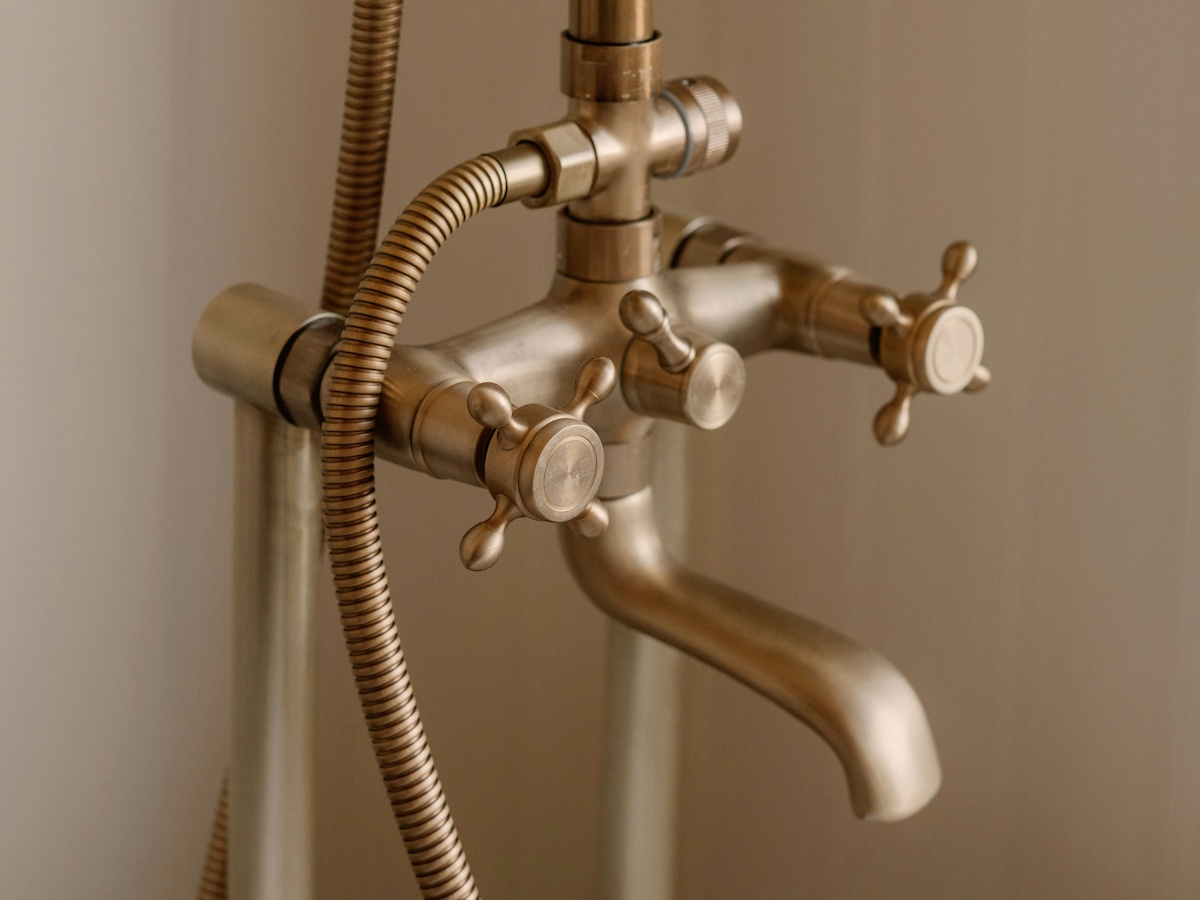
Why brass earns its place in tropical villa bathrooms
Brass has been used in high-quality interiors for centuries, and its appeal in tropical villa bathrooms is straightforward. The warm golden tones complement everything from traditional to contemporary design, and as an alloy of copper and zinc it offers genuine durability and natural corrosion resistance in humid conditions.
In Thailand’s coastal tropical environment, brass performs well under regular moisture exposure compared to many alternative materials. It is commonly specified for taps, showerheads, handles, accessories, and the concealed mixer bodies that determine whether a bathroom installation performs for decades or develops leaks within years. When specified consistently across a bathroom it creates a cohesion that cheaper materials struggle to replicate.
The decision worth examining more carefully is what kind of brass, because the brass category covers a wide quality range and the cheaper end fails in coastal tropical conditions in ways that the premium end does not.
The alloy composition that determines performance
Brass is copper and zinc, but the proportions and the addition of trace elements significantly affect how the material performs in tropical conditions.
Premium bathroom brass typically uses approximately 60 to 65 percent copper with the balance zinc, often with small additions of tin, aluminium, or silicon to improve corrosion resistance and machinability. This composition produces the warm golden colour that brass is specified for and the corrosion resistance that justifies the specification. Lower-grade brass with higher zinc content (above 40 percent) is more susceptible to a corrosion mechanism called dezincification, where zinc is selectively leached from the alloy in contact with water, leaving a porous copper structure that eventually fails structurally. Dezincification is particularly likely in water with high chloride content, which describes most coastal Thai water supplies whether municipal or well-sourced.
Specify dezincification-resistant brass for any fitting that will be in sustained contact with water, particularly concealed mixer bodies, valve mechanisms, and internal pipework components. The specification standard to ask for is BS EN 12164 grade CW602N or equivalent, which is brass formulated specifically to resist dezincification. The price difference between standard brass and dezincification-resistant brass is modest. The performance difference in Thai coastal water conditions is significant.
Plated zinc alloy fittings sold as brass-look hardware are a different material entirely and do not deliver brass performance regardless of how similar they appear at purchase. The weight difference is the simplest diagnostic: solid brass is substantially heavier than plated zinc alloy of equivalent dimensions. If a fitting feels lightweight in the hand, it is not solid brass regardless of how it is described or what colour the surface shows.
Surface finishes and what they do
Brass surface finish is part aesthetic decision and part performance decision. The finish affects how the brass appears initially, how it behaves over time, and how much maintenance it requires in tropical conditions.
Polished brass is the traditional finish: a bright reflective surface that shows the warm golden colour at maximum intensity. It is also the finish that requires the most active maintenance in tropical conditions, because the polished surface tarnishes visibly when exposed to humidity, salt air, and water spotting. Without protective coating, polished brass develops surface darkening within weeks in Thai coastal conditions. With protective coating, the polished appearance can be maintained but the coating itself eventually requires renewal.
Brushed brass is a satin or matt finish achieved by mechanical brushing of the surface. It hides water spots and surface marks better than polished brass and develops a softer natural patina over time. For most contemporary tropical villa applications, brushed brass is the more practical specification because the maintenance demand is meaningfully lower without significant aesthetic compromise.
PVD coated brass uses physical vapour deposition to apply a hard surface coating in colours including matte black, gunmetal, brushed gold, and rose gold. PVD coatings are significantly more durable than traditional lacquer or electroplating, and provide consistent appearance over the life of the fitting in tropical conditions. The PVD coating is the differentiator between fittings that maintain their appearance and fittings that require ongoing maintenance to keep them looking acceptable. For premium specifications in coastal tropical villas, PVD coated brass on a dezincification-resistant brass substrate is the combination that delivers both aesthetic intent and long-term performance.
Unlacquered brass is supplied without protective coating and is intended to patina naturally. This is a legitimate specification choice in interiors where the developed patina is the design intention, but it requires committing to the appearance evolution rather than fighting it. Some villa owners specify unlacquered brass and then attempt to maintain a polished appearance, which is a maintenance-intensive approach. The right approach is to choose the finish that matches the desired appearance trajectory and specify accordingly.
The patina question
One of the defining characteristics of brass is that it changes over time. The chemistry of patina formation matters because it determines what kind of patina develops and how stable it is.
In dry environments, brass develops a brown to dark brown patina through gradual surface oxidation. In coastal tropical conditions, the salt air contributes chloride to the surface chemistry, which can produce a greener patina component (verdigris) on copper-rich alloys. The patina that develops on brass in coastal Bangkok or coastal Phuket differs from the patina that develops on the same brass in mountainous Chiang Mai or in temperate climates.
For owners who want the patina, this evolution is a feature. For owners who want to maintain a polished or original appearance, the patina is a maintenance problem. The decision matters because it directly affects specification, finish selection, and the maintenance regime the property requires. Decide which approach suits the property before specifying brass, and make sure the installer understands which finish is intended and how to achieve it.
Maintenance in Thailand’s tropical climate
Thailand’s combination of high humidity, salty coastal air, and frequent water contact is genuinely demanding on bathroom fittings. Without proper care, brass tarnishes, develops water spots, and loses its lustre, sometimes quickly in conditions close to the sea.
Keeping brass fittings in good condition requires regular cleaning with gentle, non-abrasive cleaners suitable for brass. Avoid harsh chemicals including bleach, ammonia-based products, and acidic cleaners, which strip protective coatings and accelerate tarnishing. For polished and unlacquered brass, periodic application of microcrystalline wax or specialised brass protective coating maintains the surface and slows tarnishing. Wipe fittings dry after use to prevent water staining, which is the single most effective routine maintenance measure for any brass installation.
None of this is complicated, but it needs to be done consistently. Brass that is neglected in a tropical environment deteriorates noticeably. Brass that is well maintained stays beautiful for decades.
Professional installation also matters more than is generally communicated to clients. Poorly fitted brass fittings allow water to sit in joints and crevices, accelerating tarnishing externally and corrosion internally. Sealed installation with appropriate plumber’s putty, PTFE tape, and silicone where required prevents water ingress into the fitting body and the wall behind it. Installation quality affects brass longevity as much as material specification does.
How brass compares to alternatives
Stainless steel offers very high durability, low maintenance, and a modern aesthetic. It is the practical choice for anyone who wants good-looking fittings without ongoing upkeep, and it performs excellently in tropical conditions. Specify grade 316 marine-grade stainless for coastal locations, because grade 304 develops surface rust spots in salt air within a few years.
Chrome-plated fittings are bright and reflective with moderate durability and low to moderate maintenance. They are popular but prone to water spots in humid conditions and require regular wiping to stay looking clean. The chrome plating itself eventually fails in coastal tropical conditions, particularly where the underlying base metal is zinc alloy rather than brass. Chrome over solid brass performs better than chrome over zinc, but the surface still requires more attention than brushed brass or PVD finishes.
Plastic fittings offer low durability and low cost. They are suitable for utility areas or temporary installations but not appropriate for a villa bathroom where longevity and aesthetics matter.
Brass offers high durability, moderate maintenance, and a warm timeless aesthetic. It is the right choice when design quality is a priority and the owner is committed to the maintenance regime that brass requires. It is not the right choice for a rental villa where maintenance consistency cannot be guaranteed, unless the specification is brushed or PVD-coated brass which forgives inconsistent maintenance better than polished or unlacquered alternatives.
The specification questions worth asking before ordering
Before committing to brass for a villa bathroom, the specification questions that matter most are the ones that determine performance rather than appearance.
Ask whether the brass is dezincification-resistant grade for any fitting with internal water contact. Ask what the brass content actually is, because some products described as brass contain significant zinc proportions that compromise corrosion resistance. Ask whether the surface finish is PVD coating, traditional lacquer, electroplating, or unlacquered brass, and confirm the maintenance requirements for the chosen finish. Ask about the internal valve mechanism specification, because a brass-bodied tap with cheap plastic or zinc alloy internal components fails internally while looking acceptable externally. Ask the supplier for documentation that confirms the alloy specification and finish, rather than accepting verbal assurance.
These questions identify the meaningful quality differences between products that look similar at purchase and behave very differently after five years of tropical service.
The bottom line
Brass is a considered specification rather than a default one. It rewards owners who value craftsmanship and are prepared to maintain it, and it punishes specifications that prioritise appearance over alloy composition, finish quality, and installation standards. In a well-designed tropical villa where the bathroom is a genuine feature of the property, correctly specified brass delivers a quality of detail that alternatives cannot match.
In a rental property, or anywhere that long-term maintenance cannot be relied upon, brushed or PVD-coated brass delivers better practical results than polished alternatives, and grade 316 stainless steel remains the most forgiving specification for inconsistent maintenance regimes.
The honest answer is that both brass and stainless can look excellent in a tropical villa. The decision comes down to the alloy and finish chosen, the installation quality delivered, and the maintenance commitment the property can realistically sustain.
For structured guidance on every stage of a villa build in Thailand (from land purchase through to handover) see The Thailand Build Blueprint™ at thetropicalarchitect.com/the-blueprint
For guidance on anything that is concerning you about your design or construction, book a strategic session at thetropicalarchitect.com/consultations
Getting this specified and checked on site
Decisions like this one are only as good as the drawings and the site supervision behind them. If you are building on Koh Samui, Nay's full service from land assessment to handover is described at Architect Samui; for Phuket, see Architect Phuket. If you already have a builder and want an independent second opinion on a specification, book a strategy session.