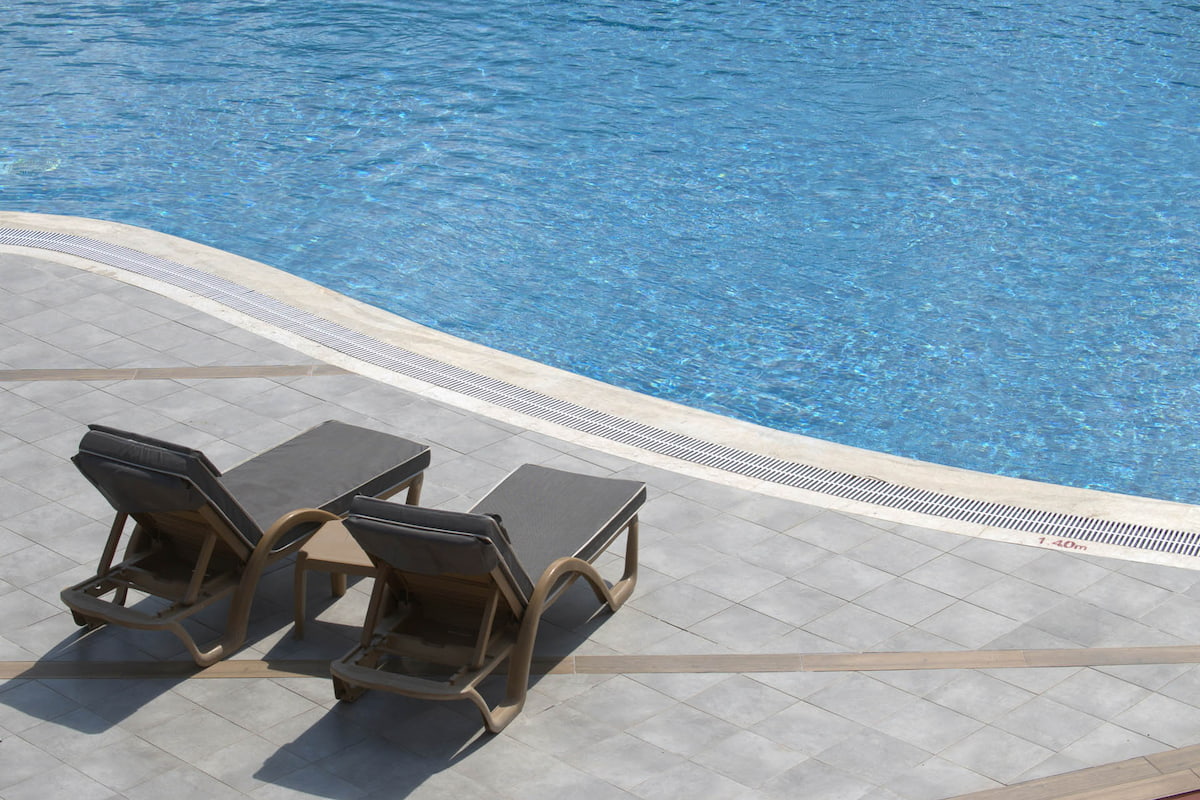
The surface that gets more use than any other
The pool deck is the most used outdoor surface in a Thai villa. Guests and owners walk across it barefoot, wet, in full sun, repeatedly. It is exposed to pool chemicals through splash and drainage, to monsoon rainfall, to sustained UV radiation, and to the barefoot temperature test. A pool deck material that fails any of these tests creates a problem that is visible, uncomfortable, and in the case of slip resistance, a genuine safety issue in a rental property.
The choice between tiled and concrete pool deck surfaces is not simply aesthetic. Each has distinct performance characteristics in Thailand’s conditions, distinct failure modes, and distinct implications for ongoing maintenance. Understanding those characteristics before the specification is made avoids the regret that follows getting it wrong.
Barefoot temperature: the test most specifications ignore
Surface temperature under Thailand’s direct sun is the performance characteristic that most pool deck specifications fail to account for adequately. A material that is comfortable underfoot in morning shade becomes genuinely painful to walk across barefoot at two in the afternoon in full sun.
Surface temperature is determined primarily by the material’s thermal mass, surface colour, and solar reflectance. Dark, dense materials absorb and retain heat. Light, reflective materials absorb less and remain cooler. The practical difference between a light-coloured porcelain tile and a dark granite or dark concrete surface in Thailand’s direct afternoon sun can be fifteen to twenty degrees Celsius at the surface and the difference between uncomfortable and painful.
Timber decking, by contrast, stays significantly cooler than stone or concrete under the same solar exposure because timber is a poor thermal conductor. Heat absorbed at the surface does not transfer efficiently into the body of the material and does not store. A teak deck in full afternoon sun in Thailand is typically walkable barefoot; a dark granite deck in the same conditions is not.
Specifying pool deck surfaces without considering the barefoot temperature of the chosen material in Thailand’s solar conditions produces a deck that is used less than the design assumed, particularly in the afternoon hours when pool use is highest.
Tiles: performance, specification, and failure modes
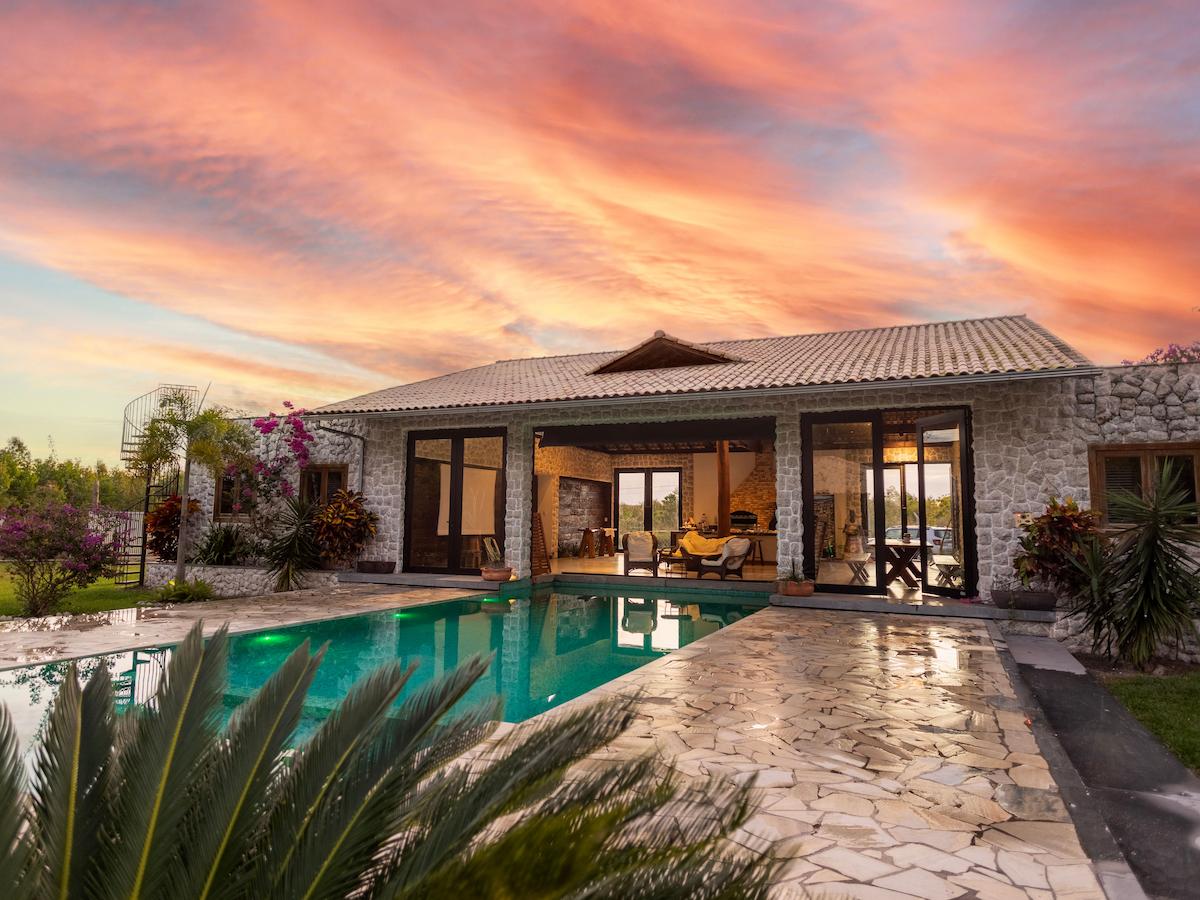
Porcelain tiles remain the most specified pool deck surface in Thai villa construction for reasons that are primarily about durability and design flexibility. Large-format rectified porcelain provides a clean, contemporary appearance, is available in formats that achieve adequate anti-slip ratings (a minimum R11 as covered in the pool surround tiling article in this series), and performs well against pool chemical contact and UV exposure when correctly specified.
The failure modes for tiled pool decks in Thailand are almost always installation failures rather than material failures. Tile adhesive inadequate for thermal cycling debonds progressively. Substrate movement from expansive soils or inadequate curing cracks the tile or the adhesive bond beneath it. Grouting with standard cement grout rather than epoxy grout in a chemically aggressive pool environment leads to staining, cracking, and biological growth in the joints within a few years.
The installation requirements are identical to those described for pool surrounds: flexible polymer-modified adhesive rated for wet and immersion applications, a waterproof membrane beneath the adhesive layer, and epoxy grout throughout. Movement joints at regular intervals across a large pool deck area (typically every four to five metres and at all changes of direction) accommodate the thermal expansion and contraction that Thailand’s temperature cycling imposes on a rigid tile installation. A tiled pool deck without movement joints will crack. The only question is where and when.
Large format tiles present a specific challenge on pool decks that slope for drainage. Achieving consistent drainage falls while maintaining flat tile surfaces across large formats requires precise substrate preparation. A large tile bridging a high and low point in an inadequately prepared substrate will rock underfoot and eventually crack at the point of maximum flex. Substrate preparation for large format tiled pool decks is more demanding than for smaller formats, and the consequence of inadequate preparation is more visible and more expensive to correct.
Concrete: options, performance, and what goes wrong
Concrete pool decks are less common in higher-specification Thai villa projects but remain widely used in mid-range construction, and when correctly finished and sealed they offer genuine advantages with no joints to grout, no tiles to debond, and design continuity across complex pool deck geometries that tiling handles less cleanly.
Plain brushed concrete is the entry-level finish and the one with the most variable performance. Concrete mix specification, curing conditions, and surface treatment all affect the final performance significantly. Concrete that is inadequately cured in Thailand’s heat dries too rapidly, develops surface cracking, and has reduced surface strength that abrades under foot traffic and pool chemical exposure faster than correctly cured concrete. The surface treatment applied after curing determines the anti-slip characteristic: a brushed finish provides reasonable grip when wet, a smooth float finish does not.
Exposed aggregate concrete is where the top layer of cement paste is washed away during finishing to expose the aggregate beneath and this provides inherent anti-slip texture and a decorative surface quality superior to plain concrete. The aggregate specification determines both the appearance and the barefoot comfort: fine aggregate produces a smoother finish that is more comfortable underfoot; coarse aggregate provides better anti-slip performance but is harder on bare feet over extended use. Rounded aggregate is more comfortable than crushed aggregate of equivalent size for barefoot pool deck applications.
Stamped and textured concrete patterns are widely used in Thai villa pool deck construction with mixed results. The stamped surface provides anti-slip texture, but the pattern depth that creates the texture also creates grout lines that accumulate biological growth and require regular cleaning to remain presentable. In a rental villa, a stamped concrete deck that is not cleaned at adequate frequency looks worse than either a plain concrete or tiled alternative. The maintenance commitment required to keep a stamped concrete deck presentable needs to be realistic before specifying it.
Concrete sealers applied to pool decks extend the surface life and reduce staining from pool chemical contact, but they introduce a maintenance cycle of their own. A sealer that has worn unevenly produces patches of differing appearance and differing slip resistance across the deck surface. Reapplication requires cleaning, preparation, and even coverage which is a more demanding maintenance task than grouting a joint or replacing a single tile. Specify sealers with service lives that match the villa’s maintenance intervals rather than those requiring annual reapplication.
Drainage: the design decision both materials share
Regardless of whether the pool deck surface is tiled or concrete, drainage design determines how the surface performs in Thailand’s monsoon rainfall and how quickly standing water clears after pool splash or rain.
The pool deck must fall consistently toward perimeter drainage at a gradient of 1.5 to 2 percent. Falls that are inconsistent or too shallow produce standing water that is both a slip hazard and a surface for biological growth to establish. On pool decks where the geometry is complex such as pools with irregular shapes, decks that wrap around corners, or decks at multiple levels, the drainage design requires explicit engineering rather than assumed falls from the pool edge outward.
Drainage channel positioning at the outer perimeter of the deck collects surface water and discharges it away from the pool structure. The channel capacity must handle peak monsoon rainfall intensity across the full deck area, not simply the normal pool splash load. Channels undersized for monsoon conditions overflow onto adjacent garden or structure during heavy rain events — a predictable outcome on decks where drainage was designed for splash rather than rainfall.
The bottom line
Tiles and concrete are both viable pool deck surfaces in Thailand when correctly specified and installed. The decision between them is not primarily aesthetic and it is a decision about which failure modes the owner is more prepared to manage, which installation quality is achievable from the contractor pool available for the project, and which surface best suits the villa’s use pattern and maintenance resources.
Whatever the surface, anti-slip performance and barefoot temperature in direct sun are the tests that matter most to the people using the deck. Both are determined at specification stage. Neither can be corrected after the deck is built without starting again. Read more about pool specifications and common mistakes in the other pool articles in this series.
For structured guidance on every stage of a villa build in Thailand from land purchase through to handover, check out the forthcoming Thailand Build Blueprint™ at thetropicalarchitect.com/the-blueprint
For guidance on pool deck specification for your specific project, book a strategy session directly with Nay at thetropicalarchitect.com/consultations
If tile is the direction you are leaning, our guide to pool surround tiling covers slip ratings, substrate prep and the detailing that determines whether a tiled surround lasts.
Getting this specified and checked on site
Decisions like this one are only as good as the drawings and the site supervision behind them. If you are building on Koh Samui, Nay's full service from land assessment to handover is described at Architect Samui; for Phuket, see Architect Phuket. If you already have a builder and want an independent second opinion on a specification, book a strategy session.