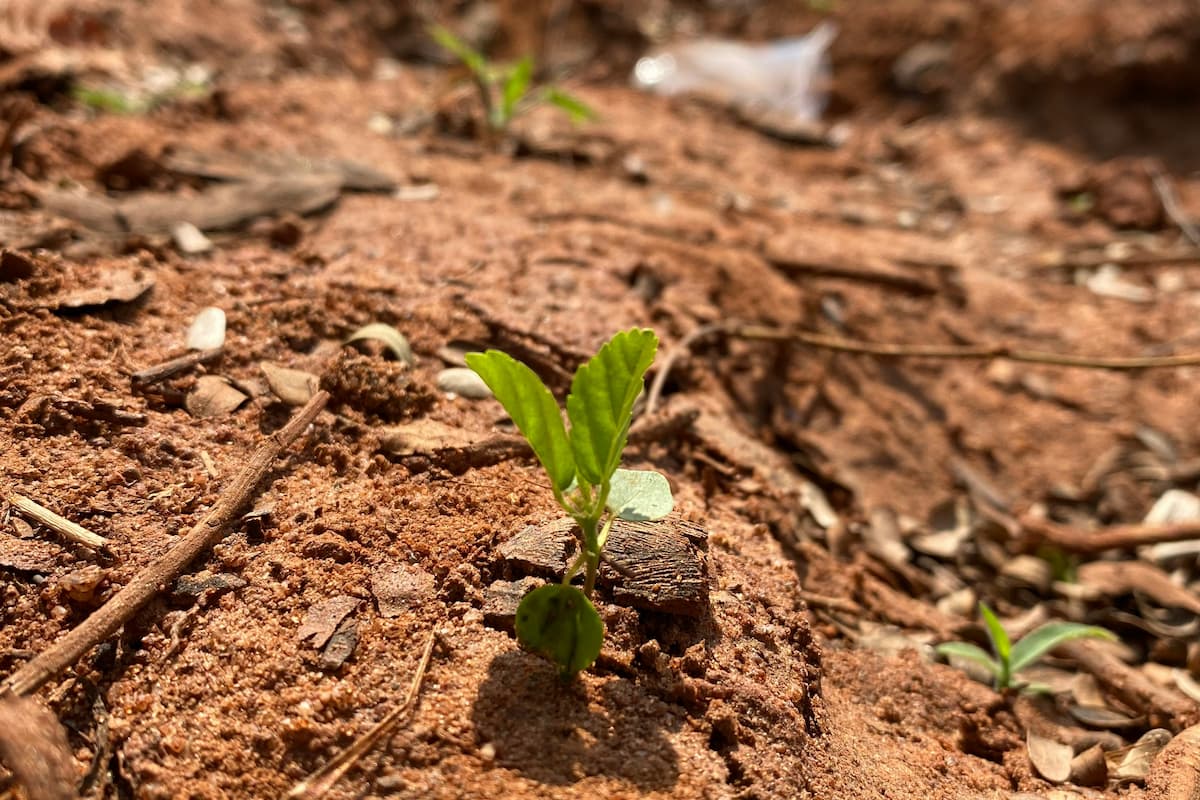
Why soil testing comes before foundation design
A foundation is only as reliable as the engineer’s understanding of what lies beneath it. Every structural load in a building, the walls, columns, floors, roof and finishes, travels downward and eventually transfers into the ground. If the soil behaves differently from what was assumed at the design stage, the building above responds accordingly.
Cracked walls, sticking doors, uneven tiled floors, and pool joints that open and weep are not the minor settling that every new building goes through. They are the visible consequences of foundation movement, and foundation movement almost always traces back to inadequate soil data at the design stage. The structural engineer designed the foundation against the conditions described to them. If those conditions were assumed rather than measured, the design has a margin of error that the building eventually reveals.
In Thailand’s highly variable ground conditions, soil testing before foundation design is the data collection exercise that makes structural decisions reliable. Without it, foundation design is a structured guess.
What the surface does not tell you
A plot can look entirely straightforward and present serious engineering challenges at foundation depth. Two neighbouring sites within fifty metres of each other can have completely different soil profiles despite appearing identical from above. Thailand’s geology is genuinely variable across short distances, particularly on the islands and along coastal strips, where weathered granite, residual clay, marine deposits and made ground can all sit within a single neighbourhood. The conditions that cause the most significant problems in Thai villa construction are rarely visible until something goes wrong.
Soft marine clay is common in lowland, coastal and flood-prone areas, including most of the Bangkok plain, parts of the eastern seaboard and significant areas of the Andaman and Gulf coasts. It has low bearing capacity and, more critically, it compresses slowly and unevenly over time. A building that appears stable at handover may show progressive cracking over the following three to five years as the clay beneath it continues to consolidate under sustained load. This is not a design failure that reveals itself immediately. It develops at the rate of clay consolidation, which is measured in years.
Expansive soils, clay-rich materials that absorb water and swell in the wet season then shrink and crack in the dry season, subject the foundation to repeated stress cycles. The damage appears gradually at junctions, openings and movement-sensitive finishes. In Thailand’s pronounced wet and dry seasonal cycle, the swell-shrink behaviour can produce vertical movement of 20 to 50 millimetres per cycle in unfavourable soils, which is more than enough to crack masonry and open tiled floors over time.
Loose fill is common on sites that have been previously disturbed, terraced, or raised to increase ground level above flood risk or to create a level building platform on sloping ground. This is particularly relevant on hillside plots where significant cut-and-fill is often carried out before the buyer ever sees the land. Fill material settles under structural load in ways that undisturbed natural ground does not, and the settlement is usually differential, meaning different parts of the building settle by different amounts. The result is twisting of the structure rather than uniform downward movement, which is the more damaging failure mode.
High water tables in coastal and lowland sites affect both bearing capacity and waterproofing requirements. The water table in many Thai coastal locations sits within one to three metres of natural ground level in the wet season and drops by a metre or more in the dry season. Foundation design that ignores seasonal water table variation can produce buildings that perform adequately in the dry season and develop moisture problems when the rains come, including hydrostatic pressure on basements, plant rooms and pool shells.
None of this is visible from the surface. All of it requires investigation.
The cost of skipping it
The consequences of inadequate soil investigation are rarely immediate, which is precisely why the risk is consistently underestimated. The visible problems appear after the people who could have prevented them have moved on, and by then the cost of correction sits entirely with the owner.
Construction completes. The building looks well-built. The owners move in. For the first year or two, everything appears normal. Then hairline cracks appear at window and door corners, at wall junctions, at the connection between walls and floor slabs. They widen progressively rather than stabilising. Doors begin to stick. Tiled floors develop slight height differences between adjacent tiles. Pool waterproofing fails as joints open with settlement movement. The first response from a contractor is usually to attribute these symptoms to cosmetic settling and to make good the visible damage. Six months later, the cracks return in the same locations.
By the time these symptoms are clearly attributable to foundation movement rather than cosmetic minor settling, the building has typically been occupied for two to five years. Warranty periods have expired. Remediation at this stage involves underpinning, additional piling installed through the existing slab, structural reinforcement, or in severe cases partial demolition and reconstruction of affected areas. None of it is straightforward in a completed, occupied building, and the costs run at ten to fifty times what the original soil investigation would have cost.
The investigation itself costs approximately 25,000 to 80,000 baht for a typical villa-scale site and takes one to two weeks to complete including laboratory work and reporting. Larger or more complex sites cost more, but rarely above 150,000 baht for residential work. That comparison is not made to dramatise the point. It is the consistent reality of what deferred soil investigation produces.
What a proper investigation involves
The standard approach for villa-scale sites is borehole drilling with Standard Penetration Testing conducted at depth intervals through each borehole. Three to five boreholes are typically appropriate for a single villa, positioned to cover the full footprint of the proposed building rather than a single central point. A site with a building footprint over 400 square metres, significant level changes, or known geological complexity should have boreholes at all four corners and one at the centre. Depth ranges from roughly 10 to 30 metres depending on expected foundation type and local conditions, and crucially the drilling continues until competent bearing strata have been positively identified rather than stopping at an arbitrary depth.
At regular intervals through each borehole, usually every 1.5 metres, Standard Penetration Testing is conducted. A standard 63.5 kilogram sampler is driven into the soil with a defined hammer drop of 760 millimetres, and the number of blows required to advance the sampler 300 millimetres is recorded. This blow count, called the N-value, is the primary indicator of soil strength and density. Values below 4 indicate very soft cohesive soils or very loose granular soils with limited bearing capacity. Values between 4 and 15 indicate firm to stiff cohesive soils or loose to medium dense granular soils suitable for some foundation types with appropriate design. Values between 15 and 30 indicate very stiff cohesive soils or medium dense granular soils, which are good bearing material for most villa foundations. Values above 30 indicate hard or dense material, and values above 50 indicate competent strata that piles can be founded on. The progression of N-values with depth reveals the full soil profile and identifies where competent bearing strata are located. A plot may have N-values of 3 at five metres depth and 45 at fifteen metres, which tells the engineer immediately that the foundation strategy needs to transfer loads down to that fifteen-metre layer.
Samples recovered during drilling are sent for laboratory testing. This produces data that field N-values alone cannot provide. Moisture content at time of sampling indicates the current state of the soil relative to its seasonal range. Particle size distribution classifies the soil and informs how it will drain and consolidate. Atterberg limits, the liquid and plastic limits, indicate how much the soil will swell and shrink with seasonal moisture change, which is the specific test that identifies expansive soil behaviour. Shear strength and consolidation tests quantify how the soil will deform under sustained load. Together with the SPT data, this gives the structural engineer a complete picture of how the soil will behave, not just at construction but over the building’s service life of 50 years and more.
The output of a proper investigation is a written geotechnical report that translates the data into design inputs. A complete report includes a soil profile for each borehole location, groundwater level observations including any seasonal variation identified, allowable bearing capacity values at the proposed foundation depths, settlement predictions under expected structural loads, and the geotechnical engineer’s recommendations on the appropriate foundation system. A useful report identifies the foundation type, the recommended founding depth, the safe bearing capacity to design against, and any specific construction precautions such as dewatering requirements or temporary works during foundation installation. Without this document, the data collected in the field does not reach the structural engineer in a form that influences design decisions, and the investigation has been a paperwork exercise rather than an engineering one.
How the findings shape foundation design
Good bearing capacity at shallow depth, typically N-values above 15 within two to three metres of the surface, allows strip foundations or spread footings. These are the most economical solutions, achievable only where the soil data demonstrates they are justified. A villa designed with strip foundations on a site where the soil report supports them costs significantly less to build than the same villa on piles, and performs identically over time.
Soft or compressible material at shallow depth requires deep foundations with bored or driven piles that transfer loads past the weak layer to competent strata below. Pile length and diameter are determined by the soil profile and the structural loads, both of which are only known once the investigation is complete. For typical Thai villa construction, bored cast-in-place piles of 350 to 600 millimetres diameter are common, with lengths ranging from 8 to 25 metres depending on the depth to competent strata. Driven precast piles are used on some sites but are limited where vibration would disturb neighbouring structures, which makes them less common in dense villa developments. The cost difference between a 10-metre pile and a 20-metre pile across the full pile schedule for a villa can run to several hundred thousand baht, which is why guessing pile length is expensive in both directions. Too short and the building settles. Too long and the owner has paid for piles that do nothing.
Expansive soils require foundation detailing that accommodates cyclic movement. This includes structural joints between the foundation and the superstructure that allow controlled movement, deeper foundations placed below the active zone of seasonal moisture change, reinforcement detailing that resists the tensile stresses generated by swell and shrink cycles, and movement allowances designed in from the start rather than retrofitted after the damage appears.
High groundwater requires both foundation sizing appropriate to saturated soil conditions, where bearing capacity is typically reduced compared to dry conditions, and waterproofing specified for the actual seasonal water table range rather than a generic assumption. It also affects construction sequencing, since excavations below the water table require dewatering during construction and the foundation must be designed to resist hydrostatic uplift in service.
A soil report that reveals straightforward conditions allows the foundation to be designed efficiently without unnecessary over-engineering. A soil report that reveals challenging conditions allows those challenges to be addressed before construction begins. Both outcomes justify the cost of the investigation. The owner pays either for the borings or for the consequences of not having them, as the geotechnical profession has been saying for decades. The figure is decisively on the side of paying for the borings.
Timing
Soil testing is only as useful as its timing allows. Conducted before structural design begins, the results inform every foundation decision. Conducted after the structural design is complete, the results may contradict decisions already made and force expensive redesign. Conducted after construction has started, the results are useful only for understanding problems already in progress.
The correct timing is to commission the investigation as soon as the plot is secured and the general building footprint is known. It can run concurrently with architectural design development and it does not delay the process if initiated promptly. The structural engineer should have the geotechnical report in hand before foundation design begins, which on a typical villa project means approximately three to four months before construction starts on site. A site where the soil investigation arrives during foundation construction is a site where the design has already been compromised.
There is an even better timing point, which is during the land due diligence process before purchase. A preliminary soil investigation on a plot under consideration can reveal conditions that materially affect what the land is worth to a buyer who wants to build on it. Soft clay requiring 20-metre piles can add 500,000 to 1,500,000 baht to a typical villa foundation cost compared to good bearing ground. That information is more useful before signing the purchase contract than after.
Beyond the boreholes
Soil testing provides the most critical subsurface data, but it is most useful alongside complementary site investigation. A topographic survey establishes existing ground levels and informs drainage design and cut-and-fill calculations. A drainage assessment identifies where surface water moves during heavy rain and what infrastructure is needed to manage it. On low-lying, coastal or river-adjacent sites, a flood risk assessment establishes the design flood level the building should be positioned above, which directly affects finished floor levels and therefore the elevation of every threshold, drain and external work on the site.
These investigations collectively provide the site understanding that informs finished floor levels, landscape design and the building’s long-term performance in its environment, not just its structural integrity. They are the data layer beneath every other decision the project will make.
The bottom line
Thailand’s ground conditions vary enough across the country, and often across a single development, that no two villa sites can safely be assumed to behave identically. Soil testing replaces assumption with measurement. It informs foundation type, footing sizes, pile depth, reinforcement specification and overall material use. In many cases it prevents both over-engineering and the unnecessary cost that comes with it, and under-engineering and the long-term risk that comes with that.
The investigation cost is a small percentage of construction cost, and a smaller percentage still of the total project cost including land. A villa designed on the basis of actual ground data performs as expected for decades. A villa designed on the basis of assumption reveals its compromises over time, expensively and usually after the people responsible have moved on.
For structured guidance on every stage of a villa build in Thailand (from land purchase through to handover) see The Thailand Build Blueprint™ at thetropicalarchitect.com/the-blueprint
For guidance on any aspect of your specific design or build, book a strategy session with Nay at thetropicalarchitect.com/consultations
Working with Nay on your build
If you are planning a build on Koh Samui, the six-step process from land viability to site supervision is set out at the six-step process; for Phuket, start with our Phuket practice. If you are further along and want an experienced second opinion on drawings, a quote or a contractor, talk to Nay directly.