Why stone deserves a more careful conversation than it usually receives
Natural stone cladding is often chosen for its sense of permanence. It is solid, textured, and visually grounded. In Thailand’s tropical climate, performance matters far more than appearance.
Used correctly, stone can last decades with very little degradation. Used incorrectly, it can stain, trap moisture, and begin failing within a few years, often from behind the surface where problems are harder to detect.
The difference comes down to three things: material selection, installation method, and moisture management. Each one is straightforward to address at the design stage and expensive to remedy after the cladding is installed.
How tropical conditions change the way stone behaves
Heat, humidity, salt air, and seasonal downpours create constant stress on building materials. Stone is not immune to this.
The main issue is not surface wear but moisture movement through and behind the stone. When water is absorbed or trapped, the consequences include discolouration and staining on the visible surface, salt deposits forming beneath the finish, mould and biological growth in the right conditions, and damp transferring into internal walls behind the cladding.
Most failures are not immediate. They develop slowly, often becoming visible only once damage is already established and the remediation work involves removing and replacing significant areas of finished cladding.
Not all stone is suitable
The performance of stone in tropical builds depends heavily on its density and porosity.
Dense, low-porosity stones perform reliably in Thailand’s conditions. Granite, basalt, and certain slates resist water absorption and are far less affected by salt and humidity. These are the correct specification for any cladding application that will face direct weather exposure.
Softer, more porous stones, including limestone and sandstone, are more vulnerable. They absorb moisture easily, which leads to staining, surface erosion, and gradual weakening over time.
This is where many projects go wrong. Selection is often based on appearance in a showroom rather than how the material behaves in a humid, exposed environment. The aesthetic appeal of a softer stone in a controlled showroom environment is real. The performance of that same stone after two seasons of monsoon rain and coastal humidity is not.
Installation is where durability is decided
Even the right stone will fail if it is installed incorrectly. Two installation principles determine whether the cladding performs as the material allows or fails before its potential is realised.
In tropical conditions, relying purely on adhesive is a risk. Movement, moisture, and heat cycles will eventually compromise the bond. Mechanical fixing using marine-grade stainless steel anchors provides a secure, long-term solution, particularly for large facades, double-height walls, and exposed elevations. The combination of adhesive and mechanical fixing is the correct specification for permanent installations in Thai tropical conditions, with the mechanical anchors carrying the structural load and the adhesive providing the secondary bond.
Stone cladding should never act as a moisture trap. Water will always find a way in. The success of the system depends on how well it is allowed to get back out. Effective systems require proper joint detailing that allows expansion and movement, ventilation gaps where the cladding system requires them, and drainage paths behind the stone that direct any moisture that does reach the substrate back to the exterior. Cladding installations that seal water in rather than allowing it to escape produce the staining, salt deposits, and structural moisture problems that this article opened with.
Consistency under real conditions
Stone can vary significantly between batches. Under strong tropical sunlight, these differences become far more visible than they appeared during selection.
Testing samples outdoors rather than relying on indoor lighting helps avoid inconsistent finishes across large surfaces. The colour, surface texture, and tonal variation that look unified under controlled showroom lighting often reveal substantial inconsistency under direct tropical sun. For large cladding installations where consistency across the surface is part of the design intention, outdoor sample testing under conditions matching the installation location is the only reliable way to predict the finished appearance.
Using stone where it adds value
Stone is at its best when used deliberately rather than excessively.
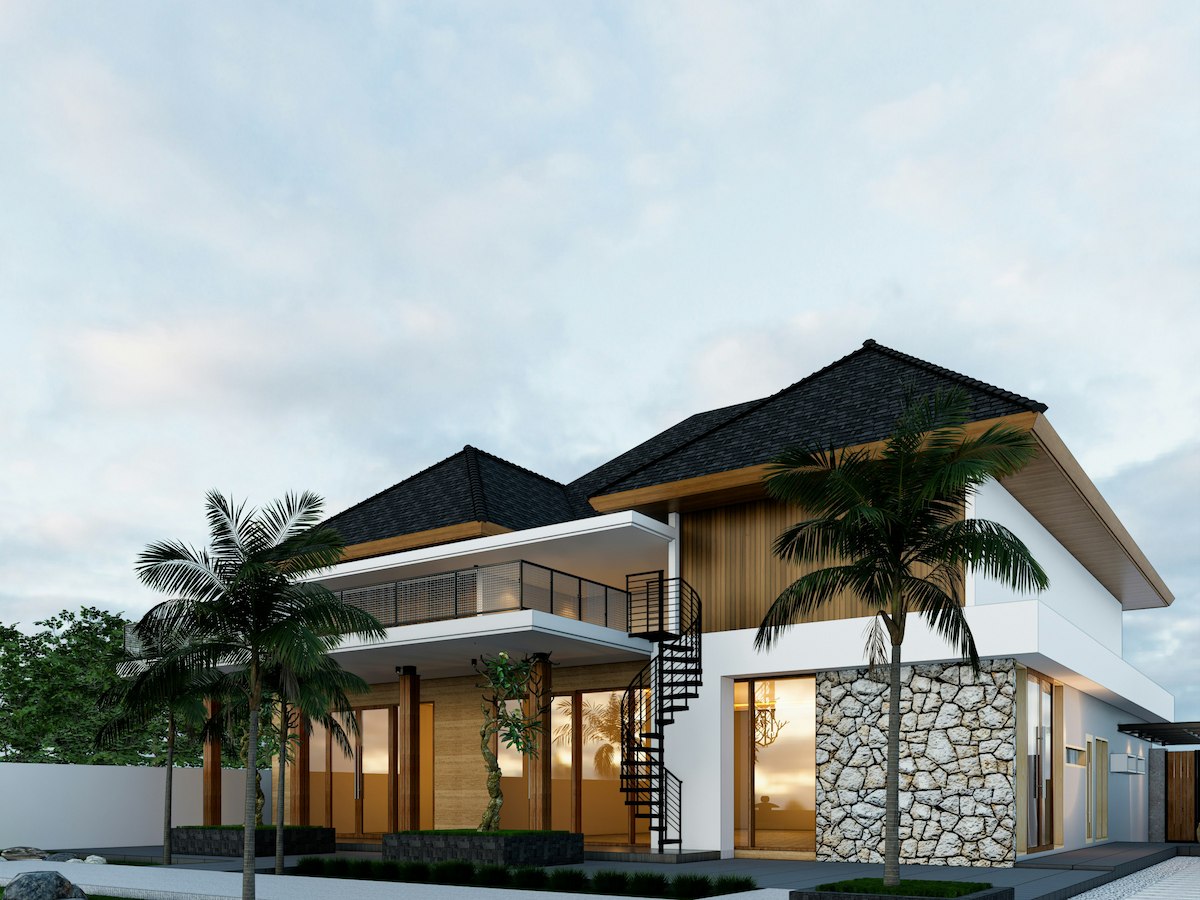
It works particularly well for entrance features, retaining walls, outdoor living areas, and selected facade elements. These applications take advantage of its durability and texture without introducing unnecessary weight or complexity across the entire structure.
Inside the home, stone is more effective as a feature rather than a dominant material. Used sparingly, it adds depth and contrast without making spaces feel heavy. Whole walls of interior stone in a tropical villa often work against the lightness and openness that the climate suggests, while a single carefully placed stone element creates the sense of permanence that the material delivers best.
How stone compares to other cladding materials
Many alternatives are marketed as easier or lower maintenance than stone, but in tropical conditions they come with their own limitations.
Painted render tends to peel, crack, and fade under sustained UV and humidity exposure. The maintenance cycle is short and the visible deterioration is constant. Composite panels and tiles can warp or lose colour over time, and the failure modes are often impossible to remediate without panel replacement. Timber cladding requires ongoing treatment and is vulnerable to insects and moisture in ways that other materials are not.
Stone behaves differently. It does not try to resist the environment completely. It weathers gradually and develops character, provided the underlying system is sound. The aged appearance of properly specified stone after a decade of Thai tropical conditions is part of its appeal, in a way that the aged appearance of failed render or warped composite panels is not.
Modern finishes carry higher risk
Current design trends favour tight joints or dry-stack finishes, creating a clean, contemporary look.
These systems are less forgiving than traditional cladding methods. Any inconsistency in fixing, alignment, or waterproofing becomes more noticeable and more problematic over time. The narrower joint widths reduce the system’s capacity to accommodate movement and reduce the visual tolerance for any installation imperfection. They require careful planning, precise installation, and proper structural support behind the surface.
For a villa where the design intention is a contemporary stone facade, the specification and installation cost is higher than for traditional methods, and the consequences of inadequate execution are more visible. This is not an argument against contemporary stone detailing. It is an argument for committing to the level of installation quality that contemporary detailing requires.
Stone is not just a finish
One of the most common mistakes is treating stone as a final decorative layer. In reality it is part of a broader construction system.
Stone cladding interacts with the structural walls behind it, the waterproofing layers between substrate and stone, the drainage design that moves water away from the building, and the thermal movement that the building experiences across daily and seasonal cycles. Decisions about stone need to be made early in the design process rather than added at the end without coordination.
The structural implications of heavy stone cladding require engineering input at the design stage. The waterproofing detail at the substrate determines whether the stone performs or traps moisture. The drainage path that allows water to escape from behind the cladding is part of the building’s overall water management system, not a detail of the stone installation itself.
The bottom line
Natural stone cladding can perform exceptionally well in tropical builds, but only when approached correctly.
It requires the right material, a proper fixing system, and careful attention to how moisture moves through the structure. When those elements are aligned, stone becomes one of the most durable and low-maintenance finishes available. When they are not, it becomes a long-term liability hidden behind a high-end appearance.
For structured guidance on every stage of a villa build in Thailand, from land purchase through to handover, see The Thailand Build Blueprint™ at thetropicalarchitect.com/the-blueprint
For guidance on any building or interior issue relating to your project, book a strategy session with Nay at thetropicalarchitect.com/consultations