The surface most owners underspecify
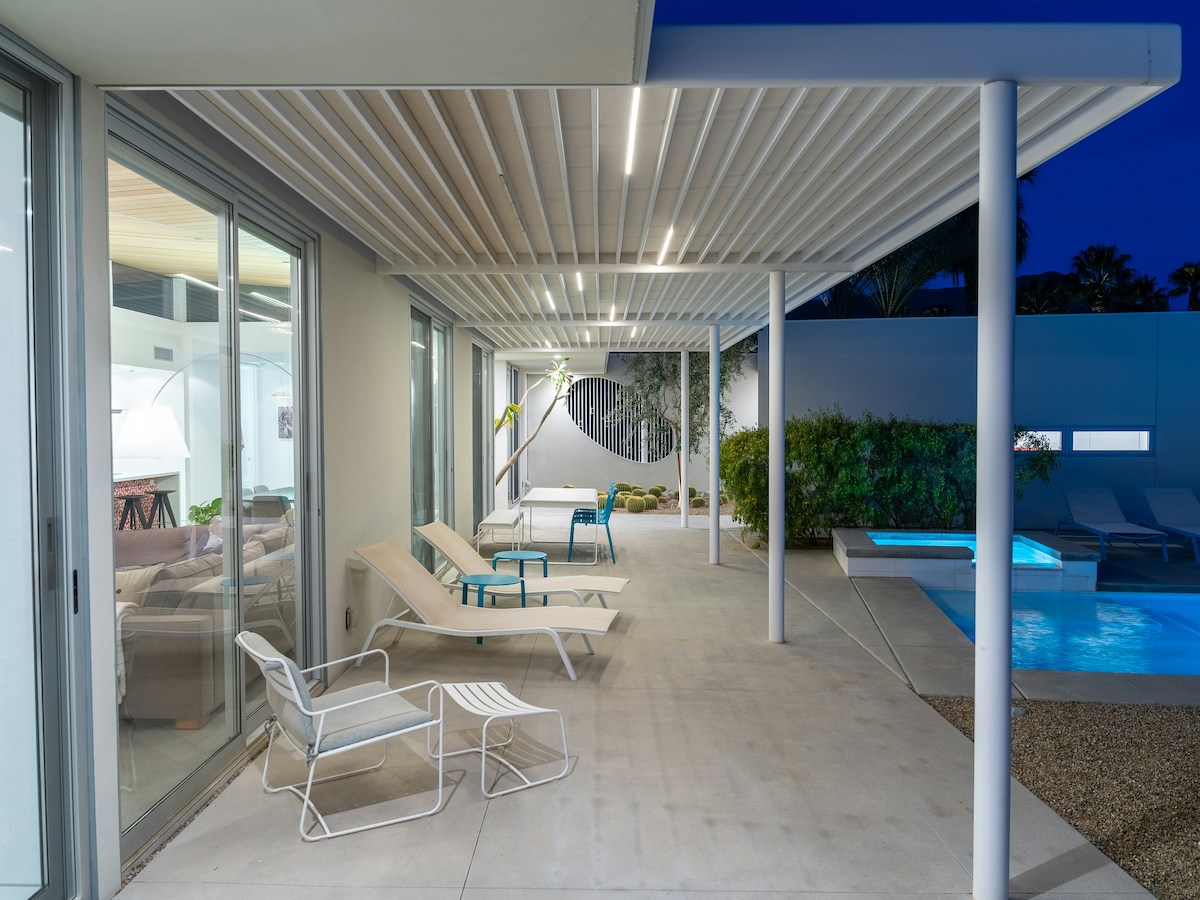
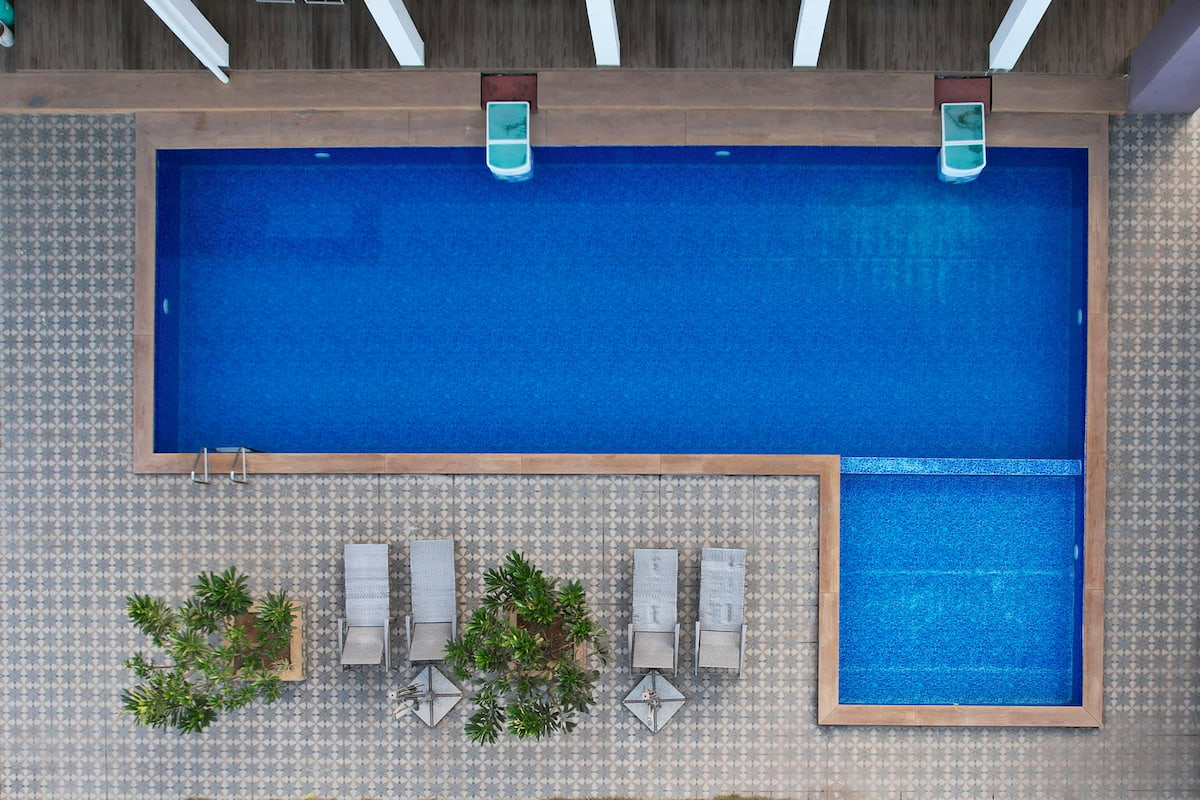
Pool surround tiling is consistently treated as a finishing decision and a choice made late in the project from a sample board, based primarily on how the material looks next to the pool water. In Thailand’s conditions, the material and installation decisions made at this stage determine whether the surround is safe to use when wet, whether it holds its appearance through years of UV exposure and chemical contact, and whether it remains bonded to its substrate through successive wet and dry seasons.
These are not minor considerations. A pool surround that is slippery when wet is a liability in a rental villa regardless of how good it looks. A tile that debonds from the substrate after two wet seasons requires full replacement. Getting the specification right at the design stage costs no more than getting it wrong.
Anti-slip rating: the specification that is not optional
The single most important specification decision for any pool surround tile is its slip resistance when wet. A tile that performs acceptably on a dry surface provides very little meaningful grip when wet, which around a pool in Thailand is the only condition that matters.
Slip resistance is quantified by the pendulum test value (PTV) in most international standards. The relevant threshold for wet areas is a PTV of 36 or above, which corresponds to a low slip risk classification. Many attractive natural stone and polished tile products achieve PTVs well below this threshold when wet, which makes them appropriate for interior dry areas and inappropriate for pool surrounds regardless of how commonly they are used in that application.
The R-rating system, used on German DIN standards that are widely referenced in construction specifications, classifies tiles from R9 (low slip resistance, dry areas only) through R13 (high slip resistance, wet industrial floors). For pool surrounds, a minimum of R11 is appropriate. R12 or above is the correct specification for areas where the surround transitions from pool level to stepped or sloped access areas where wet feet encounter a change of gradient.
Specifying anti-slip rating in the contract and verifying that the supplied tile has the relevant certification before installation is the protection. Specifying “anti-slip tiles” without a minimum rating value gives the contractor latitude to supply tiles that meet a low anti-slip standard rather than the appropriate one.
Material performance in Thailand’s conditions
The pool surround environment subjects tiles to a specific combination of stresses: pool chemical contact, UV exposure, thermal cycling between sun-heated surface temperatures and cool pool water, and the expansion and contraction driven by Thailand’s wet and dry season temperature variation. Not all materials handle this combination equally.
Porcelain tiles are the appropriate default specification for Thai villa pool surrounds. Dense, low-porosity porcelain absorbs minimal water, resists the chemical contact from pool water treatment, holds colour and surface quality under Thailand’s UV intensity, and is available in formats and finishes that achieve adequate anti-slip ratings without sacrificing appearance. Rectified porcelain with consistent dimensions allows tight grout joints that reduce the surface area exposed to chemical contact and biological growth.
Natural stone requires more qualification. Sandstone and limestone are porous enough to absorb pool chemicals and stain over time unless sealed regularly, which in a managed rental property may not happen at the required frequency. Granite is dense enough to resist chemical absorption but achieves anti-slip ratings primarily through flamed or brushed surface treatments. Marble is inappropriate for pool surrounds in nearly all cases: it is porous, it reacts with pool chemicals, and polished marble achieves extremely low wet PTVs. The aesthetic appeal of marble pool surrounds in developer renders does not reflect the maintenance reality of marble pool surrounds in operational Thai villas.
Timber decking around pools is a separate category. Treated hardwood decking is used around villa pools throughout Thailand and performs well when the correct timber species and treatment are specified. Teak and similar dense hardwoods with adequate natural oil content resist moisture and provide inherent slip resistance from their surface texture. Softwood decking in the same application deteriorates within a few wet seasons regardless of treatment. The gap spacing between deck boards is a drainage and slip resistance consideration: boards spaced too closely trap standing water; boards spaced correctly drain quickly and provide consistent grip underfoot.
Substrate preparation and adhesive specification
The most common cause of pool surround tile failure in Thai villa construction is not material failure but adhesive and substrate failure driven by inadequate specification for the thermal cycling and moisture conditions the installation faces.
Standard cement-based tile adhesives are not specified for immersion or sustained contact with pool water. A pool surround tile set in standard adhesive will debond progressively as water penetrates the grout joints and reaches the adhesive layer, which was not designed to resist sustained moisture exposure. The correct specification is a flexible, polymer-modified adhesive rated for wet area or immersion applications. The flexibility matters because pool surround tiles face thermal expansion and contraction loads that a rigid adhesive cannot accommodate without cracking the bond.
The substrate must be waterproof before tiling begins. A screed or concrete base without a liquid-applied waterproof membrane beneath the tile adhesive allows water that reaches the substrate through grout joints to migrate into the structure and eventually undermine the adhesive bond from below. Waterproofing beneath pool surround tiling is specified the same way as waterproofing beneath bathroom tiling: a continuous liquid-applied membrane applied to the prepared substrate, with adequate cure time before tiling commences.
Grout specification is the final substrate decision. Standard sanded grout in a pool surround application stains, cracks, and harbours biological growth that no cleaning regime fully removes. Epoxy grout provides chemical resistance, minimal porosity, and biological resistance that cement grout cannot match in a pool surround environment. The cost premium over cement grout is modest relative to the total tiling cost and the maintenance savings over the life of the installation.
Drainage design and falls
A pool surround that does not drain effectively creates standing water that is both a slip hazard and an accelerator of biological growth on the tile surface. Drainage from the pool surround must be designed into the substrate before tiling, not achieved through surface gradient alone after the fact.
The surround should fall away from the pool edge at a minimum gradient of 1.5 to 2 percent toward perimeter drainage channels or grated drains positioned at the outer edge of the surround. Falls should be consistent across the full surround area, including around corners and at steps, where inadequate falls most commonly result in pooling. The drainage channel capacity must be sized for peak monsoon rainfall intensity, not simply for pool splash and in a heavy rain event the pool surround drainage carries far more water than the pool itself generates.
Drain covers over drainage channels must themselves meet anti-slip requirements. A pool surround with correctly rated tile throughout and a slippery metal drain cover at the point where most foot traffic crosses it has an anti-slip specification that stops at the detail that matters most.
The bottom line
Pool surround tiling in Thailand fails predictably when material selection prioritises appearance over performance, when anti-slip specification is left vague, and when adhesive and substrate decisions are made to a budget rather than a specification. None of these failures is expensive to prevent. All of them are expensive to correct after the installation is complete and in use.
Specify the anti-slip rating in the contract. Specify the adhesive and grout system for the conditions. Waterproof the substrate before tiling begins. Design the falls and drainage before the screed is laid. The result is a pool surround that is safe, durable, and requires routine cleaning rather than periodic replacement. For more information abut pool design and common mistakes, see more articles in this series.
For structured guidance on every stage of a villa build in Thailand — from land purchase through to handover — see The Thailand Build Blueprint™ at thetropicalarchitect.com/the-blueprint
For guidance on your specific project, book a strategy session with Architect Nay at thetropicalarchitect.com/consultations
Getting this specified and checked on site
Decisions like this one are only as good as the drawings and the site supervision behind them. If you are building on Koh Samui, Nay's full service from land assessment to handover is described at Architect Samui; for Phuket, see Architect Phuket. If you already have a builder and want an independent second opinion on a specification, book a strategy session.