What you need to know before anything else (as of 2026)
Foreigners cannot own land in Thailand. This is a fundamental legal principle, not a technicality or a temporary restriction, and it shapes every property decision a foreign national makes in the country. The restriction exists for considered reasons. Thailand’s property legislation is designed to prevent foreign capital from dominating the land market in ways that would price Thai nationals out of their own country and erode local community. The principle is not unique to Thailand. Many countries with significant foreign investment interest in their property markets have comparable protections in place.
Working with this reality rather than trying to work around it produces better outcomes. The legal alternatives available to foreign buyers are genuine and workable. Approached on their own terms rather than as circumventions of a restriction, they provide secure property rights adequate for most residential and investment purposes. The problems arise when buyers, encouraged by agents or lawyers with an interest in completing a transaction, treat the restriction as something to be engineered around rather than understood.
What foreigners can and cannot own
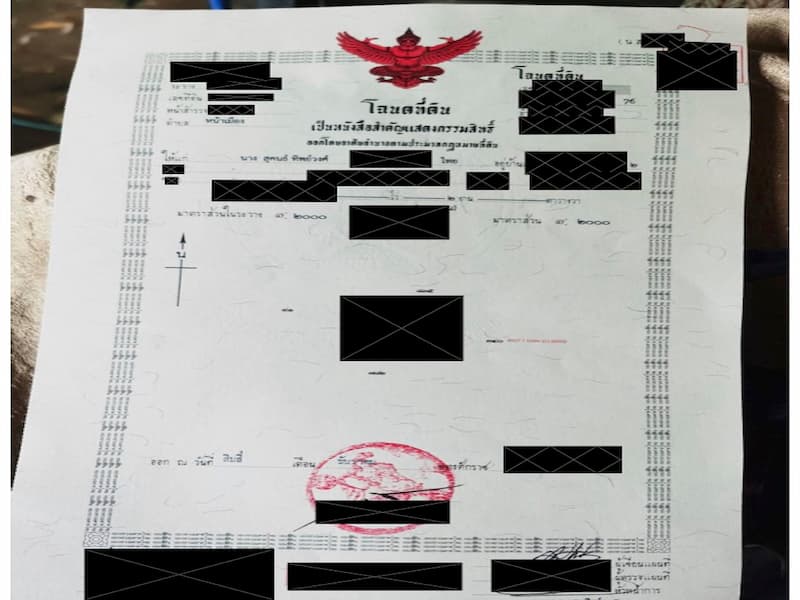
Freehold land with a Chanote title deed cannot be registered in a foreign national’s name. There is one narrow exception: a foreigner who invests a minimum of 40 million baht in specified qualifying investments and satisfies additional legal criteria may apply for the right to own up to one rai of residential land. This pathway is relevant to very few buyers in practice and should not be confused with the standard ownership options available to the majority.
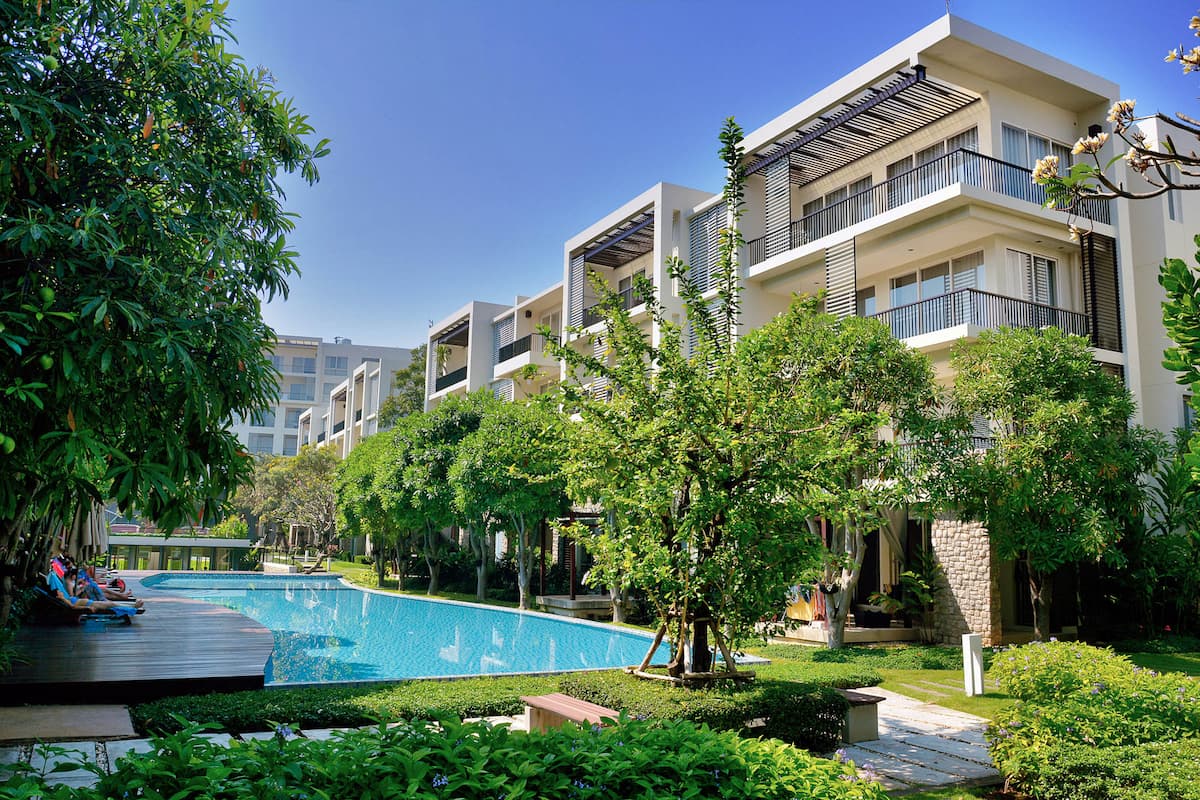
Condominiums are different. Thailand’s Condominium Act permits foreign freehold ownership of condominium units, a title deed in the buyer’s own name, within a limit of 49 percent of the total unit area of any registered condominium project. This is the most straightforward ownership pathway available: genuine freehold title without the complexity of company structures or lease arrangements.
Buildings on leased land occupy a separate legal category that is worth understanding clearly. A foreigner who leases land in Thailand can own the buildings constructed on that land outright, from foundation to roof, with full legal title to the structures. The building ownership is entirely separate from the land ownership and carries no foreign ownership restriction. This distinction is what makes leasehold arrangements genuinely workable rather than merely a consolation prize.
The registered lease and why it suits more buyers than it initially appears
A lease registered at the Land Office gives a foreign national the right to occupy and use land for the lease term, up to 30 years under Thai law. The lessee owns the buildings on the land outright. Registration at the Land Office creates a legally binding public record that protects the lessee against the landowner selling, transferring, or mortgaging the land in ways that would compromise the lessee’s rights during the lease period.
The instinctive reaction to a 30-year maximum lease is often concern. It feels insecure compared to freehold ownership held indefinitely. In practice the comparison is less dramatic than it appears. A villa built today on a 30-year lease will reach the point where significant renovation or rebuilding is required regardless of tenure by the time the lease expires. For buyers in their 50s or older, 30 years covers the full intended period of residence or investment without requiring the complexity of a company structure. The lease suits more buyers’ actual circumstances than the initial reaction to the 30-year limit suggests.
Some developers market leases as 90-year terms across three consecutive 30-year periods. Thai law does not recognise lease terms beyond 30 years at a single registration. What is marketed as a 90-year lease is in practice three separate agreements. The first is a registered lease. The second and third are options to renew that require the landowner’s agreement at the time of renewal. Renewal is not guaranteed. If the land changes hands during the first lease term through sale, inheritance, or otherwise, the new owner is not automatically bound by renewal commitments made by the previous owner. Any contractual provision that purports to guarantee the full 90 years as a single enforceable term is legally problematic, and Thai courts have consistently held that such provisions conflict with the 30-year statutory limit. The position that correctly reflects the legal reality is this: a registered 30-year lease provides 30 years of secure tenure. Renewal after that period is possible if both parties agree at the time, but it is not a right that can be contractually guaranteed in advance regardless of what documentation is provided at the point of sale.
Paying the full lease consideration upfront rather than in periodic instalments provides cleaner documentation and removes the ongoing financial relationship between lessee and lessor that periodic payments create. A fully paid lease registered at the Land Office is a more straightforward arrangement, legally and practically, than a payment structure that continues throughout the lease term.
Additional protections worth registering alongside the lease
Two additional rights are registrable at the Land Office and provide protections that a lease agreement alone does not offer.
A superficies is a registered right that gives the holder ownership of structures built on the leased land independently of the lease itself. If the lease is disputed or ends prematurely, the superficies right provides legal standing to retain ownership of the buildings even if the underlying land reverts to the lessor. It can be registered for a defined term or linked to the lease period.
A usufruct is a registered right that gives the holder the right to use and profit from land for a defined period, which can be the holder’s lifetime rather than a fixed term. A usufruct holder can rent the land or buildings to others and retain the income. Combined with a lease it provides an additional layer of security and can outlast the lease term if registered for the holder’s lifetime.
A property lawyer experienced in Thai land transactions can advise on which combination suits a specific situation. Both are worth serious consideration on any significant leasehold purchase.
The Thai Limited Company route and the risks that are frequently understated
Setting up a Thai Limited Company to hold the Chanote has been widely used and often recommended by lawyers and agents. It deserves examination with clarity, including the aspects that sometimes receive less emphasis when there is an interest in completing a transaction.
A Thai Limited Company requires a minimum of 51 percent Thai shareholding. The company holds the Chanote in its own name. The foreign buyer holds shares in the company, up to 49 percent, and typically holds management control through a directorship with broad operational authority. The structure becomes legally problematic when the Thai shareholders are nominees, individuals whose names appear on the share register but who have no genuine economic interest in the company and who have signed documents returning effective control to the foreign director. Thai law explicitly prohibits nominee structures used to circumvent the foreign land ownership restriction. Both the Foreign Business Act and the Land Code contain provisions applicable to such arrangements.
Nominee company structures are pervasive in Thailand’s property market. Enforcement has historically been selective rather than systematic, which leads many buyers and their advisors to treat the risk as theoretical. This is a calculation worth examining carefully rather than accepting at face value. The relevant consideration is not historical enforcement patterns but potential consequences if enforcement occurs. Government investigations into nominee structures take place periodically and have been increased in recent times. Consequences include criminal prosecution, substantial financial penalties, and potentially the confiscation of the property held through the structure. For a buyer who has invested several million baht in a villa, the enforcement risk is not trivial even if its probability at any given time appears low.
A Thai Limited Company also requires annual accounting, tax filing, statutory audits, and maintenance of proper corporate records throughout the company’s life. These obligations carry professional fees that represent an ongoing cost a simple lease does not. The company must demonstrate genuine business purpose rather than existing solely as a land-holding vehicle, which creates compliance requirements that add complexity to what might appear to be a straightforward arrangement.
For most foreign buyers purchasing residential property in Thailand, the 30-year registered lease with appropriate additional rights is simpler, cheaper, and legally cleaner than a Thai Limited Company. The company structure is more appropriate for buyers with genuine commercial operations in Thailand where the company serves a legitimate business purpose beyond holding a single residential plot. For purely residential purposes, the lease route involves less ongoing cost, less compliance obligation, and less legal risk. This is not a popular position in the agent and developer community, where company structures generate legal fees and remove the complication of finding a willing landowner. It is nonetheless the position that experience in this market supports.
Deciding between the options
The intended holding period matters. A 30-year lease suits buyers intending to hold the property for up to 30 years, whether for retirement residence, long-term living, or a medium-term investment, without requiring the complexity or ongoing obligations of a company structure.
Resale is a real consideration that affects exit strategy and should be factored into the purchase decision rather than discovered at the point of sale. A leasehold property can be sold and the remaining lease term transfers to the buyer, but the resale market for leasehold properties is narrower than for freehold and the achievable price reflects the remaining term.
The landowner relationship matters more than buyers typically anticipate. A long-term lease is a relationship as much as a legal document. The landowner’s stability, their succession arrangements, and the quality of the direct relationship between lessee and lessor all affect how the lease performs over its term. Negotiating directly with individual landowners typically provides more flexibility and better terms than dealing through agents or developers managing the transaction on the lessor’s behalf.
The legal advice that cannot be substituted
Regardless of which ownership route is chosen, independent legal advice from a Thai property lawyer who is not recommended by or connected to the agent or developer is essential before any commitment is made or money transferred.
For a lease, the scope of legal review should include a title search at the Land Department to verify the land title and identify any encumbrances, review of the lease terms against Thai law requirements, registration of the lease and any associated rights at the Land Office, and verification that the lessor has unencumbered legal authority to lease the land. For a company structure, the review should include assessment of the shareholding and voting arrangements for nominee risk, verification of the company’s existing liabilities if purchasing an existing company, and independent legal opinion on the structure’s legitimacy given the current enforcement environment.
Legal fees for thorough due diligence on a Thai property transaction are modest relative to the sums involved. The cost of proceeding without it when something is wrong is not modest.
Foreign property ownership in Thailand operates within clear constraints, but those constraints leave genuine and workable options for buyers who understand them. The registered 30-year lease with superficies and usufruct protections provides secure property rights adequate for most residential purposes. The condominium route provides the clearest path to a title deed in the buyer’s own name. The Thai Limited Company route is widely used but carries legal risks and ongoing obligations that the lease route does not, and for purely residential purposes without a genuine underlying commercial rationale, the lease is the more appropriate and legally defensible choice. This decision determines the legal foundation on which everything else is built. It deserves the time, the independent advice, and the careful consideration that its significance warrants.
For structured guidance on every stage of a villa build in Thailand — from land purchase through to handover — see The Thailand Build Blueprint™ at thetropicalarchitect.com/the-blueprint
For guidance on your specific project, book a strategy session with Architect Nay at thetropicalarchitect.com/consultations
- This article is for information purposes and you should consult a lawyer for professional legal advice.
Before you commit to land
The legal structure and the land itself are two different questions, and both need checking before a design begins. For Koh Samui, read four ways to acquire a home on Koh Samui; for Phuket, foreign ownership in Phuket and buying land in Phuket as a foreigner. Nay is an architect, not a lawyer: for the land viability side, book a strategy session.