A small component with disproportionate consequences
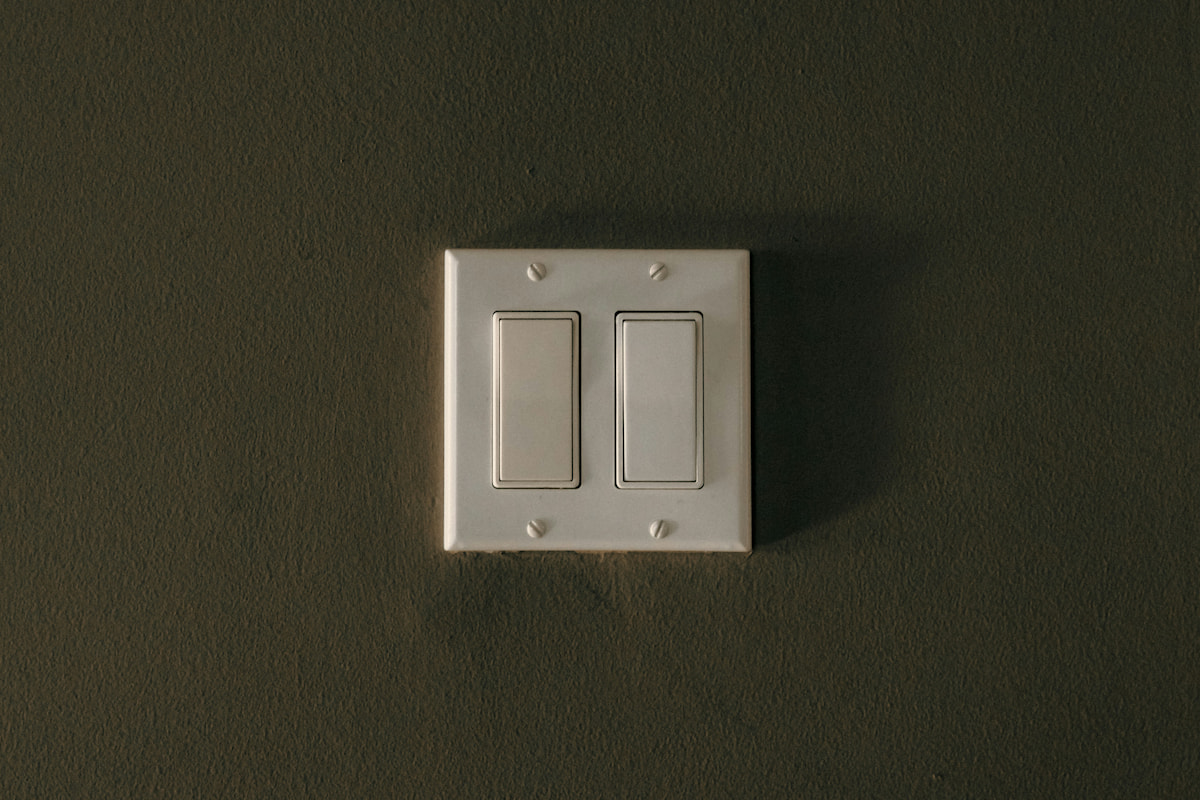
Electrical switches are among the most frequently touched components in any villa and, in Thailand’s coastal tropical environment, among the most frequently replaced. High humidity, salt-laden air, intense UV exposure, and monsoon rainfall accelerate the deterioration of switches specified without regard for the conditions they will face.
The consequences of failure range from inconvenient (switches that stick, discolour, or develop intermittent faults), to genuinely dangerous. Moisture ingress into electrical components in a high-humidity environment creates fire and electrocution risk that poor specification predictably produces and correct specification predictably prevents. Getting switch specification right adds almost nothing to a project budget. Getting it wrong adds repeated replacement costs and persistent safety risk for the life of the building.
Why material selection matters more than most people expect
The switch housing material determines how well the fitting handles Thailand’s climate across its service life. Standard plastics crack under UV exposure and heat cycling between air-conditioned interiors and ambient tropical temperatures. Metal switch plates corrode in coastal salt air. Poor quality housings allow moisture ingress that causes internal corrosion and electrical failure, sometimes within the first wet season in exposed locations.
Polycarbonate is the correct material specification for tropical villa switch housings. It does not absorb water or allow condensation ingress when properly sealed. It resists the surface degradation and discolouration that destroys cheaper plastics under sustained tropical sun. It does not warp or crack under the thermal cycling that Thailand’s climate imposes on exterior and semi-exterior fittings. And it is impact-resistant rather than brittle, which matters in a component that is touched multiple times daily for decades.
Quality polycarbonate switches in tropical conditions achieve ten to fifteen year service life even in open-sided or intermittently occupied buildings. Standard plastic switches in the same conditions may fail within two to three years. The price difference between the two specifications is marginal relative to the replacement and maintenance cost difference over a decade of ownership.
Matching the IP specification to the location
The IP rating system defines how well a fitting resists dust and moisture penetration. The two digits each communicate something specific: the first indicates solid particle protection, the second liquid ingress protection. In a tropical villa, different locations genuinely require different ratings. A single standard applied throughout the building produces either wasteful overspecification in dry interior areas or dangerous underspecification in wet and exposed ones.
For interior switches away from direct water contact, IP44 is the minimum adequate specification, protecting against solid objects above one millimetre and water splashing from any direction. For bathroom switches near showers, pool equipment areas, and covered outdoor terraces, IP65 is the correct specification: fully dust-tight and protected against water jets from any direction. For switches in locations that receive direct rain or are exposed to monsoon conditions without overhead protection, IP67 is required as it is dust-tight and protected against temporary immersion.
In direct coastal exposure, with switches on sea-facing walls, pool areas within salt spray range, or boat dock positions, marine-grade switches designed for boat and yacht applications provide the most robust available specification. Products designed to IP67 with reinforced polycarbonate housings, UV-stabilised faceplates, and stainless steel fixings handle Thailand’s coastal conditions with a reliability that standard switches, however well-rated, do not match.
One important qualification: the IP rating on the product label is the minimum it has been tested to under controlled conditions, not a performance guarantee under all circumstances. Installation quality determines whether the rated protection is actually achieved in service. A correctly rated switch installed with inadequate sealing at the wall junction provides less protection than the rating implies.
Electrical ratings and specifying for actual loads
Switch amperage rating must be adequate for the circuits they control. Undersized switches in high-load circuits generate heat, accelerate mechanical wear, and create fire risk, which is a failure mode that develops progressively and is not always visible until it produces a fault.
For switches controlling air conditioning circuits, kitchen appliances, and any circuit with significant continuous load, a 16 amp minimum rating is the appropriate specification rather than an upgrade. In Thailand, where air conditioning typically represents the largest electrical load in a villa and runs for extended daily periods, undersizing the switches on these circuits is a predictable source of premature failure. Standard lighting circuits with LED fittings can be adequately controlled by 10 amp switches, as the load from LED fittings is significantly lower than the incandescent and fluorescent loads these circuits previously carried.
In coastal Thailand, connection corrosion is a failure mode that standard installation practice does not always adequately address. Specify tinned copper terminations in high-humidity locations, as the additional cost is negligible and the service life improvement is significant.
Are smart switches of practical value for remotely managed villas?
For villa owners managing properties from a distance (holiday rentals, second homes, or investment properties), smart Wi-Fi enabled switches provide practical operational benefits that go beyond convenience.
The most immediate is pre-arrival management. Switching on cooling and lighting before guests arrive, rather than having them enter a hot and dark villa, is a basic hospitality improvement that smart switches make straightforward from anywhere in the world. For rental villa operators, this single capability can meaningfully affect early guest experience and review scores.
Energy management during unoccupied periods is the second practical benefit. Monitoring and controlling lighting and fan circuits remotely reduces standby electricity consumption during the periods between guests when a property might otherwise be left partially running. Automated lighting schedules that vary day to day also provide basic security presence indication for unoccupied properties without requiring onsite management.
Smart switches require stable Wi-Fi coverage throughout the villa to function reliably. A dead spot in coverage produces intermittently unreliable switches that are more frustrating than manual alternatives. Specify the network infrastructure to support the switch locations — this is a design coordination decision, not an afterthought.
The material and IP rating requirements for smart switches are identical to those for standard switches in the same location. Smart functionality does not excuse inadequate tropical specification. Polycarbonate housings and the correct IP rating for the location apply regardless of whether the switch is standard or smart.
Placement decisions that affect daily experience
Standard switch height in Thailand is 1.2 metres from finished floor level. Consistent switch height throughout a villa makes the space intuitive for residents and guests, which is particularly relevant in rental properties where guests are unfamiliar with the layout.
Dimmer switches are appropriate in open-plan living and dining areas that transition between daytime and evening use. The critical specification detail is compatibility, as LED dimmers and incandescent dimmers are not interchangeable, and mismatched dimmer and lamp combinations produce flickering, buzzing, and reduced lamp life. Specify dimmers rated for the actual lamp type installed, confirmed with the lamp manufacturer where there is any uncertainty.
Backlit switches or illuminated rocker switches improve navigation in dark spaces and are a practical specification for rental villas where guests are unfamiliar with room layouts. The cost addition is minimal and the guest experience improvement is consistent.
Two-way switching (controlling the same circuit from two locations) is appropriate for stairways, corridors, and large open-plan spaces. Like lift shaft provision, this is a decision to make at the design stage rather than after construction. Retrofitting two-way switching into a completed building is a significant wiring exercise that costs far more than specifying it correctly from the outset.
For outdoor switch positions, locate under roof overhangs, in recessed positions, or with shielded faceplate surrounds wherever possible. Even IP65-rated switches benefit from reduced direct rain exposure as direct monsoon contact accelerates seal degradation regardless of initial IP rating and shortens the service life of correctly specified switches.
The bottom line
Electrical switches are a minor budget line with consequences that are neither minor nor limited to inconvenience when they fail. Polycarbonate housings, correct IP ratings matched to each location, adequate amperage for actual circuit loads, and smart functionality where it adds genuine operational value. These are the decisions that can be straightforward, add minimally to project cost, and determine whether the switches installed in a Thai tropical villa last a decade or require replacement within a few years.
Specify them correctly at the outset. The consequences of not doing so accumulate for the entire life of the building.
For structured guidance on every stage of a villa build in Thailand — from land purchase through to handover — see The Thailand Build Blueprint™ at thetropicalarchitect.com/the-blueprint
For guidance on any issue that you are worried about for your specific project, book a strategy session with senior architect Nay at thetropicalarchitect.com/consultations
Working with Nay on your build
If you are planning a build on Koh Samui, the six-step process from land viability to site supervision is set out at Architect Samui; for Phuket, start with Architect Phuket. If you are further along and want an experienced second opinion on drawings, a quote or a contractor, book a strategy session.