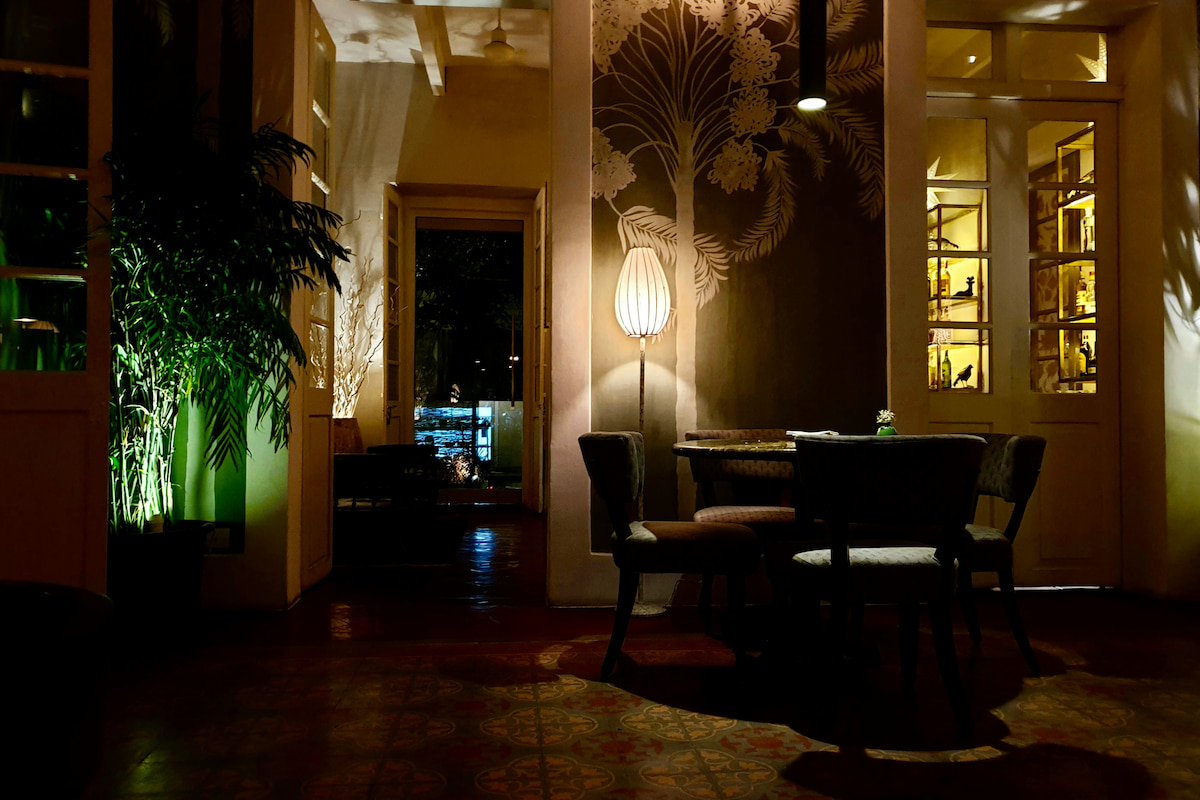
Two problems that lighting design in tropical villas needs to solve simultaneously
Lighting a tropical villa well requires solving two problems at once, and they pull in different directions.
The first is atmospheric. Lighting defines how a space feels after dark more than almost any other single design decision. The difference between a villa that feels magical in the evening and one that merely looks adequate is almost always lighting, and specifically the influence of layering, colour temperature, the direction of light, and where shadows fall.
The second is durability. Thailand’s coastal climate destroys lighting fixtures that are not specified for the conditions. Humidity corrodes electrical connections. Salt air attacks metal surfaces. UV exposure degrades polymer housings. Monsoon rain penetrates inadequately rated enclosures. A lighting scheme that looks beautiful at completion and begins failing within two or three years is not a successful specification.
Getting both right requires understanding each problem properly rather than treating them as separate considerations.
LED is the only practical lamp technology
This is not a close decision. LED is the correct lamp technology for tropical villa lighting and the alternatives are not competitive on any relevant criterion.
LEDs consume up to 80 percent less power than halogen lamps producing equivalent light output. In a villa where air conditioning represents the dominant energy cost and lighting is a significant secondary load, the energy saving is meaningful in absolute terms and not just as a percentage. LEDs also emit minimal heat, which reduces the cooling load that lighting creates in enclosed spaces.
Quality LED fixtures exceed 25,000 hours before requiring replacement, compared to 2,000 hours for halogen. In a tropical coastal environment where accessing fixtures for replacement often involves scaffolding, specialist access, or significant disruption to finished surfaces, the maintenance reduction from longer lifespan has real operational value beyond the lamp cost saving.
LED technology is also more inherently resistant to the effects of humidity and temperature cycling than older lamp technologies. The absence of a heated filament or gas discharge mechanism reduces the failure modes that thermal and moisture cycling cause in traditional lamps.
The qualification is product quality. The LED market contains products across a very wide quality range, and cheap LED products without marine-grade specifications fail in coastal tropical conditions as quickly as the halogen lamps they replace. The lamp technology is only as durable as the fixture housing and driver electronics that surround it.
Colour temperature
Light colour is measured in Kelvin. The number describes the warmth or coolness of the light rather than its brightness, and the choice of colour temperature is the single most significant lighting decision affecting how a villa feels to be in after dark.
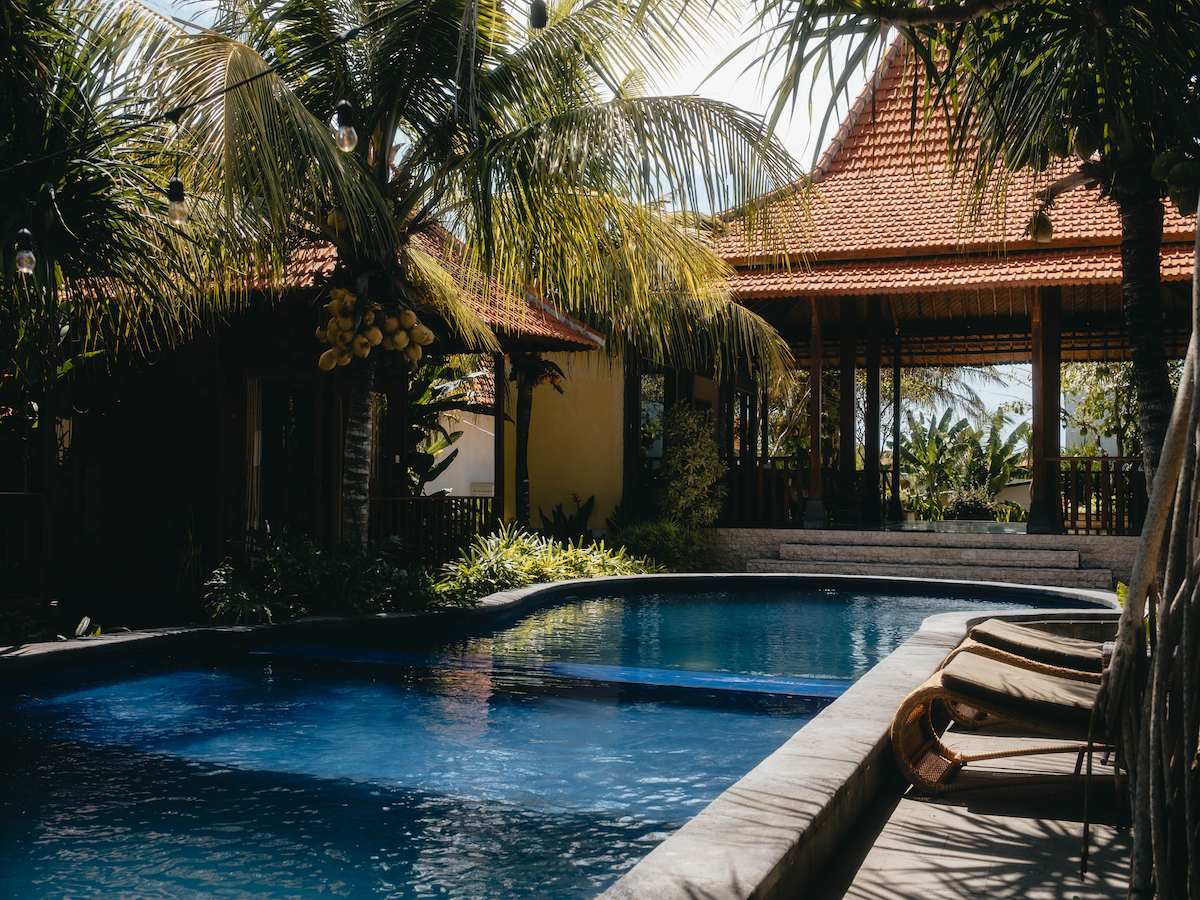
Warm white at 3000K is the correct specification for living areas, bedrooms, outdoor terraces, and any space designed for relaxation and social use. Light at this temperature creates warmth and intimacy that complements natural tropical materials such as teak, stone, and textured render. It also produces the golden evening atmosphere that good tropical villa design aims for. Warm light at 3000K works with rather than against Thailand’s natural light conditions: tropical sunsets produce warm golden light that interior lighting at this temperature continues rather than contradicts. The transition from natural to artificial light as evening falls feels seamless rather than abrupt.
Neutral white at 4000K is appropriate for task areas where visual clarity matters more than atmosphere, including kitchen preparation surfaces, home office spaces, and utility areas. The cooler, brighter quality of 4000K light supports detailed work but feels too clinical in spaces designed for comfort and relaxation. Avoid mixing colour temperatures within connected visual spaces. A living area at 3000K opening to a kitchen at 4000K creates a colour contrast that reads as a design inconsistency rather than a deliberate choice. Specify consistently within zones that are visually connected.
Very warm white at 2700K is worth considering for bedroom accent lighting and feature lighting on textured surfaces where the warmest possible quality is the objective. The difference from 3000K is subtle but perceptible in the right context.
IP ratings
The IP rating system defines how well a fixture resists dust and moisture ingress. In a tropical villa where the boundary between inside and outside is often deliberately blurred, applying correct IP ratings to fixture locations is essential rather than precautionary.
IP44 is the minimum for interior bathroom and kitchen use away from direct water contact, and is adequate for enclosed interior spaces with normal humidity. IP65 is required for covered outdoor areas, bathroom zones near showers, and any interior space exposed to significant moisture. It is fully dust-tight and protected against water jets from any direction, and is the practical minimum for covered terraces and outdoor dining areas. IP67 is required for fully exposed outdoor fixtures that receive direct rain without overhead protection. It is dust-tight and protected against temporary immersion, and is the correct specification for garden lighting, pathway markers, and any fixture position that monsoon rain reaches directly.
The rating describes what the fixture has been tested to withstand, but it does not guarantee performance regardless of installation quality. An IP65-rated fixture installed with inadequate sealing at cable entry points provides less protection than the rating implies. Installation quality determines whether the rated protection is realised.
Material specification for coastal durability
The fixture housing material determines surface longevity in Thailand’s salt air and UV conditions.
Powder-coated aluminium is the standard specification for quality exterior and semi-exterior lighting fixtures. Powder coating provides UV and corrosion resistance when applied correctly to aluminium substrate. Specify marine-grade powder coating formulations for any fixture within 500 metres of the coast. Standard powder coating degrades faster in salt air conditions.
Grade 316 marine-grade stainless steel is the correct specification for fixtures in high-exposure coastal positions. The molybdenum content provides significantly better chloride corrosion resistance than grade 304. It is more expensive than aluminium but justified in direct coastal exposure positions where salt concentration is highest.
UV-stabilised polymer blends are appropriate for outdoor fixtures where corrosion resistance is required alongside impact resistance. Verify UV stabilisation specification, because standard polymer degrades visibly in Thailand’s UV intensity within a few seasons.
The materials that deteriorate quickly in Thai coastal conditions are predictable. Untreated or inadequately treated steel corrodes within months in coastal salt air. Standard chrome plating over base metals fails as salt air penetrates plating imperfections and corrodes the base metal underneath. Timber fixture elements without adequate treatment deteriorate under UV exposure and humidity cycling.
Layered lighting
A single ceiling fitting per room provides illumination. It does not create atmosphere, define zones within open-plan spaces, or provide flexibility for different uses of the same space at different times of day. Layered lighting is the principle that separates good lighting from adequate lighting.
Ambient lighting provides general illumination through recessed downlights or indirect ceiling lighting that delivers base light levels without creating harsh direct glare. Task lighting provides focused light at kitchen work surfaces, reading positions, desk areas, and bathroom mirrors, positioned to illuminate the work surface without casting shadow from the user’s own body. Accent lighting creates visual interest through wall sconces highlighting textured surfaces, strip lighting beneath stair treads, up-lighting at architectural features, and carefully positioned spots that draw attention to art or natural material details.
The combination of these three layers on separate circuits and dimmers allows a space to transition from well-lit functional use to intimate evening atmosphere without requiring different fixtures.
Placement decisions that affect daily experience
Pendant lights over dining tables should hang approximately two metres above the finished floor level. The lower-than-standard ceiling height creates intimacy and focuses light on the table surface rather than dispersing it generally. For open-plan spaces where the dining area is visually connected to living areas, pendant positioning and scale define the zone as much as furniture arrangement does.
Uplighting near pool surfaces and glazed facades creates reflected glare that makes outdoor spaces uncomfortable to use in the evening, which is precisely when they are most used. Test lighting placement and direction before finalising installation positions. Lighting that reads as elegant on a plan behaves differently in reality after dark.
Avoid positioning exterior fixtures where insects, which are attracted to light in Thailand’s tropical environment, accumulate at eye level or directly above seating areas. Positioning light sources at higher levels and directing them downward rather than radiating in all directions reduces the insect concentration problem meaningfully.
Dimmer specification
Dimmers transform lighting from functional to atmospheric. For tropical villas where the transition from daytime to evening use of living spaces is a daily experience rather than an occasional event, dimmers are a specification that justifies their cost immediately in daily use quality.
LED lamps require dimmers specifically designed for LED loads. Standard incandescent dimmers produce flickering, buzzing, and reduced lamp life when used with LED lamps. This is a common problem in villas where dimmers were installed for previous halogen lighting and LED lamps were substituted later without changing the dimmer modules. Specify LED-compatible dimmers from the outset and verify compatibility between the dimmer and lamp combination before installation.
LED lamps generally perform better with trailing edge dimmer technology. Leading edge dimmers designed for incandescent loads can cause flickering at low dim levels with LED lamps. Specify trailing edge modules for any new LED dimmer installation.
Operational considerations for intermittently occupied villas
Villas used as holiday rentals or seasonal homes have lighting operation patterns that differ from permanently occupied residences. Specifications that work well for continuous occupancy may be inadequate for intermittent use.
Automated lighting schedules for security, cycling lights on and off to indicate occupancy during closure periods, and for operational convenience, ensuring arriving guests enter a lit rather than dark villa, are worth including in the electrical specification. These systems are most reliable when specified as part of the electrical installation rather than retrofitted with plug-in controllers.
Fixtures installed in positions that require scaffolding, specialist access equipment, or significant disruption to access for lamp replacement or maintenance create ongoing operational cost. Design maintenance access into the positioning of fixtures where possible, particularly for exterior and high-level fittings that require periodic attention in tropical conditions.
The bottom line
Lighting a tropical villa well is an investment that pays daily in the quality of the spaces it creates after dark. The specification decisions that determine whether that investment holds its value over time, namely LED technology, correct IP ratings, marine-grade materials for coastal positions, and layered dimmer-controlled circuits, are neither technically complex nor disproportionately expensive.
The villas that get lighting right feel designed. The villas that get it wrong look adequate, which in a beautiful tropical setting is a noticeable gap.
For structured guidance on every stage of a villa build in Thailand, from land purchase through to handover, see The Thailand Build Blueprint™ at thetropicalarchitect.com/the-blueprint
For guidance on any aspect of your particular project, book a strategic session at thetropicalarchitect.com/consultations
Indoors covered, but the garden matters just as much — see our guide to garden and landscape lighting for Thai villas for fixtures and layouts that hold up outdoors.
Working with Nay on your build
If you are planning a build on Koh Samui, the six-step process from land viability to site supervision is set out at how the build process runs; for Phuket, start with licensed Phuket architect. If you are further along and want an experienced second opinion on drawings, a quote or a contractor, get a second opinion.