The gap between the demonstration and the reality
A smart home system demonstrated in a showroom in a controlled environment and a smart home system operating in a remotely managed rental villa in Thailand’s tropical climate are not the same proposition. The demonstration is reliable because everything has been configured, tested, and maintained by people who installed it. The villa is reliable only if the system was specified for the conditions, integrated correctly at the build stage, and has a maintenance structure that keeps it functioning between guests.
The market for smart home integration in Thai villas is growing and being driven by rental operators who want remote management capability, by buyers who expect the technology as standard, and by developers who use it as a differentiator. The appetite is legitimate. The implementation quality is inconsistent enough that understanding what determines a system that works from one that creates operational problems is worth examining before committing to a specification.
What smart integration actually means in a villa context
Smart home technology in a villa covers several distinct categories that are sometimes bundled together in developer marketing but serve different purposes and have different implementation requirements.
Access control like keyless entry, PIN codes, and remote lock management is the category with the clearest operational value for rental villas. A system that allows the owner to issue and revoke guest access codes remotely, without requiring physical key handover or caretaker presence at check-in, reduces operational complexity and eliminates the most common source of security vulnerability in rental properties. This category is also the most reliable: the technology is mature, the failure modes are well-understood, and the systems available in Thailand at various price points perform consistently.
Climate control automation such as scheduling and remote management of air conditioning, with occupancy sensing or guest-controlled interfaces, has genuine value in both rental and owner-occupied villas. A system that can set air conditioning to pre-cool the villa before guest arrival, revert to energy-saving mode when rooms are unoccupied, and allow the owner to monitor and adjust remotely from anywhere reduces both energy costs and the management burden of maintaining a comfortable property. Integration with smart thermostats or the villa’s existing air conditioning units through IR control or direct system integration is achievable with most major air conditioning brands installed in Thailand.
Lighting control, motorised blinds, and audio-visual systems are the categories where implementation complexity rises and operational reliability becomes more variable. Individual components like a smart light switch, or a motorised louvre, work reliably in isolation. Fully integrated systems where lighting scenes, blind positions, and audio respond to a single trigger or occupancy state require careful configuration, reliable network infrastructure, and someone who can reconfigure the system when it drifts from its intended behaviour. In a rental villa with successive guests, each of whom interacts with the system differently, configuration drift is a real operational challenge.
Pool and garden automation like automated dosing systems, irrigation timers, pool pump scheduling, sits in a category where the smart component is genuinely useful for remote management but where the underlying mechanical system must be correctly specified regardless of how it is automated. An automated pool dosing system connected to a poorly specified filtration setup does not solve the filtration problem; it monitors it more precisely while it continues.
The infrastructure that determines whether any of it works
Every smart home system depends on network infrastructure that is more demanding than standard residential internet provision. Reliable WiFi coverage throughout the villa including outdoor areas, a stable internet connection with a backup in case the primary link fails, and a network architecture that keeps smart home devices on a separate segment from guest devices all affect whether the system operates correctly.
In Thailand’s coastal and island villa locations, internet connectivity varies significantly in reliability. A smart home system that depends on cloud processing, where commands travel from the user’s phone to a cloud server and back to the device, fails silently when the internet connection drops. Systems with local processing capability, where the hub operates independently of cloud connectivity for core functions, are more appropriate for locations where internet reliability cannot be guaranteed.
Power quality affects smart home devices more than it affects conventional electrical systems. Voltage spikes from Thailand’s supply network, particularly during and after storms, damage sensitive electronics. Surge protection at the distribution board and at individual sensitive loads is a specification requirement for any villa with significant smart home investment, not an optional extra.
Wiring infrastructure is the decision that cannot be corrected after construction. A villa wired with conventional switching and no provision for smart home integration can be retrofitted with wireless smart home devices, but wireless systems have limitations (battery replacement, interference, and range constraints) that a correctly wired installation does not. A villa designed for smart home integration from the outset has conduit runs for control cabling, structured cabling for network infrastructure, and a central hub location with appropriate power and connectivity provision. Retrofitting these after the walls are closed is disruptive and expensive.
The rental villa specific requirements
For rental villa operators, the smart home features with the clearest return on investment are those that reduce operational dependency on local staff presence and improve the guest experience without requiring guests to manage complexity.
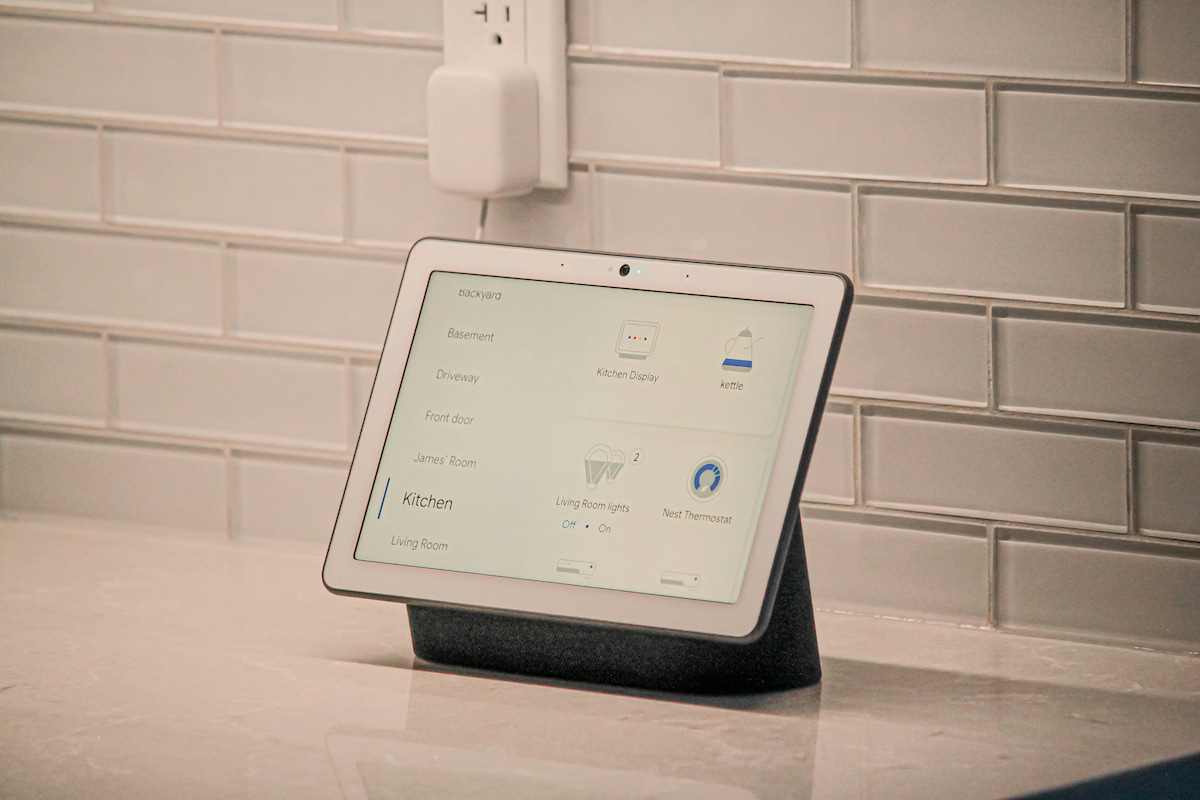
Access control with remote issuance and revocation of guest codes eliminates key management entirely and creates a record of access that is useful for security management. Energy monitoring that shows the owner real-time consumption and alerts to unusual patterns, like an air conditioning unit left running in an unoccupied villa or a pool pump that has stopped cycling, reduces utility costs and identifies equipment failures before they become guest complaints. Automated welcome messaging and simple in-villa tablets or displays that communicate house information, local recommendations, and contact details reduce the information burden on caretaking staff without reducing the guest experience.
What rental guests do not need is complexity. A villa where the lighting, blinds, air conditioning, and entertainment system all require interaction with a dedicated app, where the app requires configuration on arrival, and where the system behaves differently from what a guest expects from their own home, generates support calls and negative reviews regardless of how technically sophisticated the underlying system is. The guest experience test for any smart home feature is whether a guest who has never encountered the system before can operate it correctly without assistance.
Specifying for Thailand’s climate
Smart home hardware installed in Thailand’s tropical climate faces the same conditions that affect all other materials and systems: sustained heat, high humidity, salt air in coastal locations, and occasional power quality events. Consumer-grade smart home devices specified for temperate indoor environments do not all perform reliably under these conditions.
Outdoor and semi-outdoor devices such as access control panels, external cameras, irrigation controllers, require IP-rated enclosures appropriate for Thailand’s monsoon rainfall intensity. Indoor devices in poorly ventilated locations, particularly in roof spaces and service areas, face temperatures that shorten the operational life of electronics significantly. Hub hardware and network equipment should be located in ventilated, accessible positions rather than enclosed in ceiling voids or service cupboards where heat accumulates.
Marine-grade specification applies to external smart home hardware in coastal locations in the same way it applies to all other external hardware as standard consumer products corrode in salt air environments faster than their rated service life suggests.
The bottom line
Smart home integration in a Thai villa delivers genuine operational value in the categories where the technology is mature, the use case is clear, and the implementation is appropriate for the conditions. Access control, climate monitoring, energy management, and pool automation all meet this test when correctly specified and installed on adequate network infrastructure.
The systems that create operational problems are those specified for their brochure appeal rather than their operational fit. This includes things like complex integrations that guests cannot navigate, hardware specified for temperate conditions operating in tropical ones, and systems installed without the wiring infrastructure and network reliability they depend on.
Specify for the use case. Wire for it during construction. Maintain it as seriously as any other building system. The result is infrastructure that reduces management burden and improves the guest experience rather than adding to both.
For structured guidance on every stage of a villa build in Thailand, from land purchase through to handover, see the forthcoming “The Thailand Build Blueprint“at thetropicalarchitect.com/the-blueprint
For guidance on anything specific for your specific project, book a strategy session with Nay at thetropicalarchitect.com/consultations
Getting this specified and checked on site
Decisions like this one are only as good as the drawings and the site supervision behind them. If you are building on Koh Samui, Nay's full service from land assessment to handover is described at our Samui practice; for Phuket, see our Phuket practice. If you already have a builder and want an independent second opinion on a specification, talk to Nay directly.